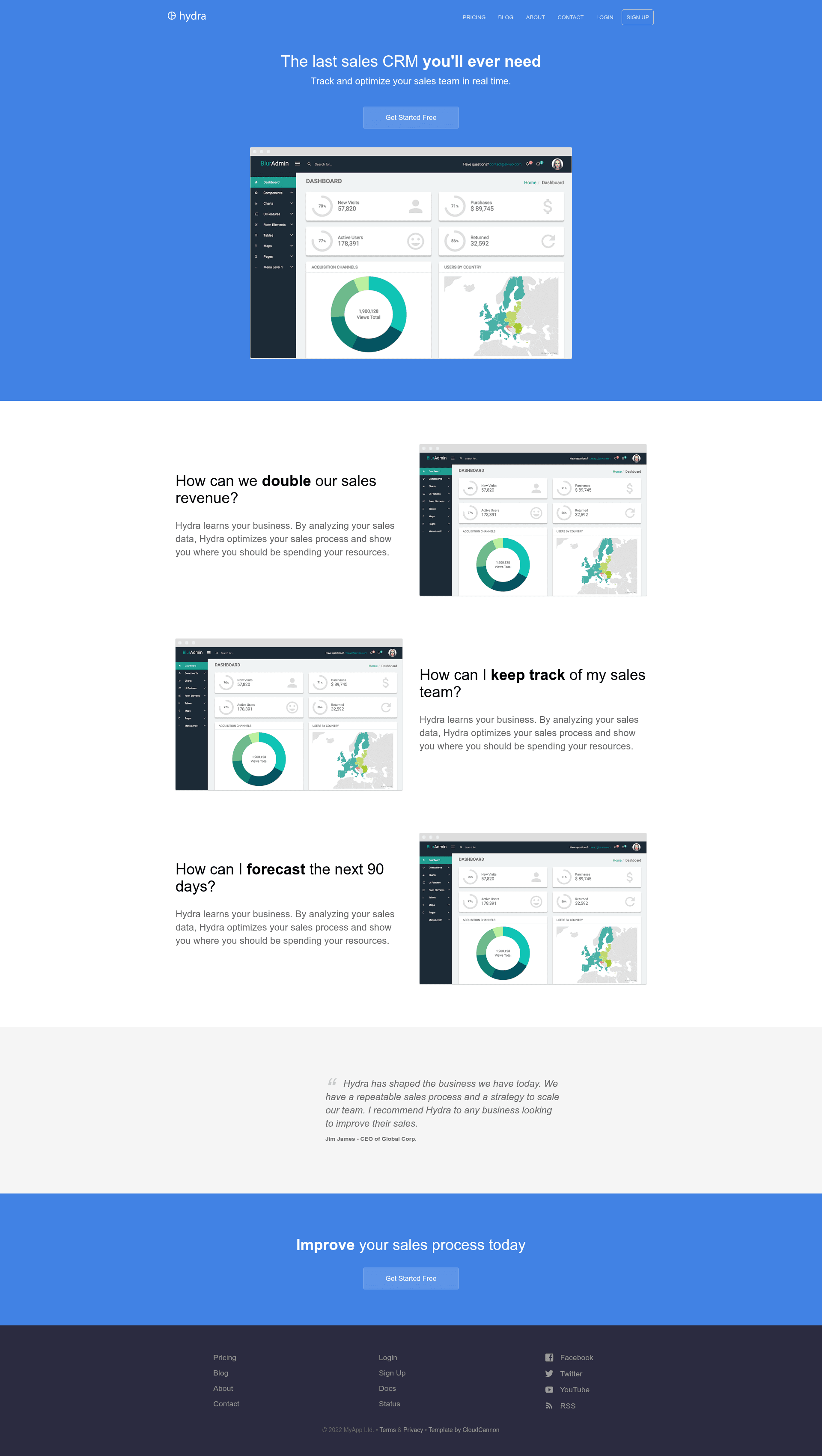
Hydra is a marketing site template built with Hugo by CloudCannon, giving brands a configurable web presence with pre-built pages, a blog, and CloudCannon CMS editing.
What is Hydra?
Hydra is a Hugo-based marketing website template created by CloudCannon, a Jamstack platform. It takes a Hugo site structure with configuration in config.toml and outputs a static marketing website featuring a blog, contact form, author system, and pre-styled components. The template is optimized for editing in CloudCannon, letting content teams update pages, posts, company details, and footer elements without code.
The template was built with Hugo version 0.76.5 and should support newer versions. A live demo is hosted at sage-turtle.cloudvent.net. Hydra is available as a GitHub repository with a one-click deploy option for CloudCannon.
Key Features
- Contact form — Preconfigured to work with CloudCannon, easily changed to another provider like FormSpree; sends submissions to the email address listed in company details.
- Blog with pagination and category pages — A complete blog system with paginated post listings and category-based archive pages.
- Disqus comments — Integrates Disqus for reader comments on individual posts.
- Author system — Posts link to an authors data file, and author info is reused across the site, avoiding duplicate editing.
- Configurable footer — Each page's front matter controls footer menu items via menu.footer.
- CloudCannon optimization — Adding, updating, and removing pages, authors, posts, company details, and footer elements are all framed around CloudCannon's visual editor.
- SEO and analytics — Includes SEO tags and Google Analytics support, configured in config.toml.
- RSS/Atom feed — Built-in feed generation for blog syndication.
Who is it for?
Hydra suits businesses and brands that need a professional marketing website with a blog and contact form, without high development effort. It is especially convenient for teams using CloudCannon as their CMS, since the template is structured for that platform's editing model. Hugo developers can also use Hydra as a clean starting point for custom marketing site builds.
What can you do with Hydra?
- Small business owners: Quickly launch a marketing site with pre-built pages, company details, and a working contact form that emails submissions to the listed address.
- Content teams: Publish blog posts with author attribution, category pages, pagination, and Disqus discussion threads.
- CloudCannon users: Deploy the template to CloudCannon and have non-technical staff edit pages, posts, and footer navigation in a visual interface.
How does Hydra work?
Hydra follows a straightforward setup: first, add your site and author details in config.toml. Then, add your Google Analytics and Disqus keys to the same file. Finally, run the local Hugo server with the command hugo server or connect the repository to CloudCannon to establish an automated build workflow.
The template's content model separates posts, authors, and company details into distinct sections, which is what makes the CloudCannon editing experience straightforward.