Newsletter
Join the Community
Subscribe to our newsletter for the latest news and updates

A modern, responsive landing page theme for business, built in Jekyll
Free Bootstrap construction website template by Themefisher with 17 pages for builders, contractors, and industrial companies.
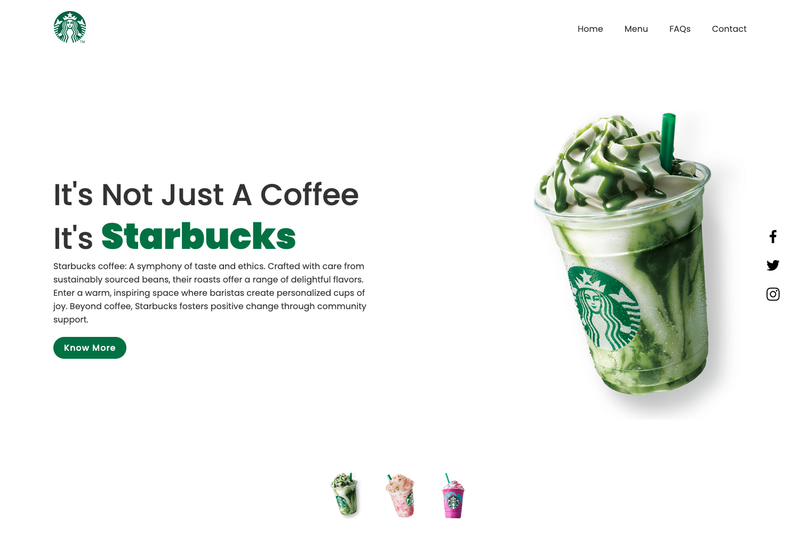
A Starbucks landing page built with HTML, CSS, and JavaScript featuring responsive design, interactive elements, and a menu section.

Free Bootstrap 4 HTML5 landing page template for SaaS, web, and mobile app websites with custom illustrations and pricing tables.
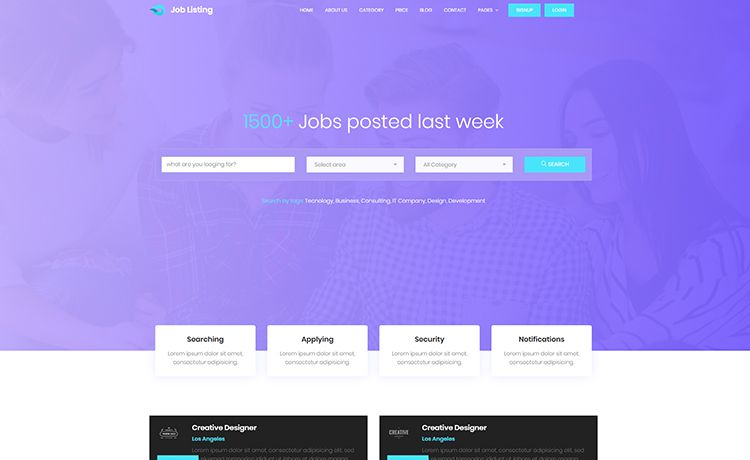
Free Bootstrap 4 job board template with advanced job search, featured jobs slider, sticky navigation, working contact form, and Google Maps.
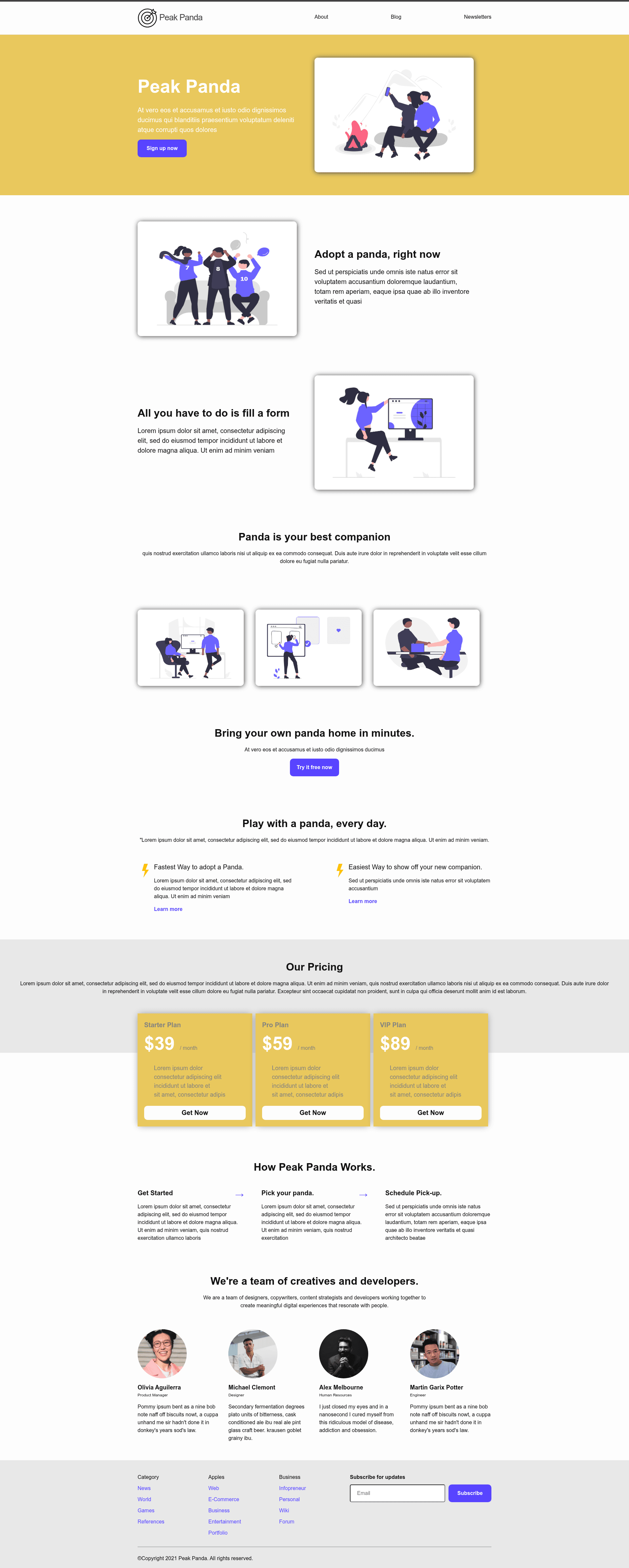
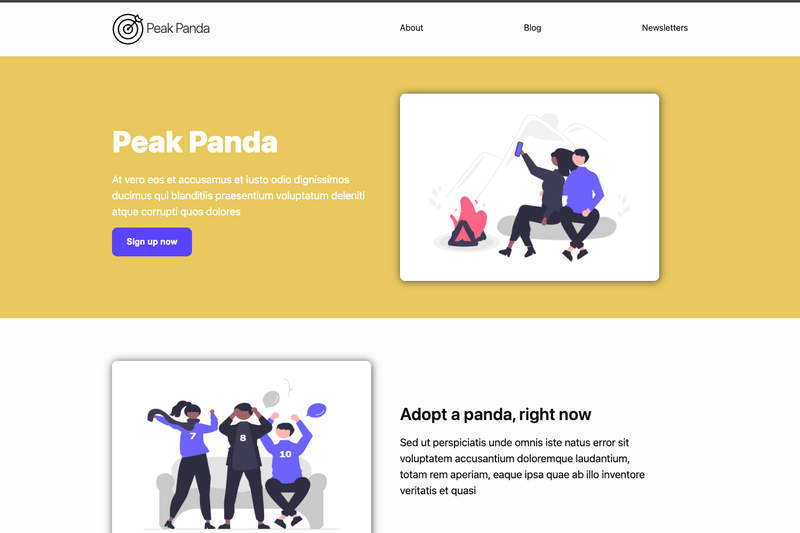
Peak Panda is a modern, responsive Jekyll landing page theme for business sites, designed to let you deploy a complete marketing page with blog support on GitHub Pages or Netlify.
Peak Panda is a Jekyll theme that generates a complete static landing page from a minimal set of files. You input your site configuration in _config.yml and optional blog posts in _posts/, and it outputs a responsive HTML site with a hero, pricing table, team section, and more. The theme is built for Jekyll 4.2.1, tested with Ruby 3.0.3, and is maintained on GitHub by the junjizhi account, with a live demo available at https://junjizhi.github.io/peak-panda/.
_sass/peak-panda.scss; no Bootstrap, Tailwind, or other CSS frameworks to override._config.yml, and brand colors/fonts in _sass/peak-panda.scss, so non-developers can update text without touching HTML._posts folder; add Markdown files to publish posts in the same design as the landing page._config.yml, and deploy to GitHub Pages or Netlify to have a complete site with hero, pricing, and team sections._posts/ and Jekyll builds a blog section that shares the landing page's styling._sass/peak-panda.scss and change copy in _config.yml to match your business identity.Fork the repository, update _config.yml with your site details, and optionally adjust the Sass file. Then either run bundle install and bundle exec jekyll serve to preview locally, or deploy via the Netlify one-click button or GitHub Pages guide. Jekyll compiles the config and Markdown content into a static site.
Peak Panda is free to use. The source is available on GitHub under the repository's license file, so you can fork, modify, and deploy it without any payment.
Yes. The README links to official GitHub Pages documentation for Jekyll, and the demo itself is hosted on GitHub Pages, so the theme works there.
Yes. The repository includes a "Deploy to Netlify" button that sets up a new site from your GitHub repo with one click.
The theme was tested with Ruby 3.0.3 and Jekyll 4.2.1. The README recommends using rbenv to manage Ruby versions and running bundle install then bundle exec jekyll serve locally.
Yes. The theme includes built-in company blog support. You add Markdown files to the _posts folder and they are rendered as blog posts alongside the landing page sections.
Colors and fonts are defined in the _sass/peak-panda.scss file. Edit the variables there and rebuild the site to see your changes.