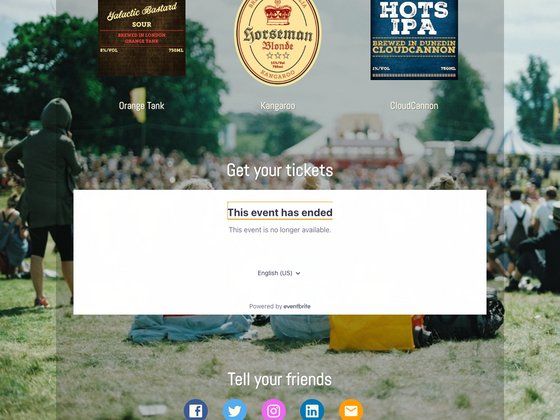
Malt is a Jekyll template for event marketing websites, created by CloudCannon, that combines EventBrite ticketing, Google Analytics, SEO tags, and a contact form into a single-page layout. The template is available through CloudCannon's GitHub and supports a live demo at whispering-boat.cloudvent.net.
What is Malt?
Malt is a Jekyll-based event marketing template built and maintained by CloudCannon. It takes site configuration from _config.yml and page content from front matter in index.html, and generates a static event website with pre-built sections, an image gallery, and a featured area. The template runs on Jekyll 3.3.1 and newer, and is optimized for visual editing inside CloudCannon's cloud CMS.
Key Features
- Pre-built page — Malt ships with a complete page layout, so event organizers can replace the default content rather than build from scratch.
- Pre-styled components — Buttons, typography, gallery, and featured blocks are already styled and ready to edit in CloudCannon.
- CloudCannon optimization — The template is set up for visual editing of pages, company details, and footer elements within CloudCannon's CMS.
- SEO tags — Uses the jekyll-seo-tag plugin; each page should set a title in its front matter for search-engine metadata.
- Google Analytics — Add your tracking key in
_config.yml; analytics only load in production builds. - EventBrite integration — Paste the EventBrite Ticket Form embed code into the
eventbrite_embedsetting in_config.ymlto sell tickets. - Contact form — A form component is included for visitor inquiries.
- Image gallery — Populated by a front matter array in
index.html; add items by copying the existing structure. - Featured section — A highlighted area for key sessions, speakers, or sponsors.
Who should use Malt?
- Event organizers — Set up an event site with ticket sales via EventBrite and a contact form in under an hour.
- Community meetup hosts — Publish a single page with agenda, gallery, and analytics without maintaining a blog or CMS.
- Conference planners — Use the image gallery and featured sections to showcase speakers, sponsors, and venue photos.
- Jekyll developers — Work with a minimal, code-friendly template they can extend with their own layouts and components.
What can you do with Malt?
- Sell tickets through EventBrite — Paste your EventBrite Ticket Form embed code into
_config.ymlto add a ticketing widget on your event page. - Track visitor analytics — Add your Google Analytics key to
_config.ymland deploy in production to start collecting traffic data. - Showcase event content — Edit the front matter array in
index.htmlto populate the image gallery and featured section with photos, speakers, or sessions. - Edit content visually in CloudCannon — Manage company details, footer elements, and page content through CloudCannon's point-and-click interface.
How does Malt work?
Setup follows three steps: fill in site details in _config.yml, add your Google Analytics key, and get a workflow going — either with CloudCannon or Jekyll locally. To add EventBrite, create an event there, copy the Ticket Form embed code from the Widgets menu, and paste it into the eventbrite_embed field in _config.yml. The template supports newer Jekyll versions and can be served with bundle exec jekyll serve.
FAQ
How do I add my EventBrite ticket form to Malt?
Create your event on EventBrite, open the Widgets menu, copy the Ticket Form embed code, and paste it into the eventbrite_embed key in _config.yml. The embed will then appear on your event page.
Can I use Malt with GitHub Pages?
Yes. The template's production environment setting, JEKYLL_ENV=production, is the default for both CloudCannon and GitHub Pages, so analytics and SEO tags behave correctly on those platforms.
What Jekyll version does Malt require?
Malt was built with Jekyll 3.3.1 but should support newer versions as well. Install dependencies with Bundler and run bundle exec jekyll serve to develop locally.
How do I edit the image gallery?
The gallery is defined in the front matter of index.html as an array. To add items, copy the existing structure and update the image paths and captions.
Does Malt include a contact form?
Yes. Malt includes a contact form component as part of its pre-built page, ready to connect to your preferred form backend or service.