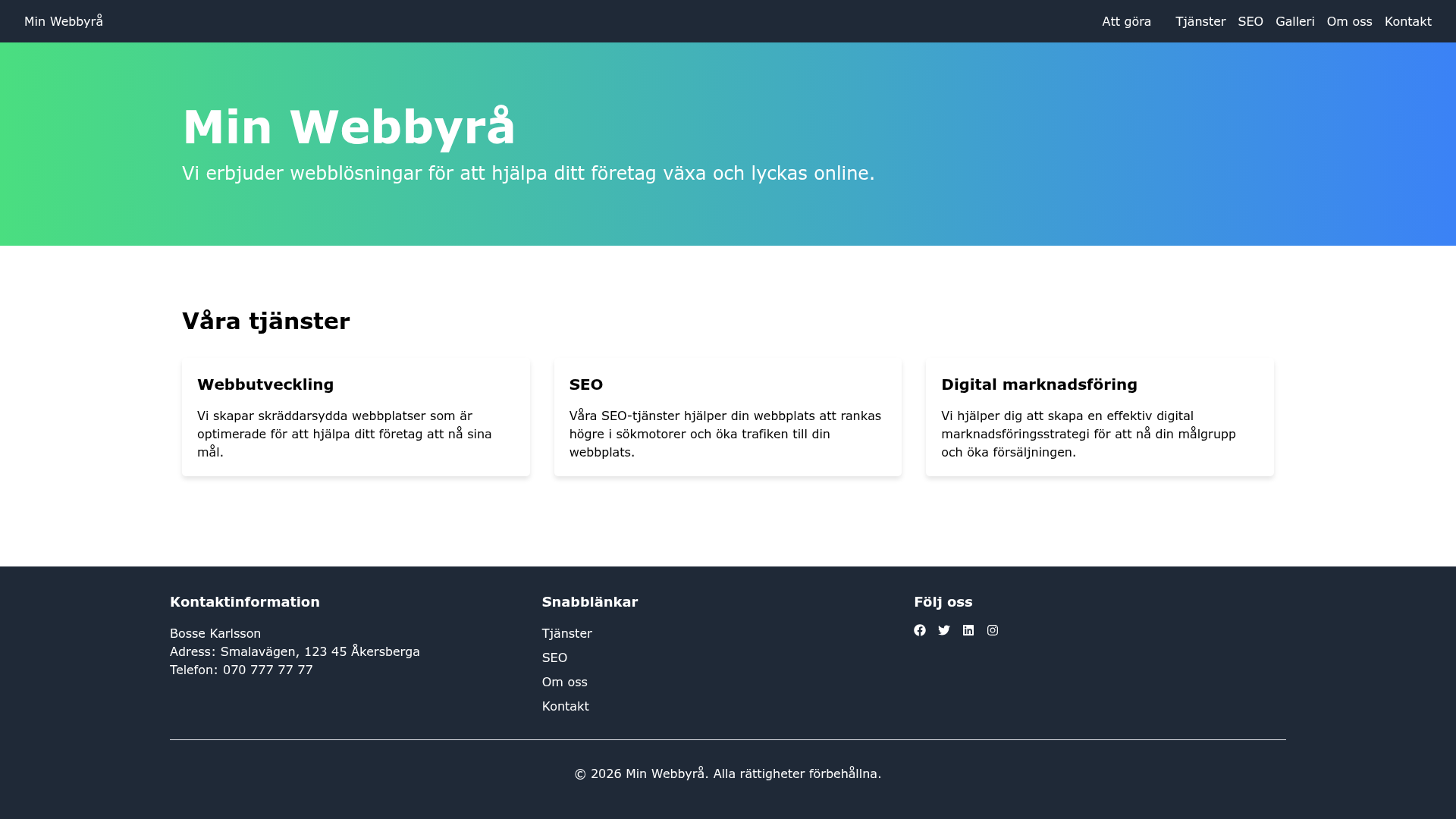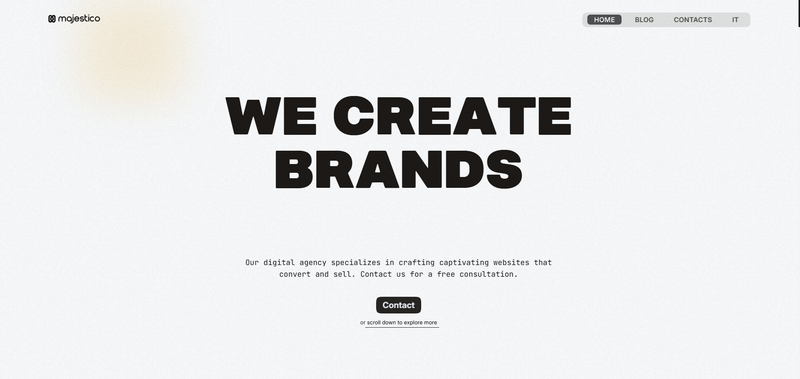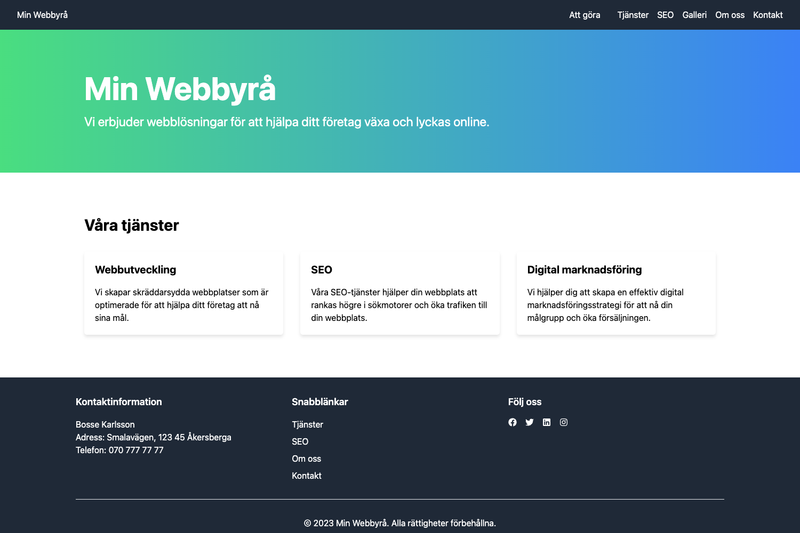
Min Webbyra is a Next.js boilerplate for a Swedish web agency (webbyrå) website, planning reusable components and dedicated subpages such as pricing, portfolio, and blog. The project is bootstrapped with create-next-app, so it runs on the Next.js framework and uses the standard React-based pages router.
What is Min Webbyra?
Min Webbyra is a starter template meant to be customized into a full marketing site for a web agency. It takes a developer's edits and produces a multi-page site with portfolio, pricing, blog, and contact form sections. The template runs on Next.js and includes the default create-next-app setup, with a development server started via npm run dev, yarn dev, or pnpm dev. The repository lives under the GitHub user broklyn777 and is named min-webbyra, though no company or author name is stated in the page content.
Key Features
- Next.js framework — Built with create-next-app, supports both static and server-rendered pages, and includes API routes available in the pages/api directory.
- Font optimization — Uses next/font to automatically optimize and load Inter from Google Fonts, noted in the README.
- Footer component — The Swedish feature list includes a site-wide footer with company info, contact details, social media links, and navigation links.
- Testimonials section — A reusable component to display customer reviews and build social proof.
- Pricing page — A dedicated page or section for presenting service packages and prices.
- Portfolio page — Shows previous projects and work examples so potential clients can evaluate the agency's output.
- Blog and about pages — The template plans a blog for industry news and an about-us page describing company history, values, team, and vision.
- Contact form — A form on the contact page lets visitors get in touch, and it can also be embedded as a component on other pages.
- Responsive and SEO-ready — The feature notes call for responsive design, performance optimization, and search-engine-friendly metadata, headings, and alt attributes.
Who is it for?
- Web agencies — Use this template as a starting point for their own marketing site, replacing the default content with their services and portfolio.
- Freelance web designers — Quickly set up a portfolio and pricing structure to present to clients.
- Small business owners — Adapt the template to showcase testimonials, share blog updates, and allow visitors to send contact inquiries.
What can you do with it?
- Launch a marketing site: Publish a multi-page business website with portfolio, pricing, blog, and contact sections.
- Collect leads: Use the contact form component to gather inquiries from potential clients.
- Share expertise: Publish blog posts about industry topics to establish authority and engage visitors.
- Showcase work: Display past projects and client testimonials to build trust.
How does it work?
- Start the development server by running npm run dev, yarn dev, or pnpm dev and open http://localhost:3000.
- Edit the home page in pages/index.tsx and see live updates.
- Access the default API route at /api/hello, which is defined in pages/api/hello.ts.
- Deploy on Vercel by pushing to a Git repository and linking it to the Vercel platform.
FAQ
What does Min Webbyra do?
Min Webbyra is a Next.js project template for building a web agency website. It includes a default home page, API route example, and planning notes for adding sections like pricing, portfolio, blog, and a contact form.
Which framework does it use?
It uses Next.js, bootstrapped with create-next-app, and follows the React component model. The project also uses next/font to handle font loading and optimization.
Does it include a blog?
The feature list in the README includes a blog section for sharing news and insights, which can be added as a subpage with individual post pages.
Is it free?
The template itself is a standard create-next-app project, which is open source. However, no license or pricing details are specified for this particular repository, so usage terms are not confirmed.
Is the template available in English?
The README and feature notes are written in Swedish, targeting Swedish-speaking web agencies. The underlying code structure is framework-based and can be adapted to any language.