Newsletter
Join the Community
Subscribe to our newsletter for the latest news and updates

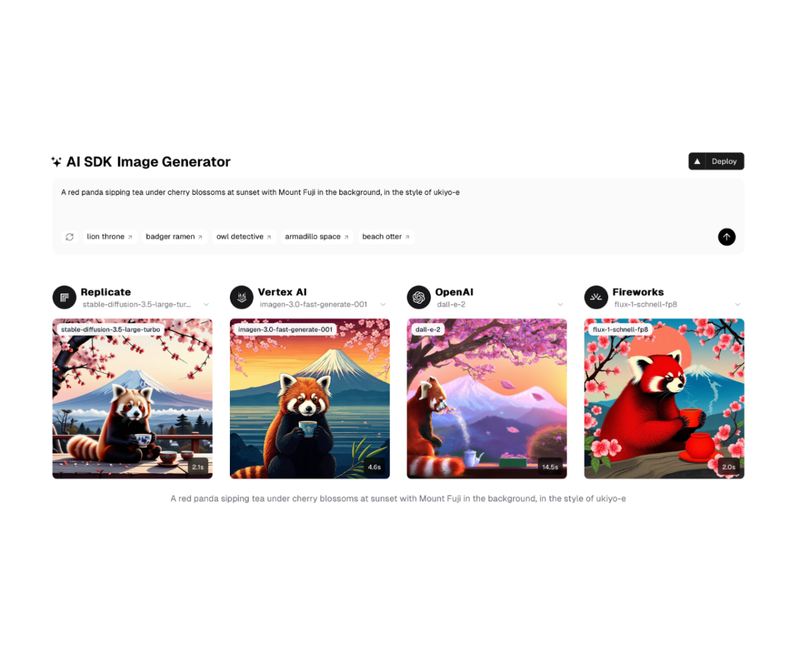
An open-source AI image generator built with Next.js, the AI SDK, and AI providers (Replicate, Fireworks, Google Vertex AI, OpenAI).
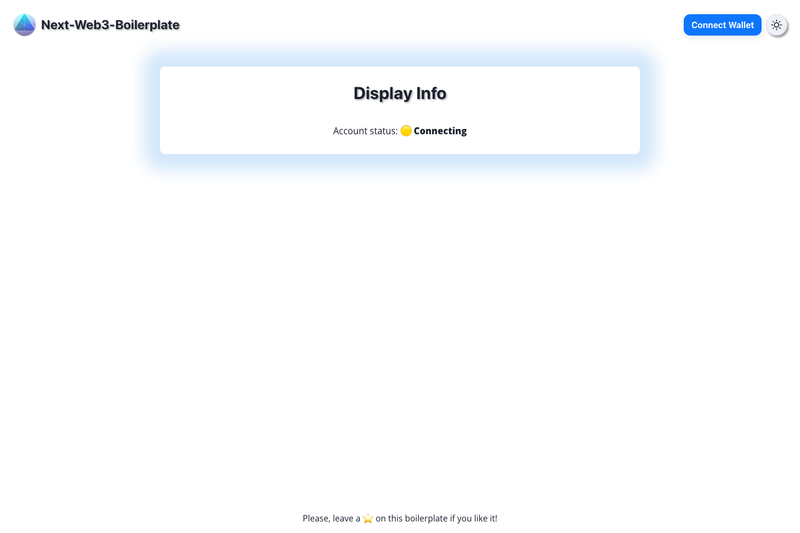
Nextjs web3 boilerplate built on Viem, Wagmi, Rainbowkit and Chakra UI for starting Ethereum dapp projects.
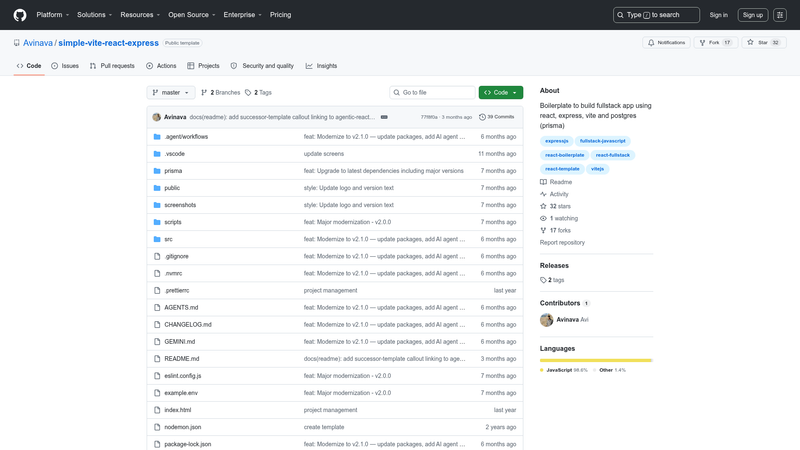
Full-stack boilerplate combining React, Express, Vite, PostgreSQL, and Prisma with working CRUD examples.
Full-stack Next.js 7 + Postgres boilerplate with TypeScript, Jest testing, and Zeit/Heroku deployment.

Jekyll starter theme that turns Markdown chapters into an all-in-one single-page book site.
AI SDK Image Generator is an open-source Next.js application template from the Vercel team that provides a complete AI image generation app with a single UI connected to multiple AI providers through the Vercel AI SDK.
AI SDK Image Generator is an open-source application template built with Next.js App Router version 15 and the AI SDK by Vercel. It implements the generateImage function from the AI SDK to call Replicate, Google Vertex AI, OpenAI, and Fireworks from one text prompt input, and it returns the generated images in a web UI. The template is maintained by Vercel staff, including Walter Korman and Nico Albanese, and is designed to be deployed to Vercel with a single click or run locally.
generateImage function so Replicate, Google Vertex AI, OpenAI, and Fireworks can be swapped with only a few lines of code; providers are configured in the codebase and can be added or removed..env.local file, and running the dev server on localhost:3000.GOOGLE_CLIENT_EMAIL, GOOGLE_PRIVATE_KEY, GOOGLE_VERTEX_PROJECT, and GOOGLE_VERTEX_LOCATION from a service account JSON.generateImage works with different providers and how environment variables and provider configuration are structured in a real app.generateImage call as your image-generation backend.The template's UI presents a text prompt input, and when submitted it calls the generateImage function from the Vercel AI SDK. That function is configured in code to route requests to the providers you've enabled (Replicate, Google Vertex AI, OpenAI, Fireworks), and the resulting images appear in the interface. The README notes that you can add or remove providers by updating the codebase configuration.
Yes, it is an open-source template maintained by the Vercel team and community contributors. The repository welcomes contributions through issues and pull requests, and the code is freely available for use and modification.
Replicate, Google Vertex AI, OpenAI, and Fireworks are included by default. All are integrated through the Vercel AI SDK's generateImage function, and you can add or remove providers by updating the configuration in the codebase.
You need Node.js, a package manager (npm, yarn, or pnpm), and API keys for the providers you plan to use. The README instructs you to create an .env.local file based on .env.example, adding keys like OPENAI_API_KEY and REPLICATE_API_TOKEN, then run the development server and open localhost:3000.
Use the Deploy with Vercel button on the README page, which clones the repository and prompts you for the required environment variables. You can also set those variables manually in your Vercel dashboard before or after deployment.
Yes, the template includes Google Vertex AI setup instructions. You get a service account JSON from the Google Cloud Console, then set GOOGLE_CLIENT_EMAIL, GOOGLE_PRIVATE_KEY, GOOGLE_VERTEX_PROJECT, and GOOGLE_VERTEX_LOCATION in your environment variables.