Newsletter
Join the Community
Subscribe to our newsletter for the latest news and updates

Open source Wagtail-based CMS for National Meteorological and Hydrological Services.
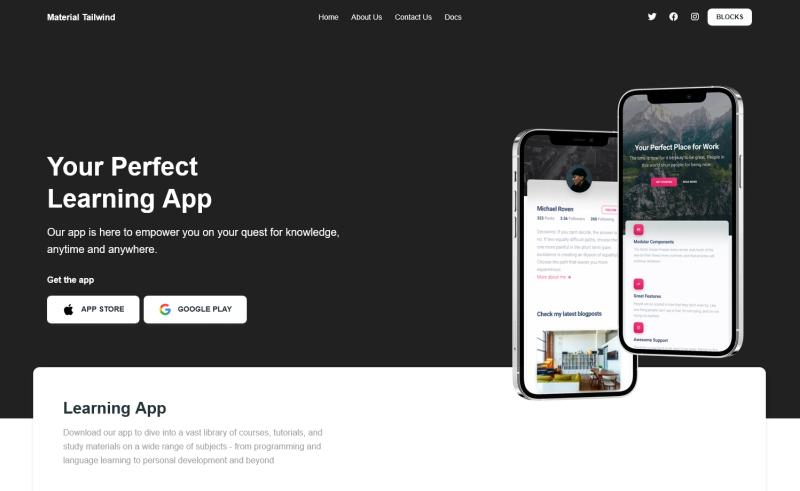
Free React + Tailwind CSS one-page landing page template for presenting apps, with hero header, testimonials, FAQ, and sticky nav.
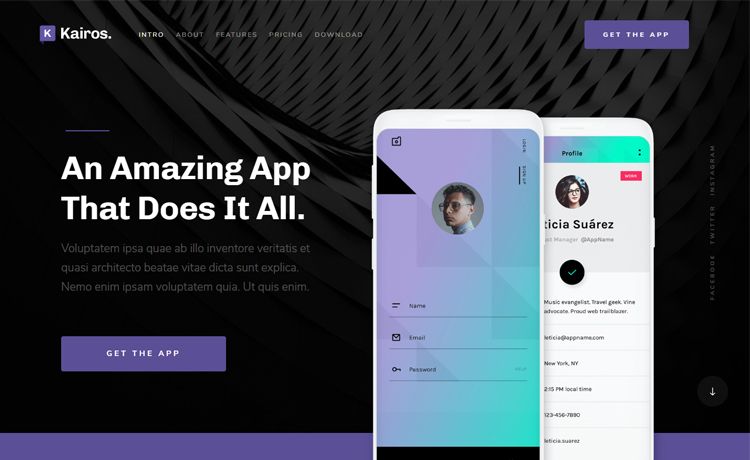
Free HTML5 one-page mobile app landing page template with parallax, pricing table, and testimonial carousel.
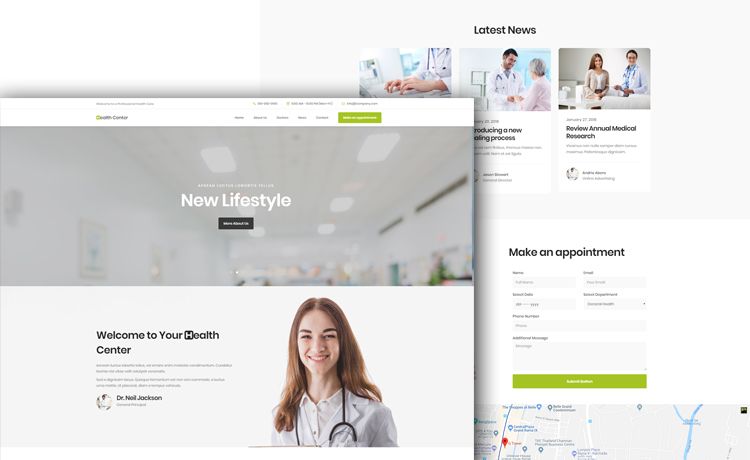
Free one-page HTML5 Bootstrap 3 medical template for hospitals, clinics, and doctors with appointment booking, carousel slider, and Google Maps.

Free Bootstrap 5 HTML5 academic website template with hero header, event/testimonial carousels, news section, and Gulp-based workflow.
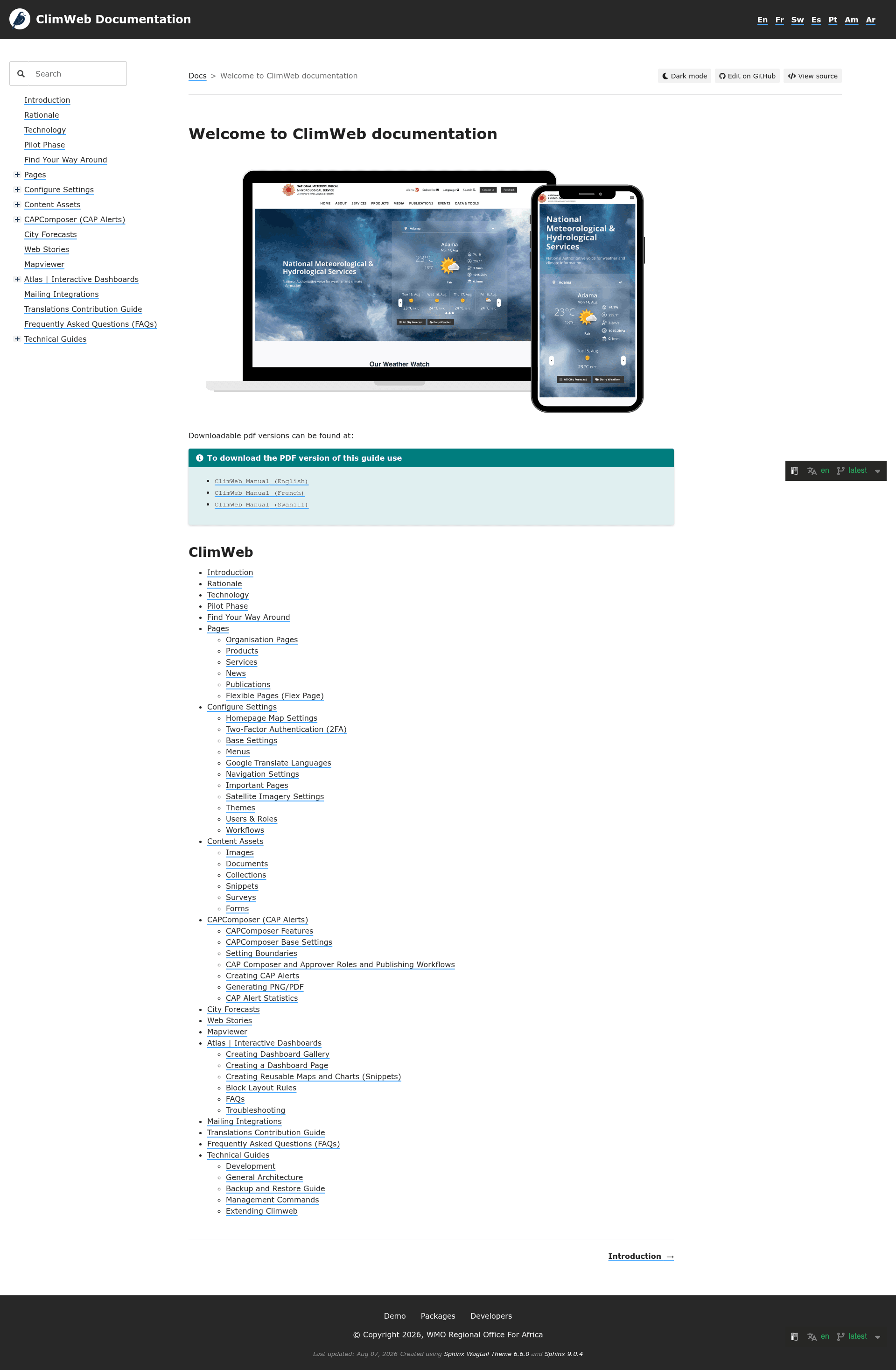
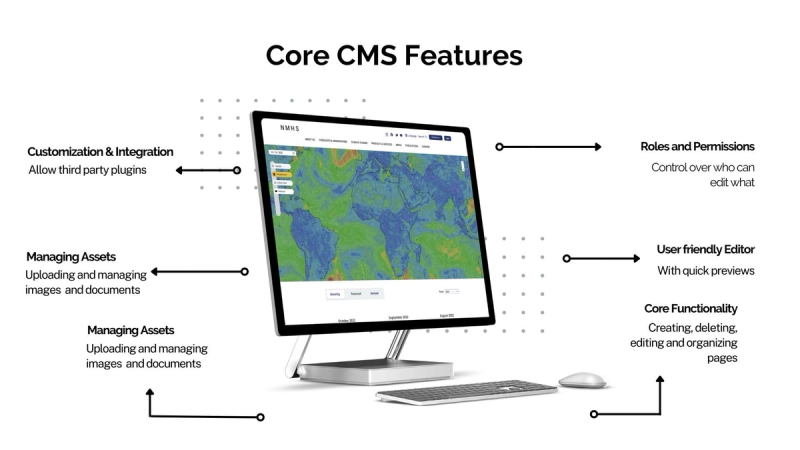
ClimWeb is an open-source, Wagtail-based content management system and website template built specifically for National Meteorological and Hydrological Services (NMHSs) in Africa, centered on publishing weather and climate information, CAP alerts, and georeferenced data.
ClimWeb is a specialized CMS distribution built on the Wagtail framework that lets meteorological services run a modern, mobile-friendly website without writing custom code. Inputs include news articles, weather forecasts, Common Alerting Protocol (CAP) 1.2 warnings, gridded climate datasets, vector geospatial files, event registrations, surveys, and email subscriber data; outputs are a public-facing website with interactive maps, an XML alert API, dashboards, and notification emails. The project is co-developed with NMHSs in Africa, is recognized as a Digital Public Good by the Digital Public Goods Alliance, and supports SDG 13 (Climate Action). More than 33 national services across Africa run ClimWeb in production, with additional deployments in progress.
ClimWeb is deployed as a set of Docker containers using the climweb-docker repository, with local development steps documented on Read the Docs. After installation, editors manage the site through the Wagtail admin interface, creating pages, CAP alerts, events, surveys, and data visualisations; approved CAP alerts are published to the public site and to aggregator APIs.
ClimWeb is open-source software, so there is no license fee or per-user cost. Adopting organizations are responsible for their own hosting and operations; the project publishes a Docker deployment stack and documentation to support self-management.
Yes, ClimWeb is open-source software and is recognised as a Digital Public Good by the Digital Public Goods Alliance. There is no purchase price or licensing fee; you pay only for your own hosting and any infrastructure you choose.
More than 33 National Meteorological and Hydrological Services in Africa run live ClimWeb sites, including Benin, Ethiopia, Ghana, Kenya, Malawi, Mozambique, Niger, Sudan, and Zimbabwe. At least eight additional countries have deployments in progress, and Syria uses ClimWeb outside Africa.
Yes. ClimWeb includes a Common Alerting Protocol (CAP) version 1.2 compliant composer with an approval workflow, live preview, multi-language publishing, and an XML API for alert aggregators. It has onboarded 18 countries onto Google Public Alerts for search and maps visibility.
ClimWeb integrates with Zoom for event invitations, Mailchimp or Mautic for email marketing, Google Earth Engine and external satellite or regional data sources for geospatial visualisation, and Google Analytics for website traffic tracking.
ClimWeb is built on Wagtail, an open-source content management system written in Python on the Django web framework. It is designed to be customised by non-technical staff, and production deployments use Docker containers.