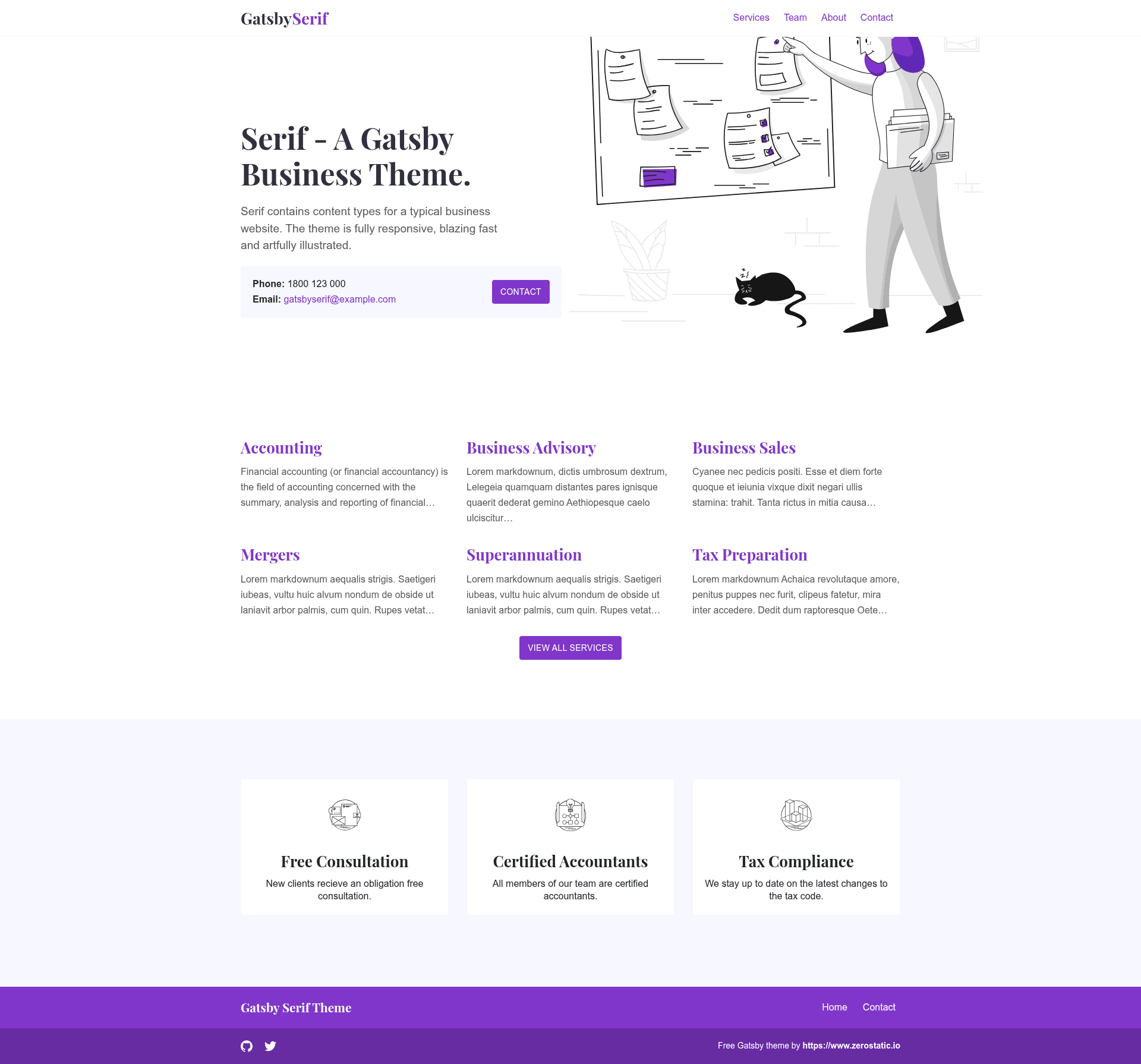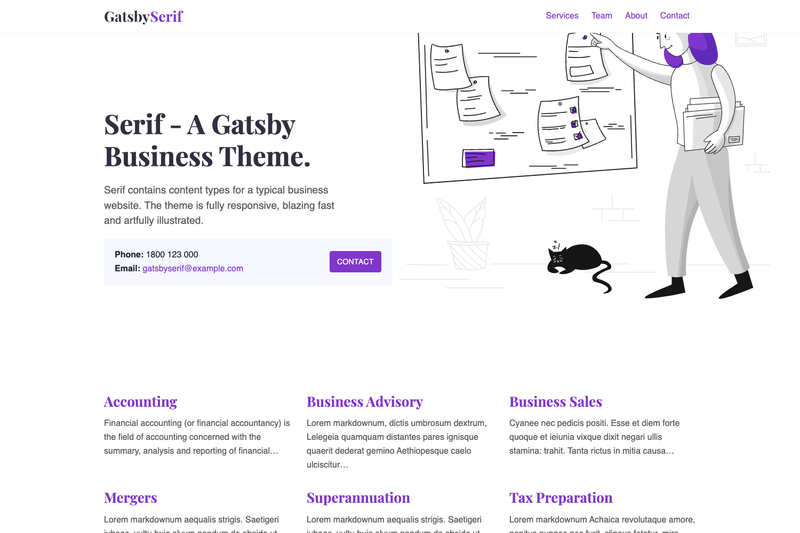
Gatsby Serif Theme is a multi-page small business website theme for Gatsby v3, built by Zerostatic Themes, that turns Markdown content into a full services, team, and testimonial site.
What is Gatsby Serif Theme?
Gatsby Serif Theme is a multi-page website theme for the Gatsby static site generator (v3), created by Zerostatic Themes and released as a GitHub starter with 196 stars. It accepts Markdown content stored in folders such as src/pages/services and src/pages/team and produces static HTML pages styled with SCSS. The theme is built for the archetypical small business website and is fully responsive, using only the Bootstrap 4 grid and media queries for layout. It includes royalty-free illustrations by Icons8, stock images by Unsplash, and feature icons by Noun Project.
Key Features
- Multi-page content types — Services, Team, and Testimonials are authored in Markdown; Features is data-driven, and the theme includes GraphQL examples of querying and filtering
allMarkdownRemark. - Automatic page creation — A GraphQL query in
gatsby-node.jsreads the folderssrc/pages/servicesandsrc/pages/teamand creates pages and templates by content type at build time. - Gatsby v3 with Node 14+ — Requires Node v14 or higher for Gatsby 3 and node-sass 5; styling is written in SCSS and compiled with
gatsby-plugin-sass. - Bootstrap 4 grid — Only the grid and media queries from Bootstrap are included; the rest of the styling is custom SCSS for a lighter footprint.
- Responsive design and menu — The layout adapts to screen sizes and ships with a responsive navigation menu.
- SEO titles and meta — Managed with
gatsby-plugin-react-helmet, letting each page define its own title and meta description. - Example content included — Robust sample services, team members, testimonials, and features are bundled so the theme works immediately after install.
- ESLint — Linting is configured to keep JavaScript consistent.
Who is it for?
Small business owners who need a polished marketing site without designing from scratch, Gatsby developers who want a multi-page starter demonstrating Markdown content models and GraphQL page creation, and freelancers who want a responsive template they can reskin with SCSS for client projects.
What can you do with Gatsby Serif Theme?
- Small businesses: Publish a site with services, team bios, testimonials, and feature highlights by editing Markdown files in the provided folders.
- Gatsby developers: Study the GraphQL queries in
gatsby-node.jsto learn how to generate pages from multiple content types. - Freelance designers: Swap the included Icons8 illustrations and Unsplash photos for client assets to deliver a unique site.
How does Gatsby Serif Theme work?
Install dependencies with npm install, start local development with npm run develop, and create a production build with npm run build. Content is written in Markdown under src/pages/services and src/pages/team; during build, gatsby-node.js queries that Markdown and generates one page per content item, using the corresponding template.
Alternatives
Hugo Serif is the Hugo port of the same small business theme, and Jekyll Serif is the Jekyll port; both follow the same structure but target different static site generators.
FAQ
Is Gatsby Serif Theme free?
The theme is free to download and use under the license terms in the repository, which state that you cannot create ports or new versions without permission and cannot re-distribute or re-sell the theme as your own template.
What are the Node and Gatsby requirements?
Gatsby v3 and node-sass 5 require Node v14 or higher. Run npm install after cloning, then use the provided npm run develop and npm run build commands.
Does the theme include a blog?
No, this is a multi-page business theme, not a blog. It includes Markdown-based content types for services, team, testimonials, and features, along with GraphQL examples for filtering content.
Can I use this theme for client projects?
Yes, you can build client sites with it, but the license prohibits re-distributing or re-selling the theme itself as your own template, and ports or new versions require the author's permission.