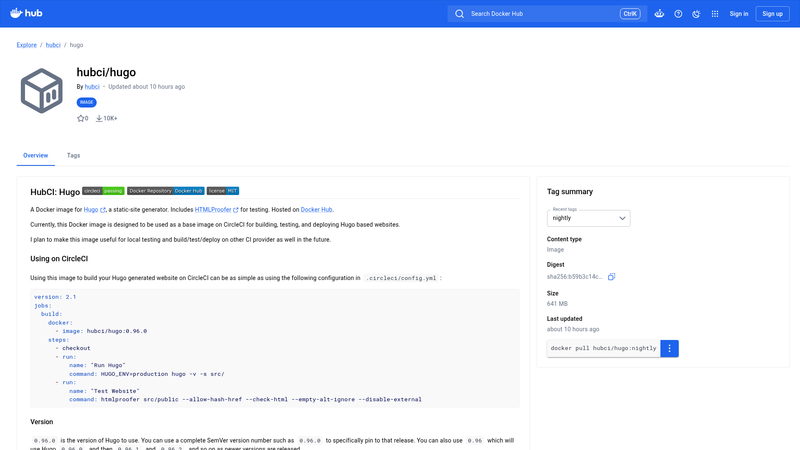
HubCI Hugo is a Docker image that packages the Hugo static-site generator with HTMLProofer, built specifically for running build, test, and deploy jobs for Hugo sites on CircleCI.
What is HubCI Hugo Docker Image?
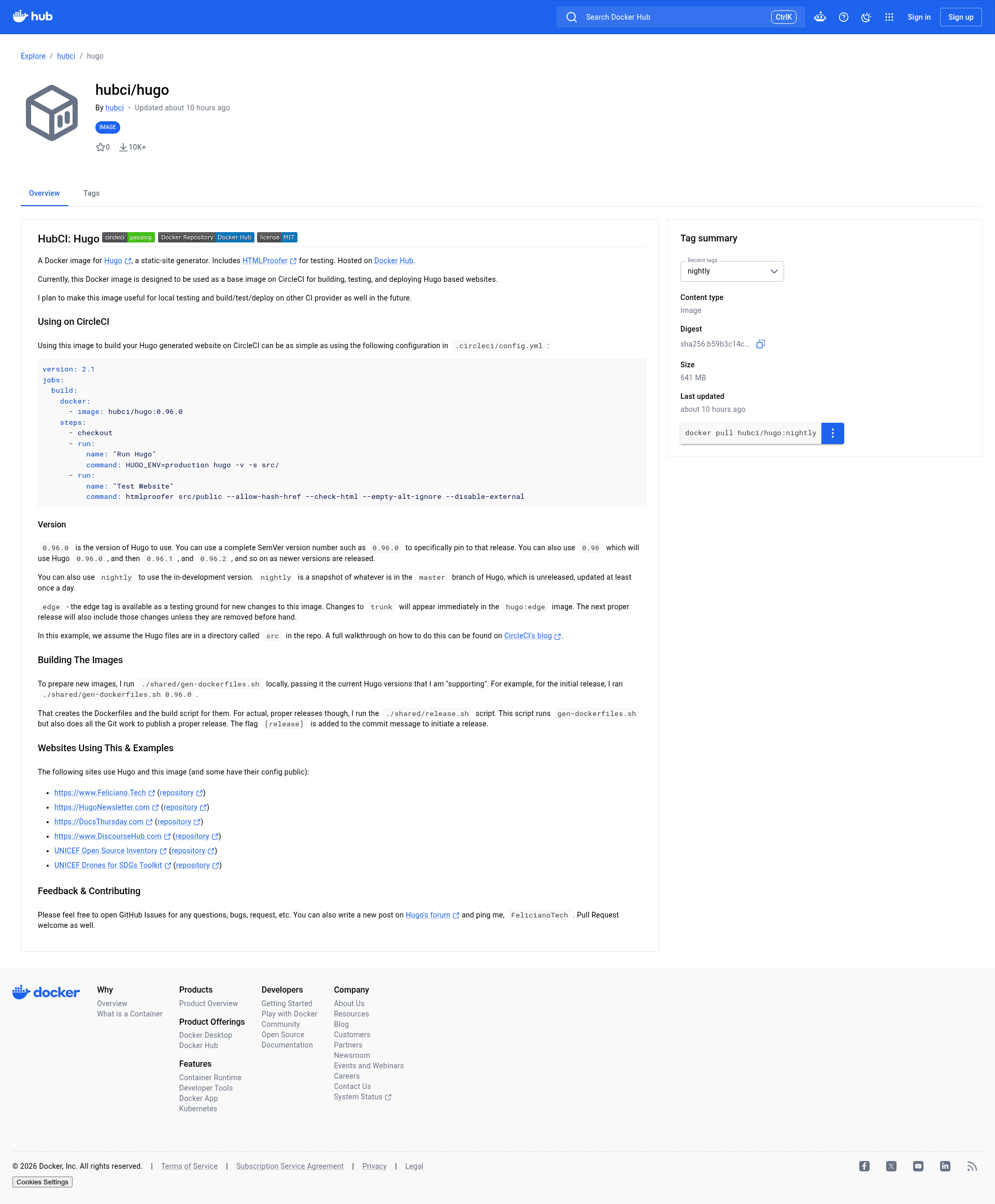
HubCI Hugo is a Docker image hosted on Docker Hub that bundles the Hugo static-site generator with the HTMLProofer testing tool. It takes a Hugo project as input and produces a built static site and validation results, designed to run as a base image inside CircleCI jobs. The image is maintained by FelicianoTech and is available under the MIT license.
Key Features
- Hugo pre-installed — The image includes a specific Hugo version (e.g., 0.96.0), with semver tags like 0.96 that automatically track the latest 0.96.x release.
- HTMLProofer included — HTMLProofer is bundled for automated link and HTML validation, run via the
htmlproofercommand in CI. - Tag flexibility — Use
nightlyfor the unreleased Hugo master branch snapshot, updated at least daily, oredgefor testing the latest image changes. - CircleCI-optimized — The image is built and tested on CircleCI with a
.circleci/config.ymlexample that builds a site fromsrc/and runs HTMLProofer on the output. - Public example sites — Sites like Feliciano.Tech, HugoNewsletter.com, DocsThursday.com, and UNICEF open source projects use this image, some with public configs.
Who is it for?
- Hugo developers using CircleCI: Set up CI to build and test a Hugo site with a single
imageline in their workflow. - Open source maintainers: Use the image for automated testing of Hugo-based documentation or project sites.
- Technical bloggers: Build and deploy a Hugo blog from a repository with a simple config, as shown in the CircleCI blog post linked from the repository.
What can you do with HubCI Hugo Docker Image?
- Continuous integration: Run
hugo -v -s src/inside a CircleCI job to produce the compiled site insrc/public. - Automated link checking: Execute
htmlproofer src/publicwith flags like--allow-hash-hrefand--disable-externalto catch broken links before deployment. - Version pinning: Use tags like
0.96.0for exact Hugo versions or0.96to automatically receive patch updates.
How does HubCI Hugo work?
The image works by providing a base environment with Hugo and HTMLProofer. On CircleCI, you specify the image in .circleci/config.yml, check out your repo, and run Hugo to build the site and HTMLProofer to test it. The maintainers generate Dockerfiles per Hugo version via gen-dockerfiles.sh and publish releases with release.sh.
FAQ
What Hugo versions are available?
The image offers semver tags such as 0.96.0 and 0.96, plus nightly for a daily snapshot of Hugo's master branch and edge for the latest image changes.
Is HubCI Hugo free?
The image is open source under the MIT license and publicly hosted on Docker Hub, so it's free to use.
How do I test my Hugo site with this image?
Add the image to your CircleCI config, then run hugo -v -s src/ to build and htmlproofer on the output directory, as shown in the repository's example.
Where can I find examples of sites using it?
The repository lists Feliciano.Tech, HugoNewsletter.com, DocsThursday.com, and two UNICEF project sites, several with public repositories.