Newsletter
Join the Community
Subscribe to our newsletter for the latest news and updates

A revamped batteries-included version of the Hugo theme Contentful.
A feature-rich, minimal, highly customizable, easy-to-use free Astro blog theme.
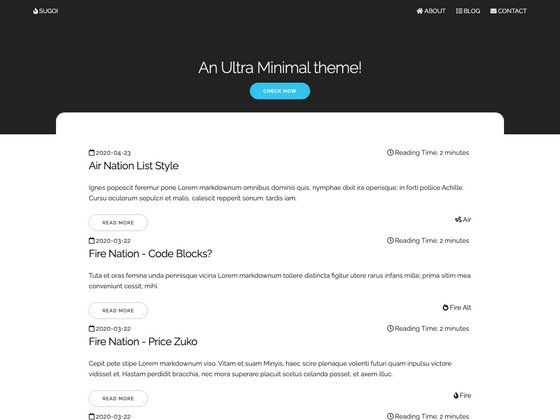
An ultra minimal, JavaScript-free Hugo theme built on Skeleton for personal blogs.
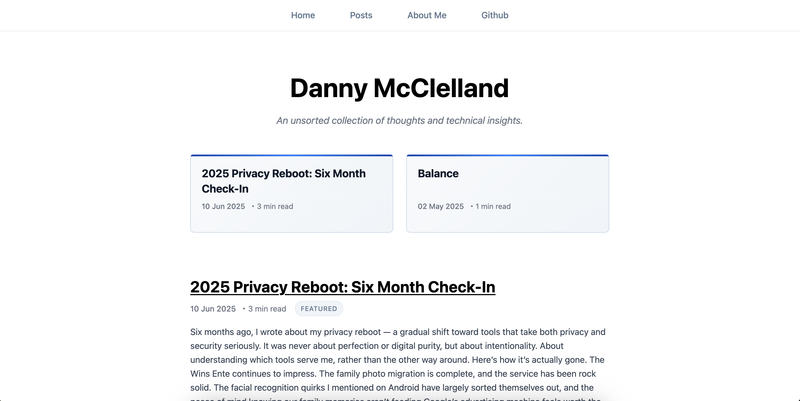
A minimal Hugo blog theme with featured post cards, callout banners, and subtle blue accents.
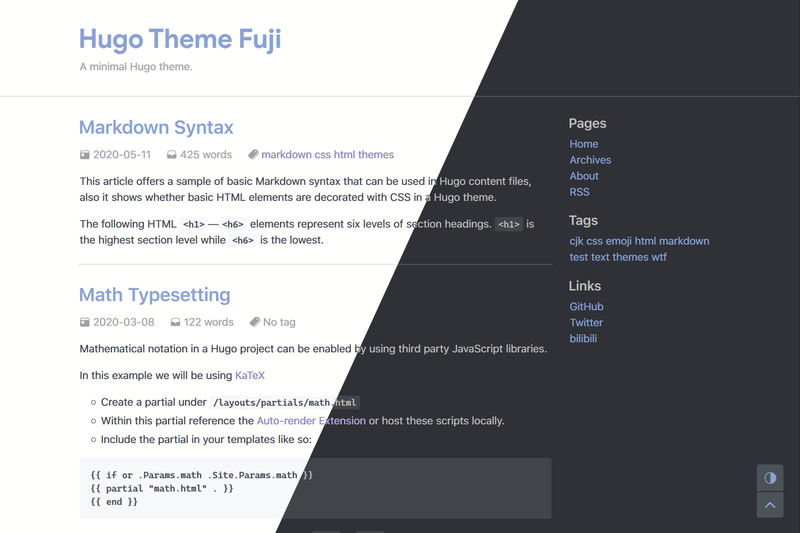
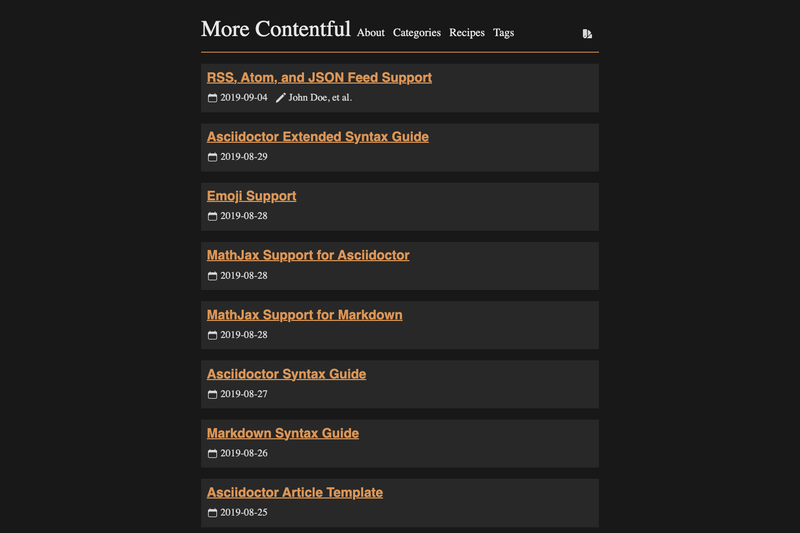
A minimal Hugo theme with full dark mode, GitHub Primer markdown styling, and 11-language i18n support.
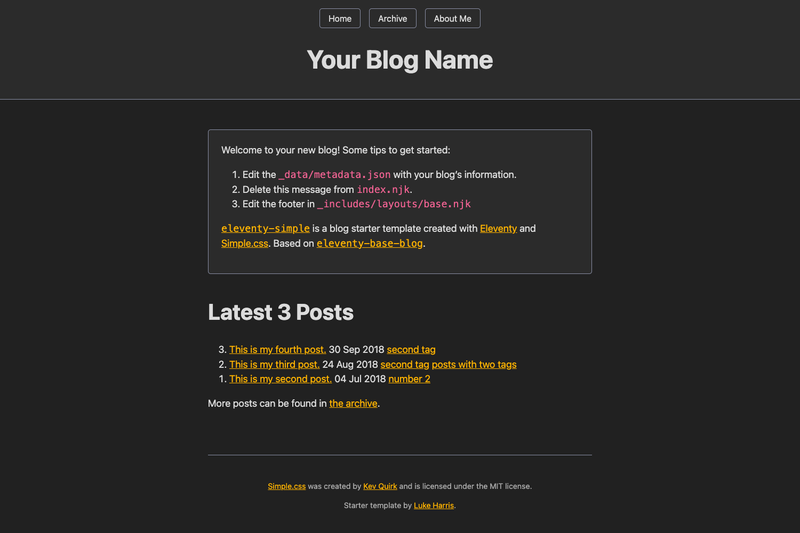
A blog starter template with 11ty and Simple.css.
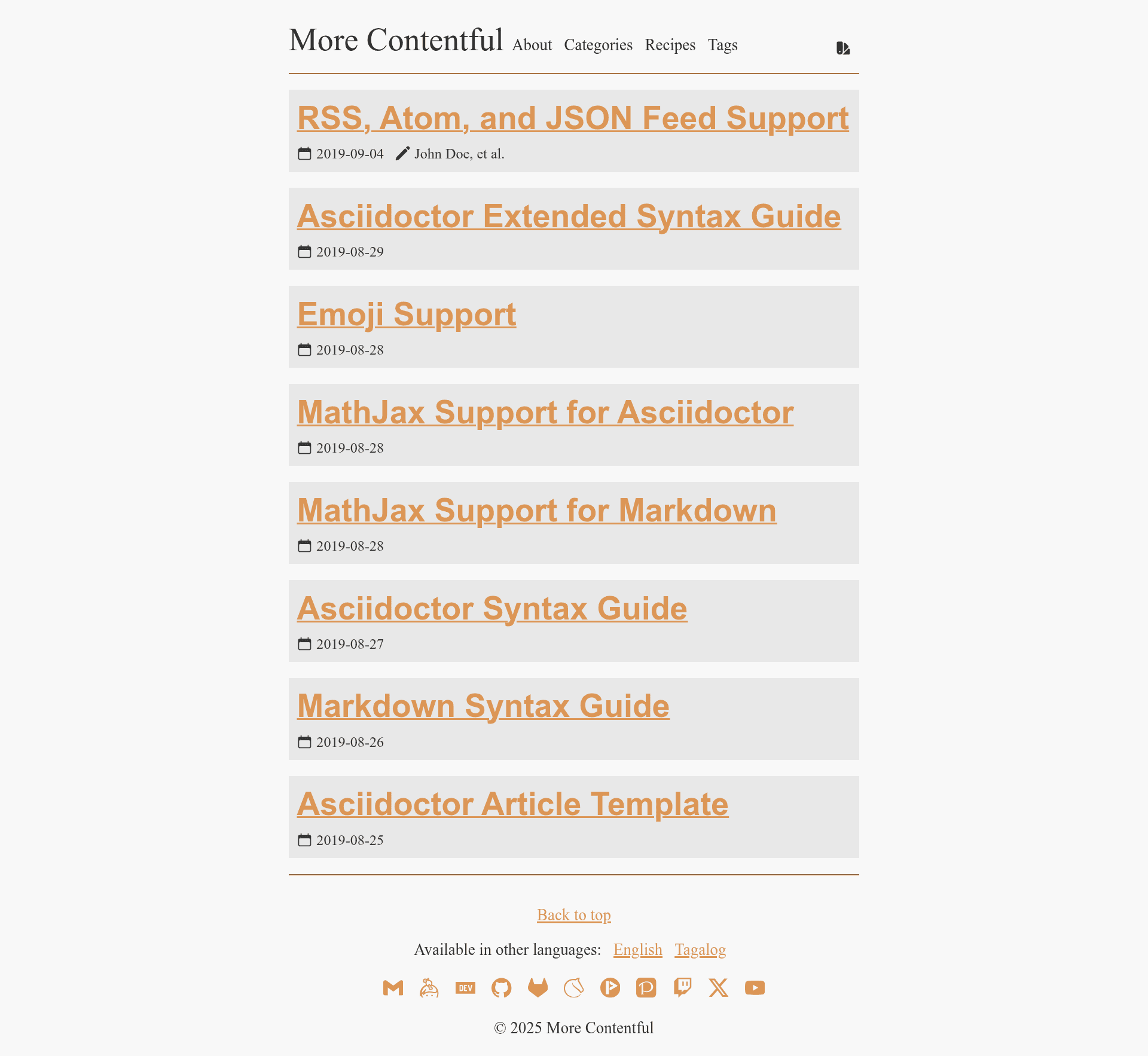
Hugo Theme More Contentful is a revamped, batteries-included Hugo theme for personal blogs, built on top of the original Contentful theme with SCSS styling, Base16 color schemes, and full Simple Icons support.
Hugo Theme More Contentful is a Hugo theme that takes a Hugo site configuration and Markdown content as input and produces a static blog site with a clean reader-mode interface. It requires Hugo extended version v0.95.0 or later because it compiles SCSS. The theme is developed by foo-dogsquared and is available as an open-source GitHub repository.
data/more-contentful/themes/.assets/scss/extend.scss, and template parts can be overridden by copying files like layouts/partials/footer.html.Hugo Theme More Contentful is aimed at personal bloggers running a one-person site, but its multi-author support makes it suitable for small team blogs too. Developers comfortable with Hugo modules will find the setup straightforward, and anyone who values accessibility, low resource usage, and a distraction-free reading experience will appreciate the design choices.
title key is enough to get started).The recommended installation method is through Hugo modules: initialize your project with hugo mod init, add the theme import to your site config, then run hugo mod get to download dependencies. Alternatively, you can clone the theme into the themes/ folder or use it as a Git submodule. After installation, place your favicon at favicon.png, write content as Markdown, and configure optional parameters like params.toc for a table of contents.
Place a Base16 color scheme data file in data/more-contentful/themes/. The theme will apply it to the stylesheet automatically. You can also name files _light.yaml, _light.toml, or _light.json and similarly for _dark to set separate color schemes for light and dark mode.
Use Hugo's build options: set _build.list to never in the content's frontmatter. This is supported from Hugo v0.65.0 onward.
Hugo supports Asciidoctor as an external helper, but this theme is not styled for Asciidoctor output. You'll need to add custom CSS for Asciidoctor elements yourself, as the theme's layout and styles are designed for Markdown documents.
Create a file at assets/scss/extend.scss. It will be appended to the main stylesheet, so you can use CSS or SCSS features to extend or override the theme's look with the Base16 custom properties already defined.