Newsletter
Join the Community
Subscribe to our newsletter for the latest news and updates

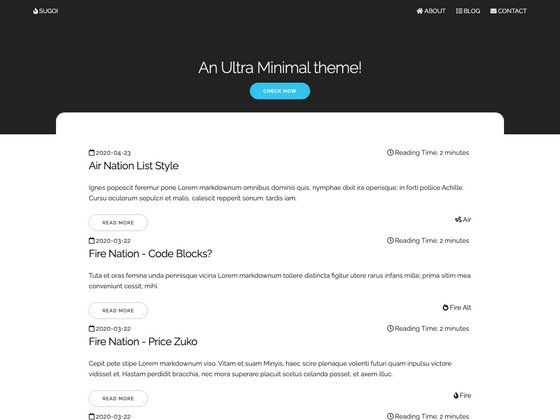
An ultra minimal, JavaScript-free Hugo theme built on Skeleton for personal blogs.
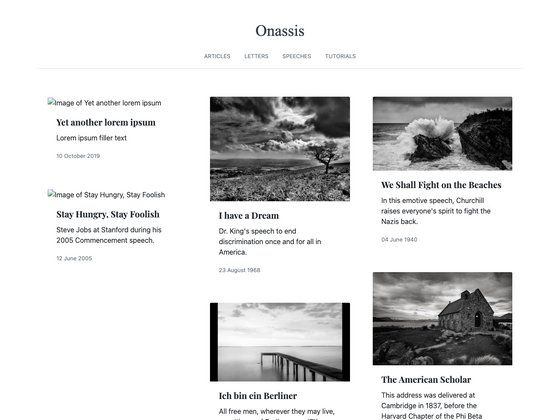
A free, open-source Jekyll theme for newspaper-style websites, built by Alvaro Duran.
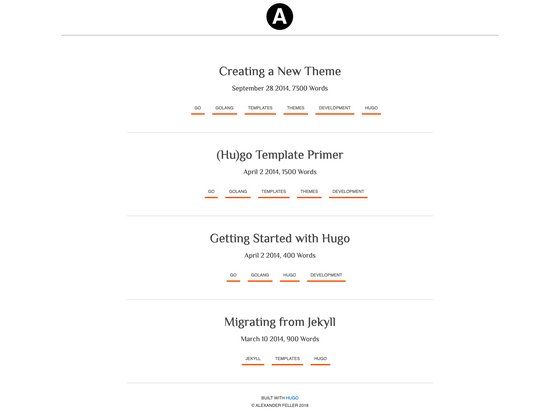
Minimalistic Hugo theme for static sites with a clean layout, perfect for personal blogs and portfolios.
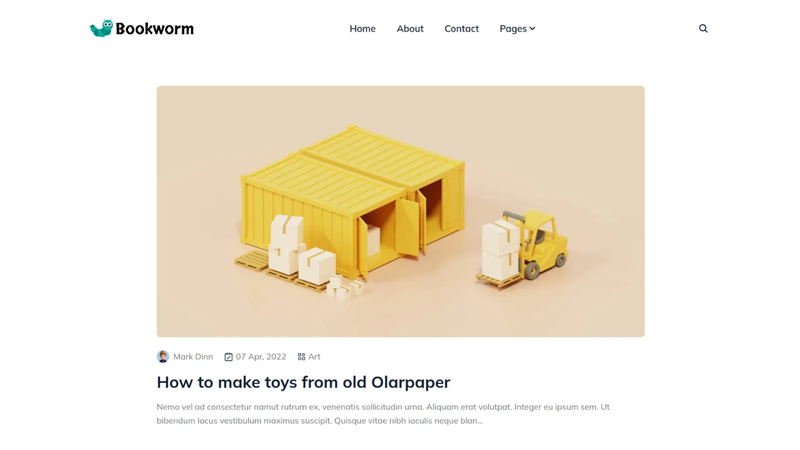
A feature-rich, minimal, highly customizable, easy-to-use free Astro blog theme.
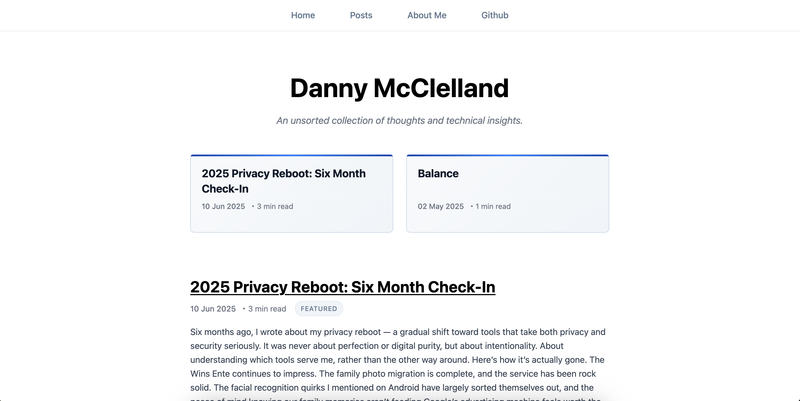
A minimal Hugo blog theme with featured post cards, callout banners, and subtle blue accents.
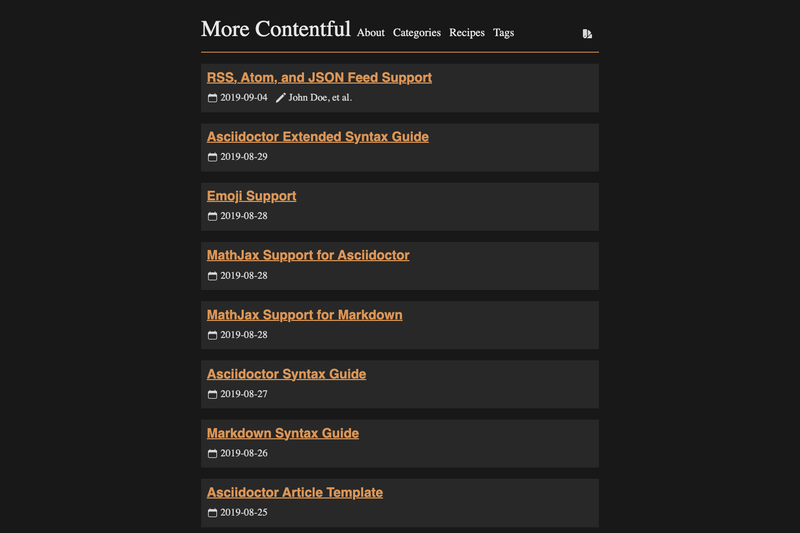
A revamped batteries-included version of the Hugo theme Contentful.
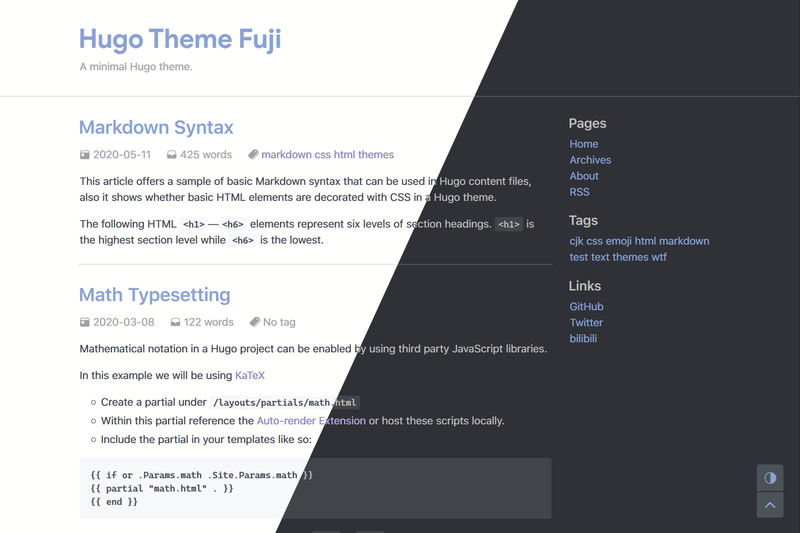
A minimal Hugo theme with full dark mode, GitHub Primer markdown styling, and 11-language i18n support.
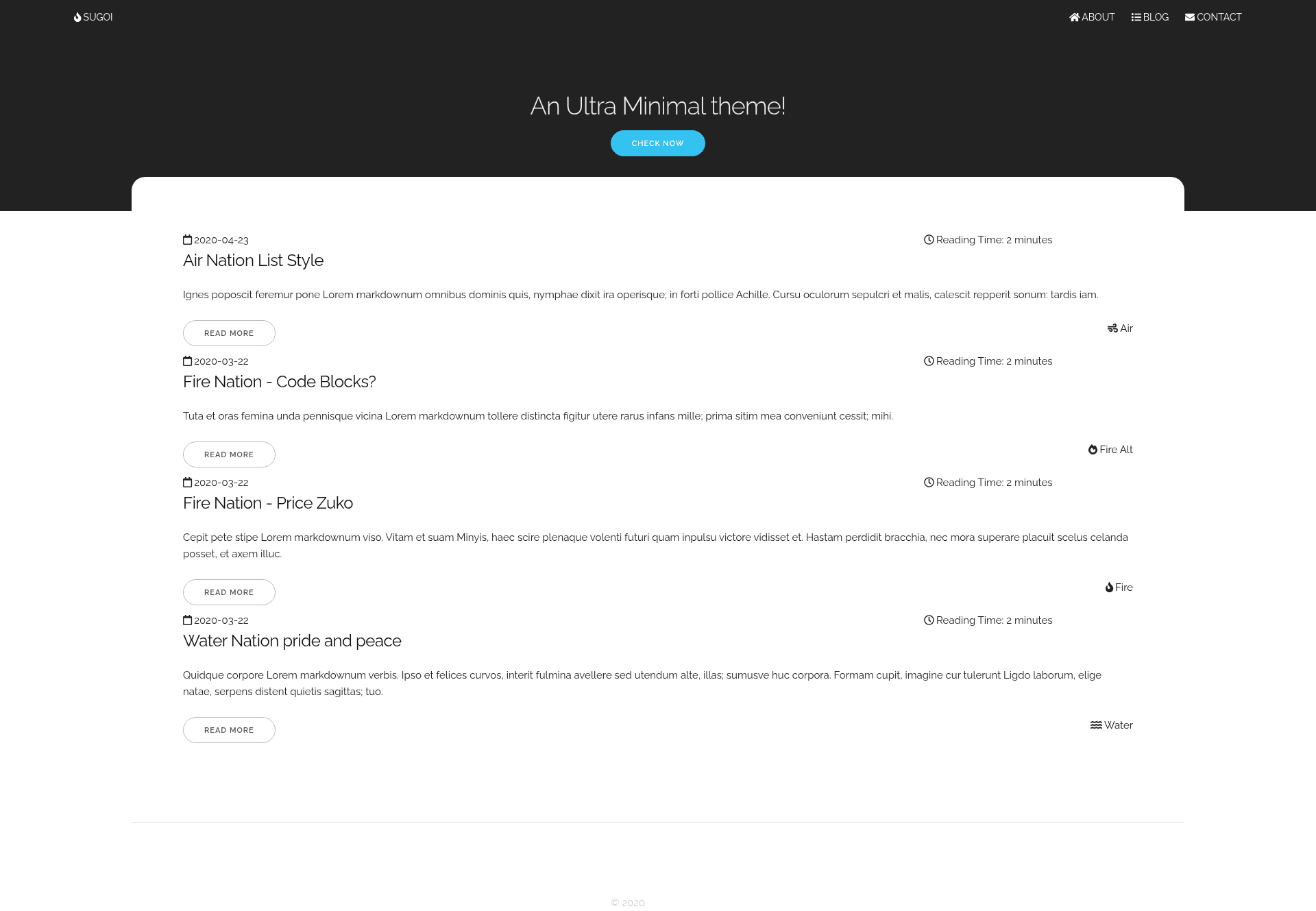
Sugoi is an ultra minimal, JavaScript-free Hugo theme built on the Skeleton CSS framework, designed for personal blogs and as a learning starting point for Hugo theme design. This theme renders a clean landing page with latest posts, single article pages, a contact page, and a 404 page from standard Hugo markdown content. It is distributed under the MIT license and maintained by aanupam23, with a live demo hosted at gosugoi.onrender.com.
Sugoi is a bare-bones Hugo theme that pairs the Skeleton CSS boilerplate with Hugo templates to produce a lightweight, script-free website. It takes Hugo content files as input and outputs a fully static site featuring a blog index, individual posts, a contact page, and a custom 404 page. The theme intentionally contains no JavaScript, relying on CSS toggles for navigation, and includes a custom.css file for user modifications.
To use Sugoi, navigate to your Hugo site directory and run git submodule add https://github.com/aanupam23/hugo-sugoi.git themes/hugo-sugoi. Then configure your site to use the hugo-sugoi theme. After adding markdown content, Hugo builds a static site where Sugoi's templates render the Skeleton-based pages with no JavaScript.
Yes, Sugoi is open source under the MIT license, so you can freely use, modify, and distribute it for personal or commercial projects.
Yes, the theme is fully functional without JavaScript. The hamburger menu uses a CSS toggle, and all other interactive features rely on HTML and CSS.
The theme includes templates for a blog, single page, contact page, and 404 page, plus the landing page that shows the latest blog posts.
Yes, Sugoi supports Hugo's internal templates for both services. Simply add the appropriate configuration values to your site's config file and the theme will render the required code.
Install it as a git submodule in your Hugo site's themes directory with the command shown in the README, then set the theme in your site configuration.