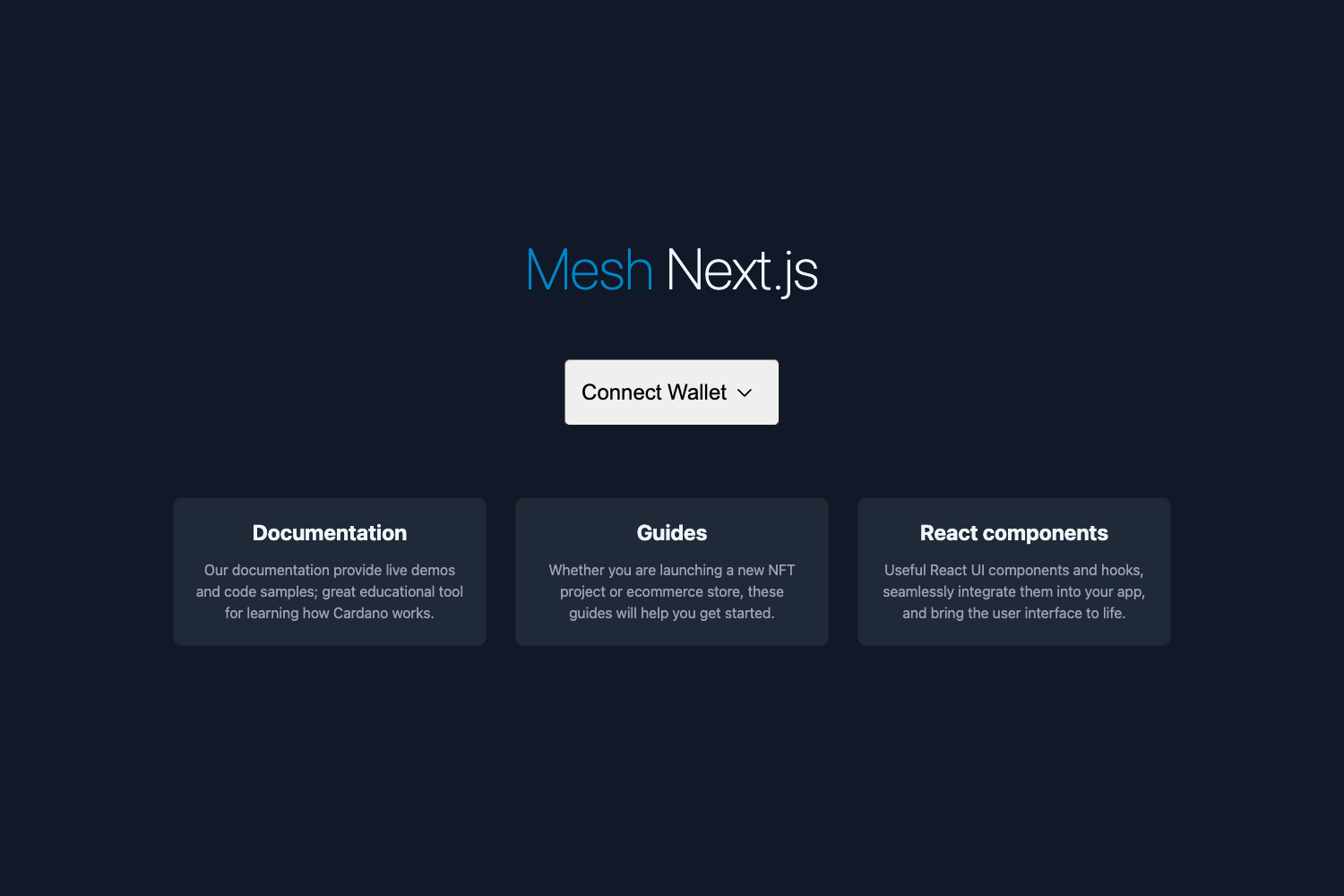

Template details
Kaminari
Next.js project starter configured with Tailwind CSS and shadcn-ui, featuring TypeScript, ESLint, Prettier, and one-click Vercel deploy.
About this template
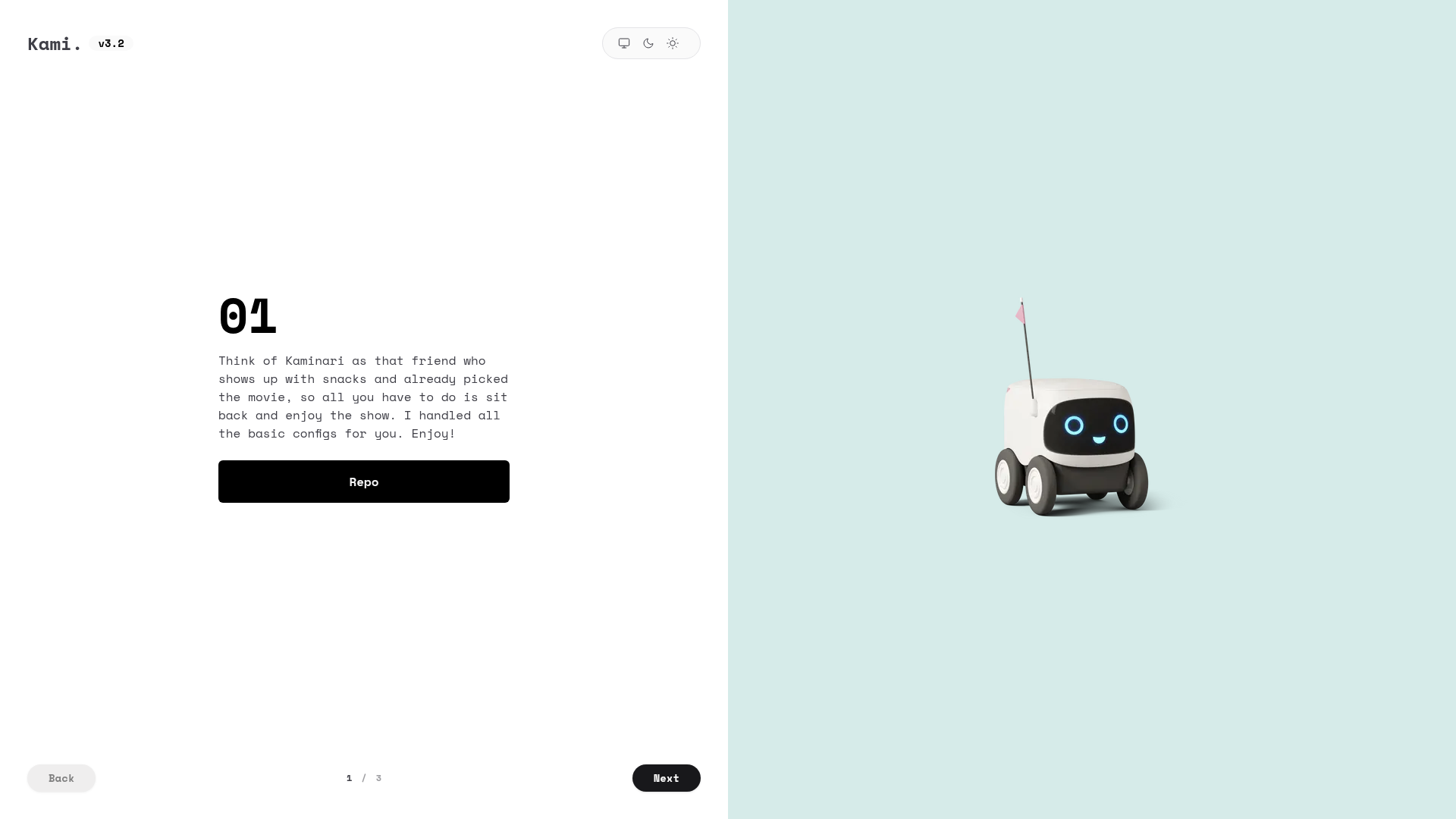
Kaminari is a free, MIT-licensed Next.js boilerplate starter template that pre-configures Tailwind CSS 4, shadcn-ui, TypeScript, ESLint, Prettier, and absolute imports, and ships with a one-click Vercel deployment button.
What is Kaminari?
Kaminari is a Next.js 15.x project starter created by developer Huncho (also known as TheAscendant) that reduces the initial setup work for building a modern React application. It takes a new Next.js project and layers on Tailwind CSS 4 for utility-first styling, shadcn-ui for component building blocks, TypeScript for static type checking, ESLint for code linting, Prettier for formatting, and an @-prefix absolute import scheme. The template runs as a standard Next.js app, starting with npm install or yarn, then yarn dev serving at http://localhost:3000.
Key Features
- Next.js 15.x — Built on the latest Next.js version with App Router routing and React server components.
- Tailwind CSS 4 — Tailwind's newest major version is included and configured for rapid utility-class styling.
- shadcn-ui — The shadcn-ui component library is wired in, giving access to accessible, Radix UI-based components that you copy into your project.
- TypeScript — The entire starter is TypeScript-based, enabling type safety across components and pages.
- ESLint — A pluggable linter is pre-configured to catch common JavaScript issues during development.
- Prettier — Opinionated code formatting keeps the codebase consistent without configuration debates.
- Absolute imports — Use the
@prefix to import folders and files without deep relative paths. - Quick deploy — The README embeds a Vercel Deploy button that clones the repository, sets up the project, and provides a demo URL and demo image.
- Jest planned — Jest, the JavaScript testing framework, is listed as a feature coming soon (not yet available in the current release).
Who is it for?
Kaminari is aimed at developers who want to start a Next.js project without repeating the same setup steps. New React developers can scaffold the template with npx create-next-app my-app -e https://github.com/lucky-chap/kaminari and examine a clean, professional configuration. Freelancers and agencies can clone the repo to build client sites quickly with a known-good stack of Tailwind and shadcn-ui. Open-source contributors can fork the repository under the MIT license, and the README explicitly welcomes pull requests.
What can you do with Kaminari?
- Scaffold a new app instantly: Use the create-next-app example flag to generate a local Kaminari project with a single command.
- Deploy to Vercel without leaving the README: Click the Deploy with Vercel button, which passes repository, demo-title, demo-description, demo-url, and demo-image parameters to prefill the deployment flow.
- Build a marketing site or landing page: With Tailwind and shadcn-ui ready, you can add prebuilt components like navigation, cards, and forms immediately.
How does Kaminari work?
The repository is a complete Next.js project. You either clone it or run npx create-next-app my-app -e https://github.com/lucky-chap/kaminari to create a local copy. After installing dependencies with npm install or yarn, you launch the development server via yarn dev and load http://localhost:3000. For deployment, the Vercel button triggers a clone-and-deploy flow that connects the GitHub repository to your Vercel account.
Pricing
Kaminari is free. The project is published under the MIT License, which permits personal and commercial use, modification, and redistribution. There are no paid tiers or licenses mentioned in the repository.
FAQ
Is Kaminari free to use?
Yes. The MIT License allows free use, modification, and distribution, including for commercial projects. The README displays a "PRs welcome" badge and invites contributions.
Which Next.js version does Kaminari use?
The README states Next.js 15.x. It also lists Tailwind CSS 4 and shadcn-ui as integral parts of the stack.
Does Kaminari include a testing framework?
Jest is mentioned as a feature that is coming soon, but it is not currently part of the template. ESLint and Prettier are included today for linting and formatting.
Can I deploy Kaminari to Vercel?
Yes. The README includes a Vercel Deploy button that streamlines cloning, configuring, and publishing the starter. You can also deploy manually by connecting the GitHub repo to Vercel.