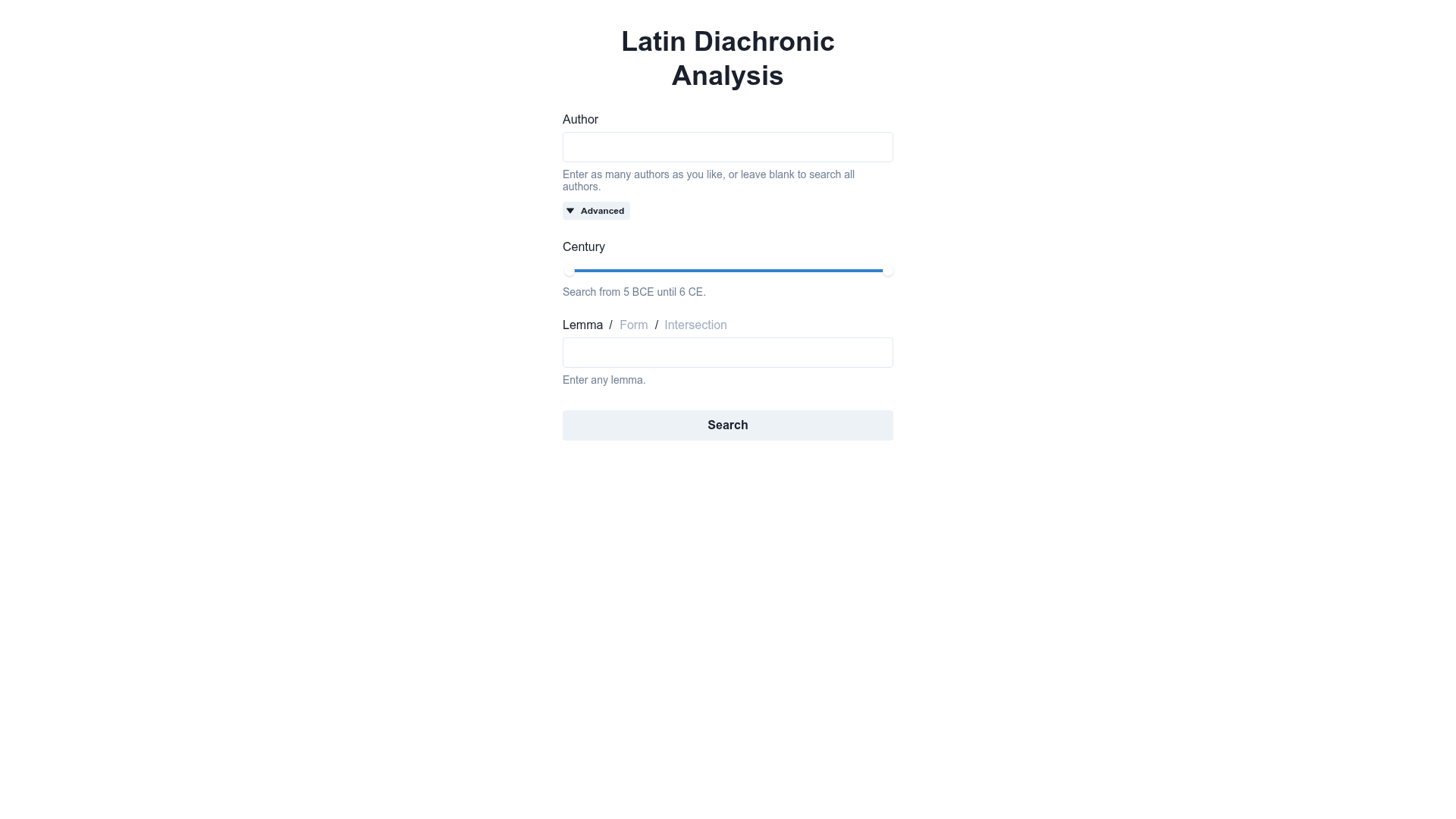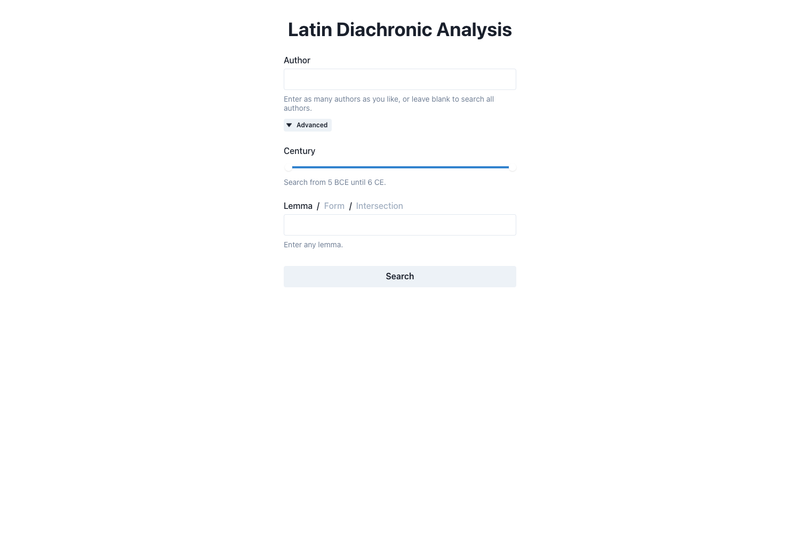
Latin Diachronic Frontend is a Gatsby and React web application that serves as the browser-based interface for the Latin Diachronic Database, a Digital Humanities toolkit focused on quantitative computational analysis of Latin language and ancient intertextuality. Developed by Jack Leslie in conjunction with the toolkit's creators Tommaso Spinelli and Giacomo Fenzi, the latest build of the master branch is automatically deployed to latin.netlify.com via Netlify.
What is the Latin Diachronic Frontend?
The Latin Diachronic Frontend is an open-source frontend for the LatinDiachronicDatabase, a toolkit for quantitative computational analysis of the Latin language and digital study of ancient intertextuality. It takes queries from users and presents results from the underlying database through a web interface, making the toolkit accessible without needing to interact with the raw backend. The application is built on Gatsby, a static site generator, with React for interactive UI, and uses Chakra UI for component styling. Authors include Jack Leslie as developer, Giacomo Fenzi as developer, and Tommaso Spinelli as inventor/Latinist.
What makes the Latin Diachronic Frontend stand out?
- Gatsby and React — Renders as a static site with Gatsby while React provides the interactive querying experience, balancing speed and functionality.
- Chakra UI — Uses Chakra UI's accessible component library for a clean, responsive interface that works across devices.
- GraphQL and Apollo — Connects to the Latin Diachronic Database via GraphQL using Apollo Client, allowing efficient data fetching.
- Netlify deployment — The master branch is continuously deployed to latin.netlify.com, and local development leverages Netlify Dev for parity with production.
- Digital Humanities purpose — Built specifically for the Latin Diachronic Database, supporting research on Latin language change and intertextuality.
- Collaborative origination — Developed at St. Andrews University by a Ph.D. candidate in Classics and a Computer Science/Mathematics student, giving it both philological and technical grounding.
Who is the Latin Diachronic Frontend for?
The frontend is aimed at researchers and students in Digital Humanities and Classics who want to use computational tools to study Latin. A Latinist can query the database for quantitative evidence about Latin usage, while a digital humanist can build on the toolkit to test intertextuality hypotheses. The project also serves as an example of a Humanities-focused web application, valuable for developers interested in applying modern frontend stacks to scholarly data.
What can you do with the Latin Diachronic Frontend?
- Classical scholars: Explore the Latin language computationally by submitting queries through the web interface and reviewing quantitative results from the database.
- Intertextuality researchers: Investigate potential ancient textual connections using the same dataset and tools that underpin the Latin Diachronic Database.
- Frontend developers: Study or contribute to an open-source Gatsby implementation that integrates Chakra UI, GraphQL, and Apollo in a scholarly context.
How does the Latin Diachronic Frontend run?
The latest build of the master branch is deployed automatically on Netlify and can be accessed at latin.netlify.com. For development, the project supports Netlify Dev, which replicates the production environment locally. The frontend communicates with the Latin Diachronic Database through GraphQL queries, and the source code is available on the original repository for the toolkit.
FAQ
Is the Latin Diachronic Frontend free to use?
The project is open source and hosted publicly on GitHub, and the live site is free to access at latin.netlify.com. No pricing information is mentioned in the repository readme.
What stack does the Latin Diachronic Frontend use?
It is a Gatsby-based React application styled with Chakra UI. Data is fetched using Apollo Client and GraphQL. The build is deployed via Netlify.
Who built the Latin Diachronic Frontend?
Jack Leslie developed the frontend in conjunction with the original authors of the Latin Diachronic Database, Tommaso Spinelli (inventor/Latinist) and Giacomo Fenzi (developer), both affiliated with St. Andrews University.
Where is the live demo?
The live application is deployed at latin.netlify.com from the master branch, with a deploy status badge visible in the repository readme.