Newsletter
Join the Community
Subscribe to our newsletter for the latest news and updates

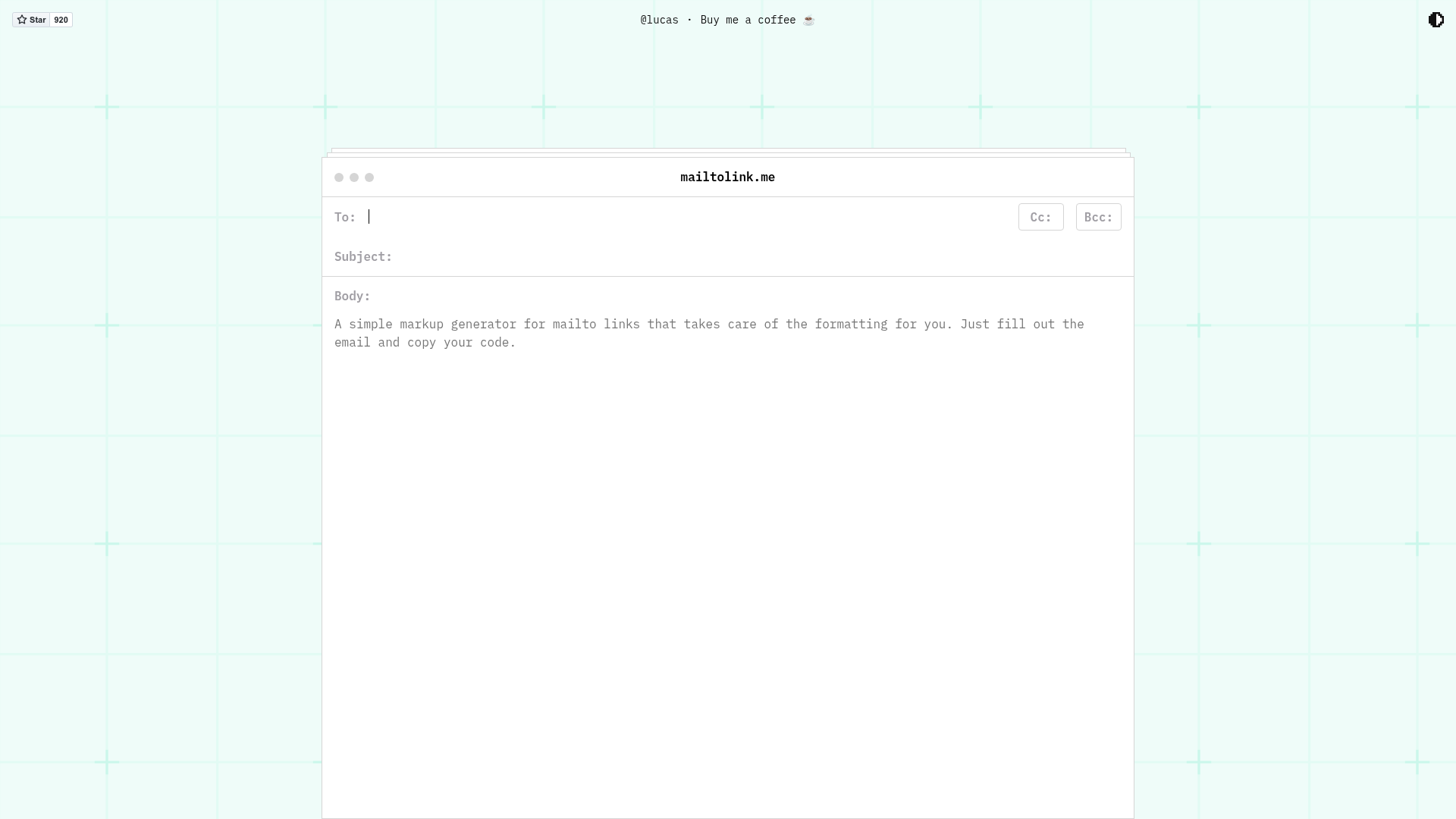
A quick and easy way to generate markup for mailto links without having to worry about the annoying formatting.
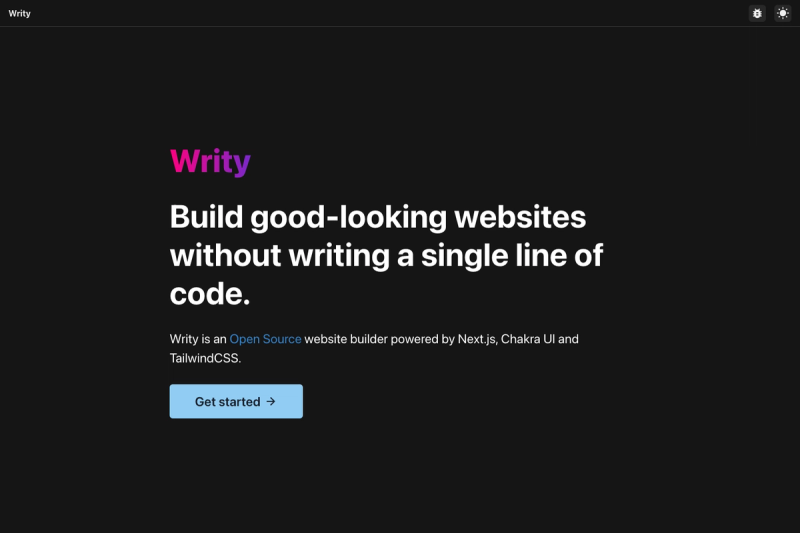
Generate beautiful HTML files without writing any code. Still in beta!
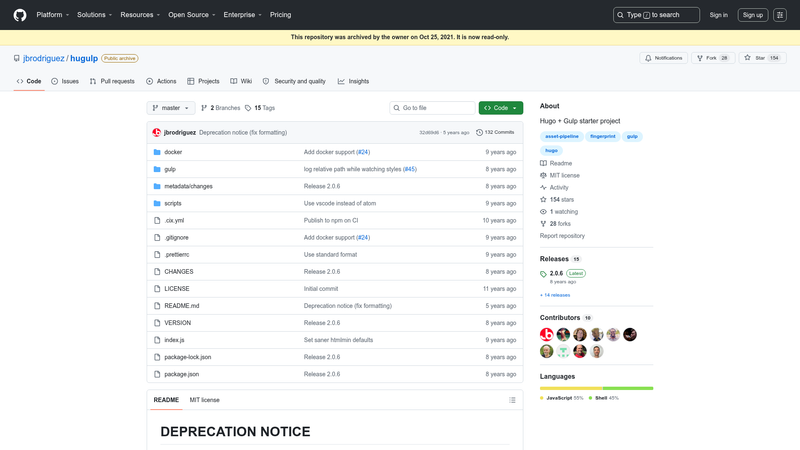
A Gulp-based asset pipeline for Hugo that minifies, concatenates, fingerprints, and optimizes CSS, JS, HTML, and images.
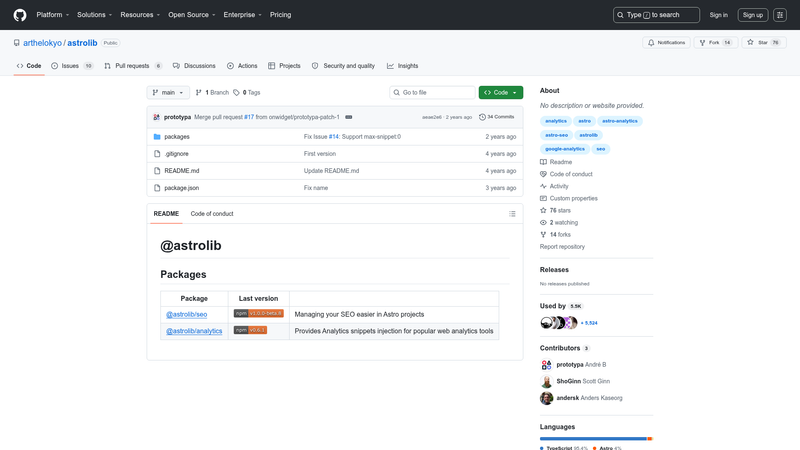
A collection of Astro modules for SEO management and analytics snippet injection.
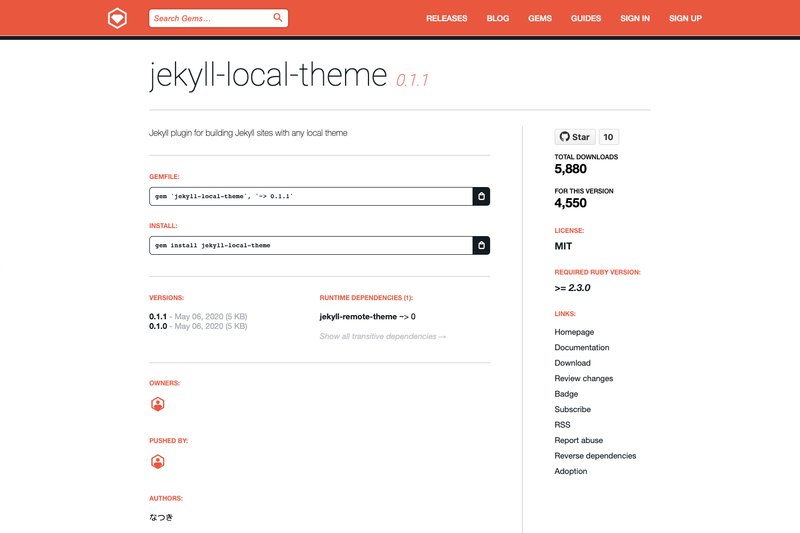
Jekyll plugin for building Jekyll sites with any local theme stored in a _themes directory.
mailtolink.me is a free, open-source web tool that generates correctly formatted HTML anchor code for mailto links, removing the need to hand-encode email details in URLs.
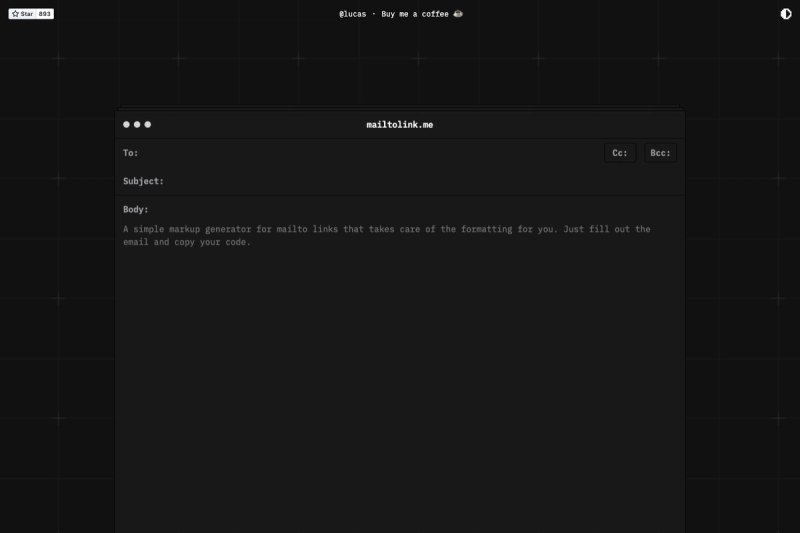
mailtolink.me is a web-based generator that turns email details into ready-to-paste HTML hyperlinks. The user provides the recipient address, subject line, and message body through a form, and the tool outputs the corresponding mailto anchor element with proper URL encoding. The site is built with the Eleventy static site generator, uses SCSS for styling, and is bundled with webpack. It is developed by Michael Mckeever and published as an open-source project on GitHub, where it has received 920 stars.
npm install, then run npm run dev to launch a local development server at localhost:4000.mailtolink.me is built for anyone who writes HTML email links on a regular basis. Front-end developers can generate valid mailto links without memorizing encoding rules. Email marketers can create pre-filled email links for campaigns, doubling as a quick way to test subject lines. Open-source contributors can also study the repository as a compact example of an Eleventy + webpack + SCSS workflow.
npm install, and starting the development server with npm run dev.The public web app at mailtolink.me presents a form for email fields and displays the generated markup for copying. For developers, the repository includes a standard npm workflow: npm install loads dependencies, npm run dev starts a live-reloading server at localhost:4000, and npm run build produces a production build.
Yes, mailtolink.me is open source and available on GitHub. The repository contains no mention of pricing or paid plans, and the web service is publicly accessible without registration.
It generates HTML anchor tags that point to an email address, including any subject and body parameters. The output can be pasted directly into a web page and will open the user's default email client when clicked.
Clone the repository from GitHub, run npm install to install dependencies, then npm run dev to start the development server at localhost:4000. For a production build, run npm run build to compile the site.
The README describes a web interface and npm scripts only. No command-line interface or API is documented in the repository.