Newsletter
Join the Community
Subscribe to our newsletter for the latest news and updates

Markdown-driven directory template built with Astro and Tailwind CSS, optimized for SEO with support for multiple data sources.

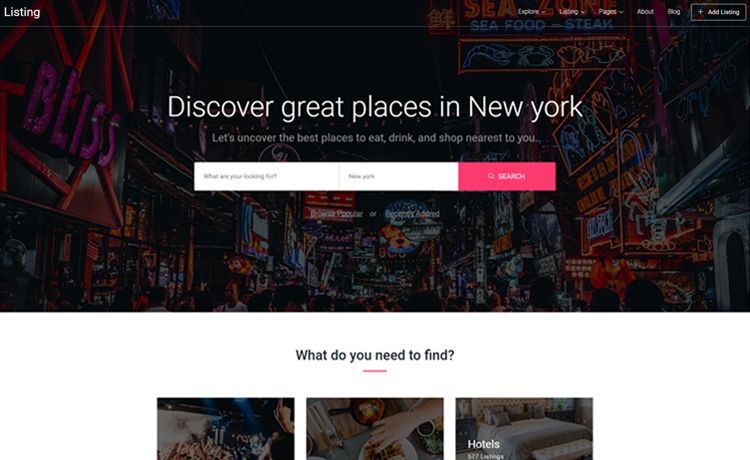
Free Bootstrap 4 HTML5 multi-page job board website template with search filters, sticky nav, and gradient styling.
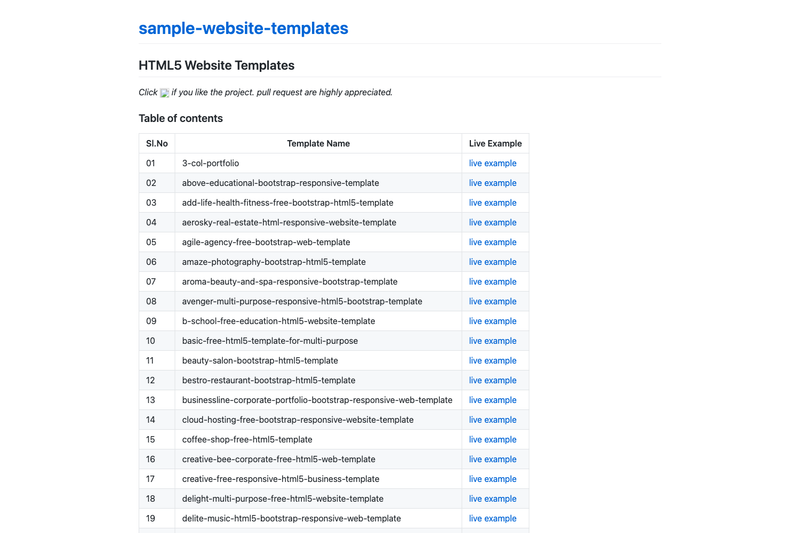
A GitHub collection of 160+ free HTML5 and Bootstrap website templates with live examples across business, portfolio, admin, and coming-soon categories.
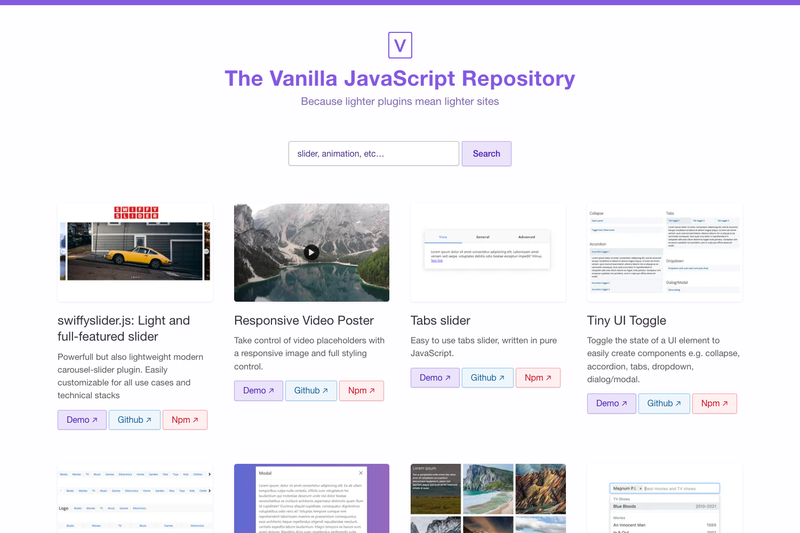
Handpicked directory of vanilla JavaScript plugins, built with Eleventy and open sourced under the Anti-Fascist MIT License.
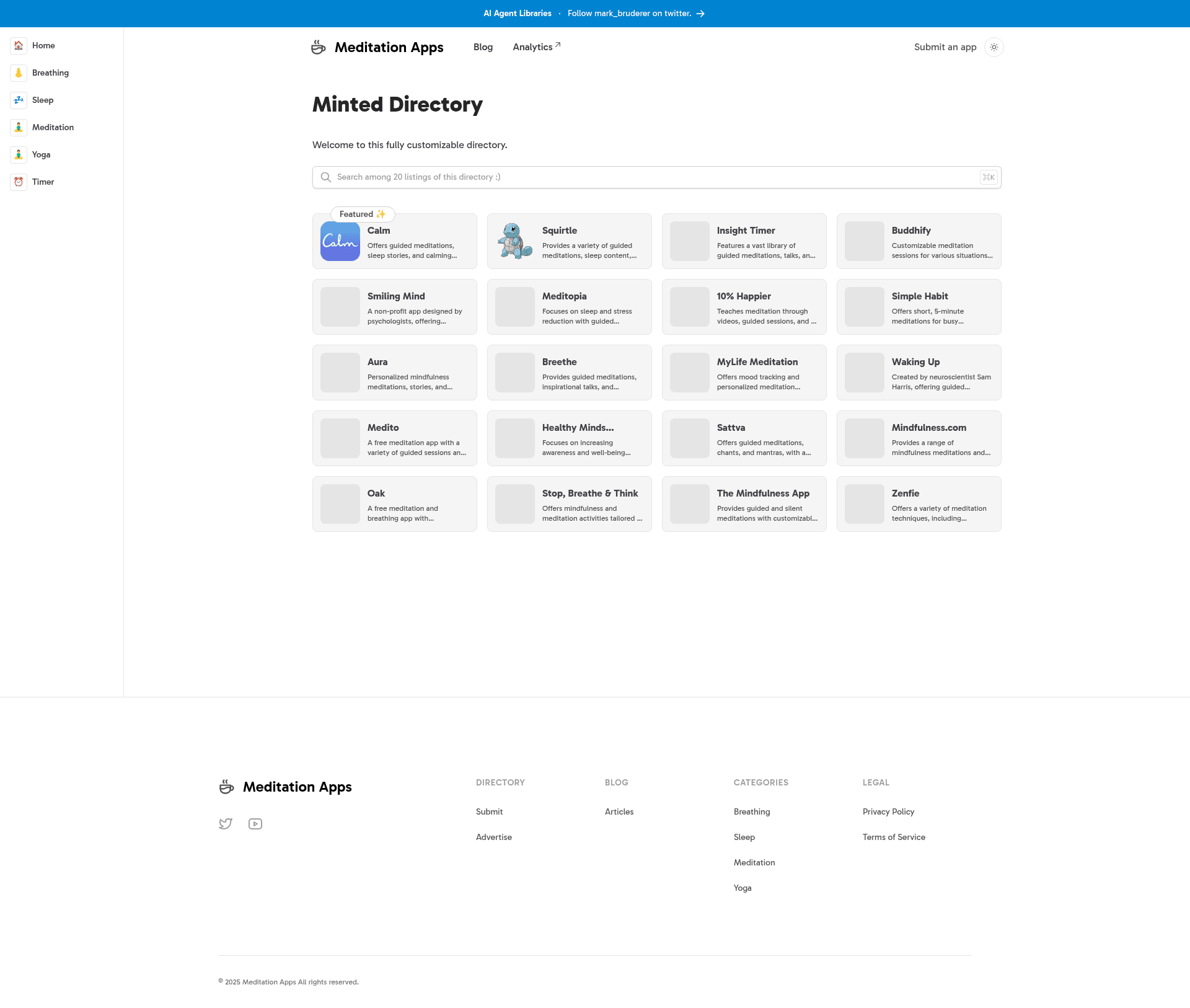
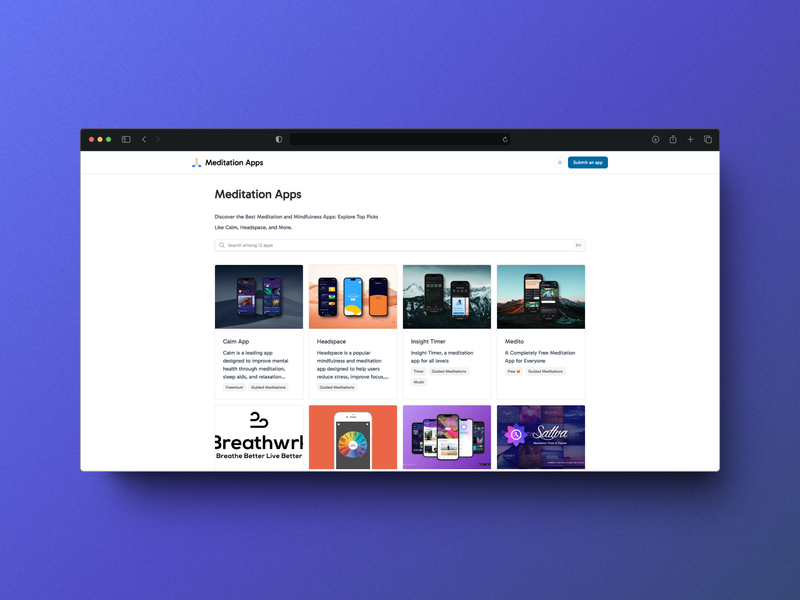
Minted Directory Astro is a directory template built on the Astro framework with Tailwind CSS, designed to create static, SEO-optimized directory websites from markdown, JSON, CSV, or external data sources.
Minted Directory Astro is a markdown-driven directory template that runs on the Astro framework and uses Tailwind CSS for styling. It takes listings as input from local files or connected services and outputs a static website with pre-rendered HTML. The template is maintained on GitHub by the account masterkram under the name "minted-directory-astro".
The template uses a src/data/directory folder where markdown files become listings automatically, and it also supports JSON and CSV files. External sources like Google Sheets, Notion, and Airtable can be wired in via a settings.toml configuration. The output is optimized for SEO and performance since it ships as static files.
The template includes a set of features that are useful for launching a directory site quickly.
src/data/directory, a single directory.json array, a directory.csv table, or by connecting Google Sheets, Notion, or Airtable.src/styles/global.css, and two pre-made themes, spearmint and peppermint, are included. Fonts can be swapped via Fontsource imports.This template is suited for developers and creators who want to launch a directory website without building one from scratch. Indie hackers can spin up a niche product or tool directory; web developers get a clean Astro and Tailwind codebase to customize; content teams can manage listings collaboratively through Google Sheets; and marketers can deploy an SEO-focused listing site quickly. Each user role benefits from the static output and the ability to update listings by editing markdown files or external tables.
To get started, you clone the repository and install dependencies with pnpm install, then run pnpm dev for local development. Listings are added as markdown files in src/data/directory or through the other supported data formats. When you're ready to publish, run pnpm run build to generate the static site, and deploy it anywhere that serves static HTML. Because the site is static, listing changes only appear after a rebuild and redeploy.
Minted Directory Astro supports markdown files, JSON, CSV, Google Sheets, Notion, and Airtable. For markdown, files placed in src/data/directory are loaded automatically; JSON and CSV use a single file named directory.json or directory.csv; for Google Sheets you must make the sheet public and set source=sheets along with the sheet ID in settings.toml.
Add a markdown file to the src/data/directory folder with the required frontmatter properties, such as title and description. The file is picked up automatically, and the listing appears after the site is rebuilt and deployed. Alternatively, you can add rows to a CSV or objects to the JSON file.
Yes, you can change the color scheme by editing the --color-primary-x00 and --color-gray-x00 variables in src/styles/global.css. The template also includes two pre-made themes, spearmint and peppermint, and you can replace the font by installing a Fontsource package and importing it in BaseLayout.astro while updating the --font-sans variable.
The template is optimized for SEO with programmatic SEO out of the box. Because it builds to static HTML, CSS, and JS, the site loads fast and search engines can easily index the pages. The README recommends deploying the built static site for the best SEO performance.