Newsletter
Join the Community
Subscribe to our newsletter for the latest news and updates

Next.js template with colocation-first folder structure where pages, components, and logic live together by feature. TypeScript, Tailwind CSS, Shadcn UI.

A Hugo theme to create WebSlides.js presentations using Markdown.

Complete boilerplate with Astro, React and TypeScript for scalable systems with Atomic Design and testing.

A gourmet Next.js boilerplate with TypeScript, SCSS, Plop.js, Jest+React Testing Library, ESLint, Prettier, Husky, React Icons, and Chakra UI.
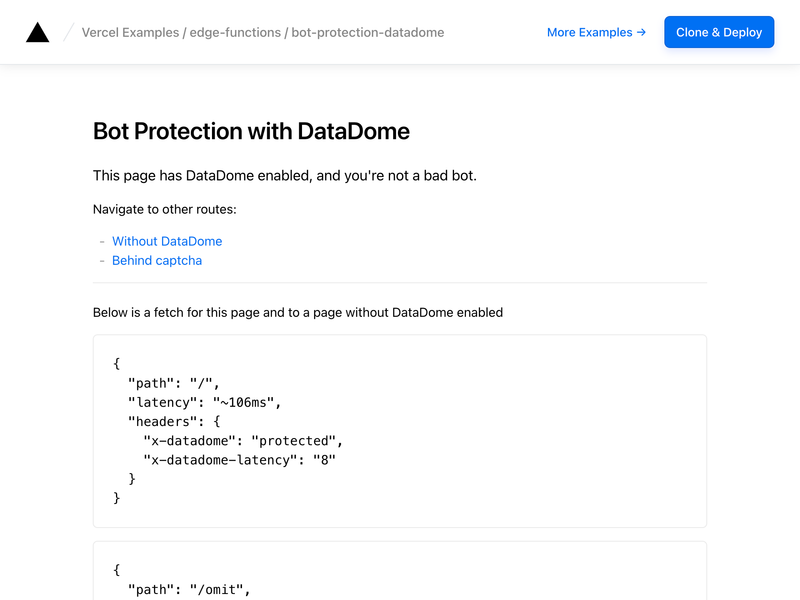
DataDome can provide real-time bot protection and other security protections to any website. In this template we'll be using it at the edge.
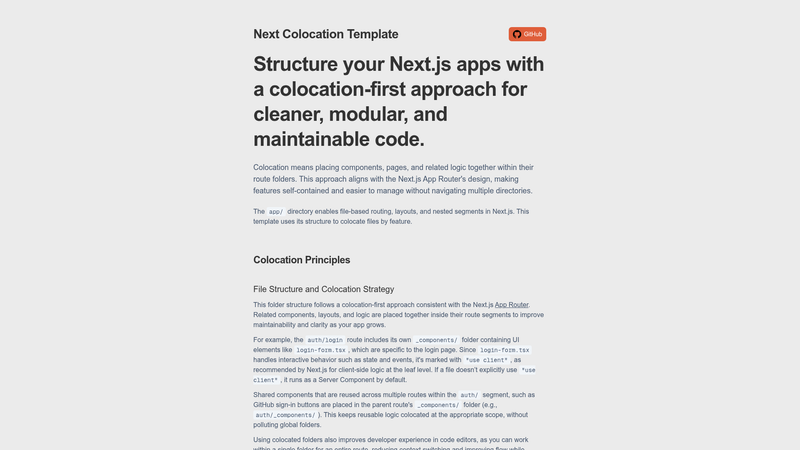
Next Colocation Template is an open-source Next.js boilerplate that demonstrates a colocation-first folder structure inside the App Router, where pages, components, and route-specific logic live together by feature.
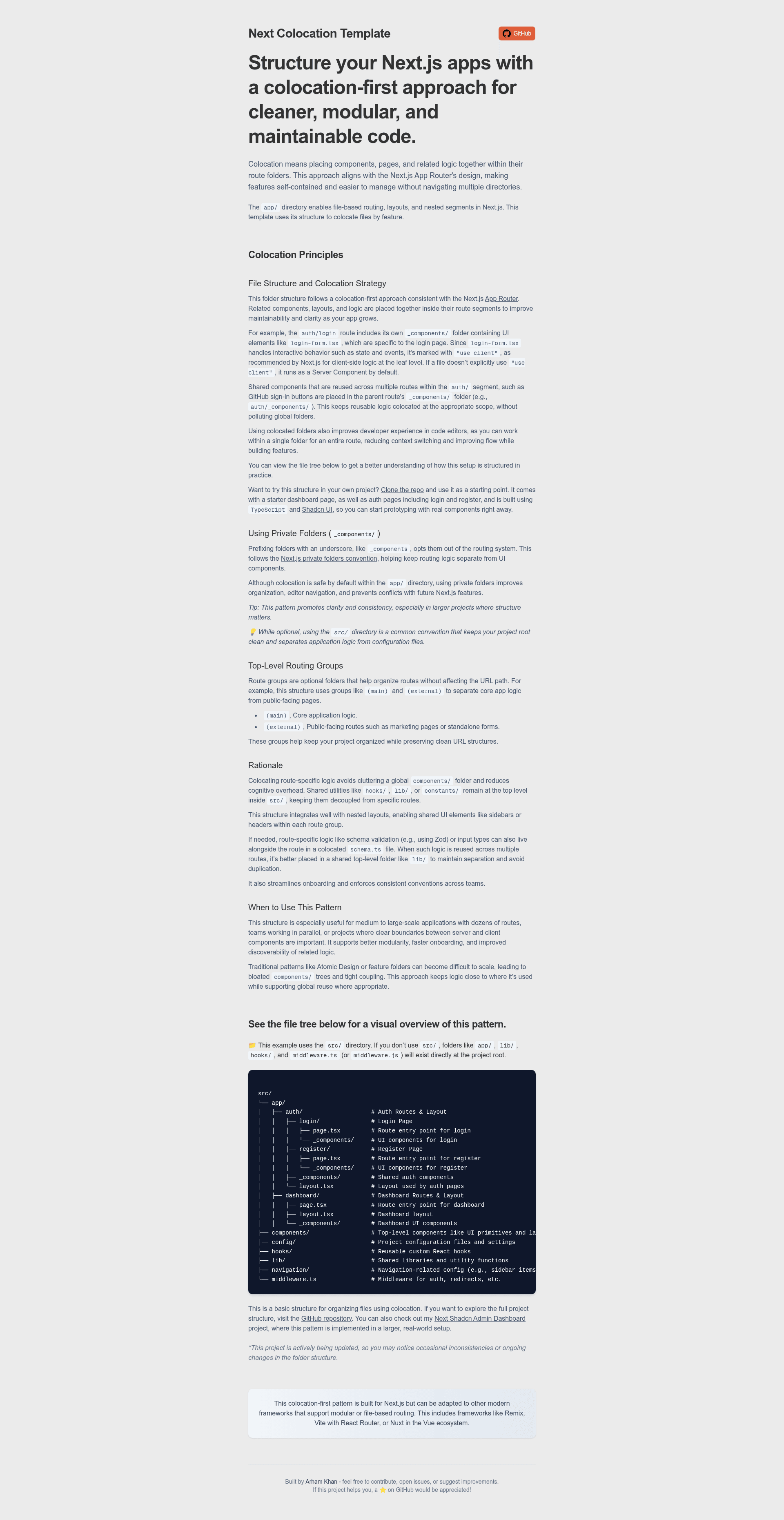
Next Colocation Template is an open-source Next.js boilerplate that organizes an application around the colocation principle: each route segment contains its own page.tsx, layout, and a private _components/ folder for the UI and logic that belong to that route. It takes the standard Next.js App Router project structure and reorganizes it so features are self-contained, reducing the need to jump between global folders. The template is built with TypeScript, Tailwind CSS, and Shadcn UI, and it ships with a starter dashboard page plus auth pages for login and register. The project is maintained by arhamkhnz on GitHub, and its repository also links to a larger real-world example called Next Shadcn Admin Dashboard that applies the same pattern.
auth/login or auth/register contains its own page.tsx and a _components/ folder holding that route's UI components, so related code stays together._components/ are excluded from Next.js routing, following the official private folders convention, which keeps components and logic out of the URL path.(main) and (external) route groups to separate core application logic from public-facing pages without changing the resulting URLs.middleware.ts file for authentication and redirects.hooks/, lib/, config/, and navigation/ under src/, keeping reusable logic decoupled from specific routes.Next Colocation Template is aimed at developers who want a production-ready folder structure without the overhead of building one from scratch. Frontend engineers starting a new Next.js project can clone the repo and immediately follow a colocation-first layout that scales. Teams working on medium-to-large applications with dozens of routes benefit from the clear boundaries between server and client components and the reduced cognitive load of having route logic nearby. Developers learning the Next.js App Router can study the file tree as a reference for private folders, route groups, and nested layouts.
The template's structure is visible in its file tree. Under src/app/, the auth/ segment contains login/ and register/ routes, each with its own page.tsx and _components/ folder; shared auth components like GitHub sign-in buttons live in auth/_components/. The dashboard/ route has its own layout.tsx and _components/. Route groups such as (main) and (external) organize the app without affecting URLs, and folders prefixed with an underscore are ignored by the router.
Yes, the template is open-source and available on GitHub. You can clone the repository and use it as a starting point without any licensing cost mentioned on the page.
src/ directory?The example file tree uses src/, but the project also works without it. If you don't use src/, folders like app/, lib/, hooks/, and middleware.ts reside at the project root instead.
The pattern is built for Next.js, but the page states it can be adapted to other modern frameworks with file-based routing, including Remix, Vite with React Router, and Nuxt.
The page notes that the project is actively being updated, so you may notice occasional inconsistencies or ongoing changes in the folder structure. Contributions and suggestions are welcome on GitHub.