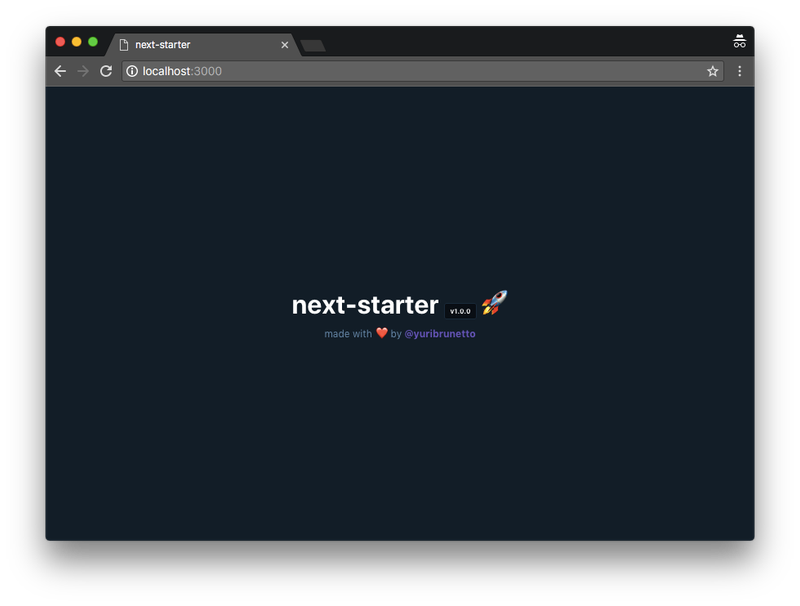
next-starter is a minimal boilerplate for starting new projects in Next.js, with Sass (.scss) styling pre-configured.
What is next-starter?
next-starter is an open-source boilerplate repository for scaffolding Next.js applications. It takes a fresh Next.js project structure and adds Sass support so developers can write styles using .scss files from the first day, and it produces a runnable development server through a single Yarn command. The template is published on GitHub by Yuri Brunetto, a developer active on Twitter, and is distributed under the MIT license.
Key Features
- Pre-configured Sass — The boilerplate comes with Sass (.scss) integration built in, so you can use .scss files for styling without manual Webpack or Babel configuration.
- Next.js framework — The project is built on Next.js, the React-based framework for server-side rendered and static web applications, giving you routing and SSR out of the box.
- Yarn-based commands — The README instructs you to install dependencies with
yarnand start the development server withyarn run dev. - GitHub clone workflow — You get started by cloning the repository with
git clone [email protected]:YuriBrunetto/next-starter.git, then moving into the project directory. - MIT license — The boilerplate is released under the permissive MIT license, allowing free use, modification, and distribution.
- Keep-it-simple structure — The repository is a minimal starting point, designed for quickly bootstrapping projects rather than including many extra dependencies.
Who is it for?
- React developers who want to start a new project on Next.js without spending time setting up the toolchain, since the boilerplate already wires Sass and a dev script.
- Prototypers who need a quick, runnable Next.js site for demos or MVPs, using
yarnandyarn run devto get running in minutes. - Learners who want a minimal, readable Next.js project structure to study how pages and styles are organized before adding their own features.
What can you do with next-starter?
- Launch a new Next.js site: Clone the repo, run
yarn, thenyarn run dev, and immediately edit files under the pages and style directories to build a custom site. - Build a styled prototype: Use the included .scss support to write styles in Sass syntax instead of plain CSS, then iterate quickly in the dev server.
- Create a project template: Fork the repository to serve as the base for your own boilerplate, adding your preferred components or utilities on top.
How does next-starter work?
Start by cloning the GitHub repository to your machine, move into the new folder, and install dependencies with Yarn. After installation, launch the development server with yarn run dev; the README's "how to" section shows exactly these three commands: git clone, yarn, and yarn run dev.
Pricing
next-starter is free and open source, released under the MIT license, so there are no fees or subscription plans to use or modify it.
Alternatives
For developers looking for other Next.js starting points, the official create-next-app scaffolding tool generates a fresh project with a guided setup, while next-starter differs by shipping with Sass and a plain GitHub clone workflow.
FAQ
Is next-starter free?
Yes, next-starter is entirely free. The repository is published under the MIT license, which allows anyone to use, copy, modify, merge, publish, distribute, and even sell copies of the software without paying fees.
How do I install next-starter?
Clone the repository with git clone [email protected]:YuriBrunetto/next-starter.git, change into the directory with cd next-starter, run yarn to install dependencies, and start the dev server with yarn run dev. You need Git and Yarn installed on your machine.
Does next-starter include Sass?
Yes, the boilerplate has Sass (the .scss syntax) pre-configured. This means you can write your styles using .scss files right away, and Next.js will process them without additional configuration on your part.
What license is next-starter under?
next-starter is licensed under the MIT License, as stated in the README. This permissive license lets you use the boilerplate in personal and commercial projects with minimal restrictions.