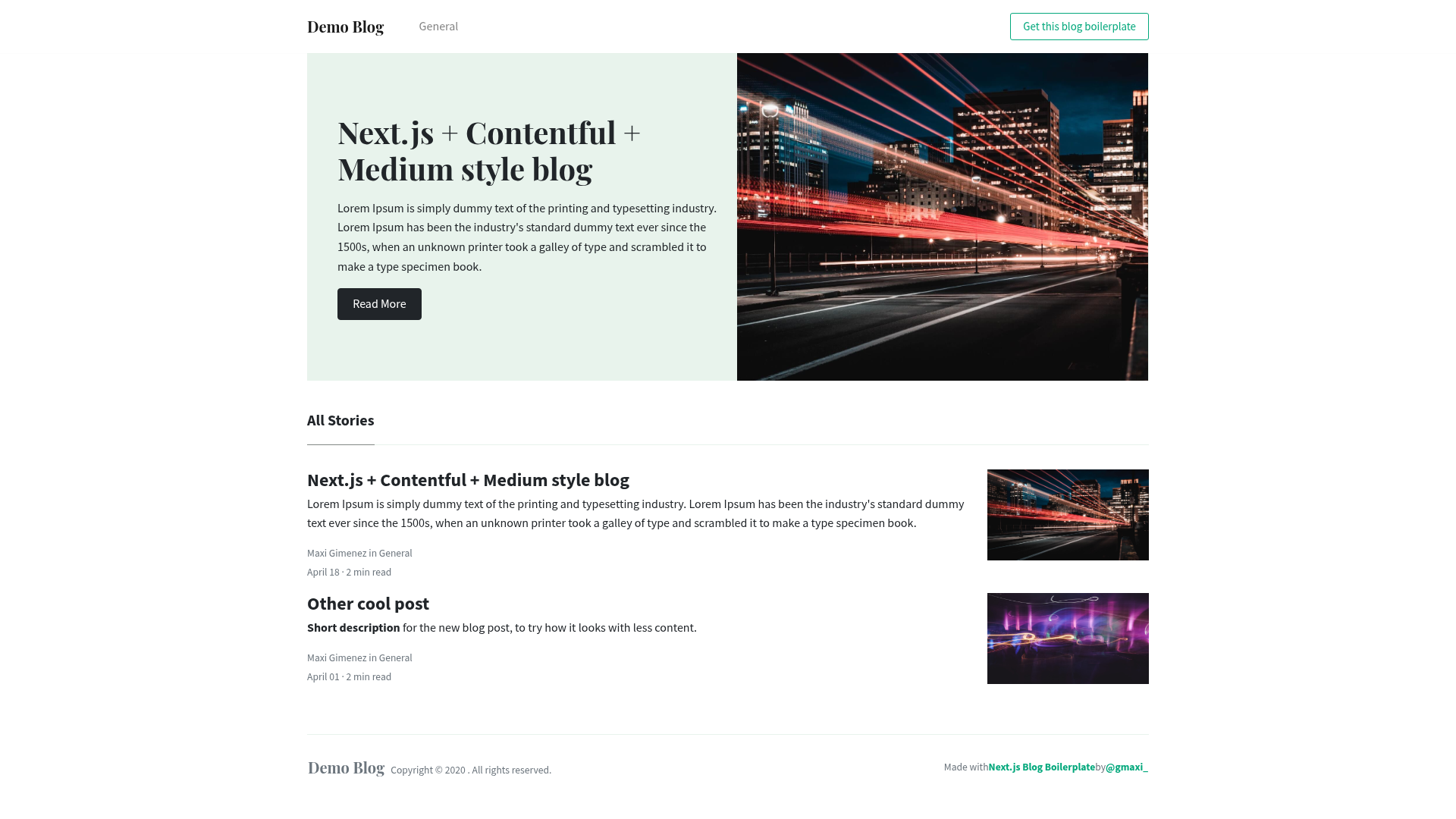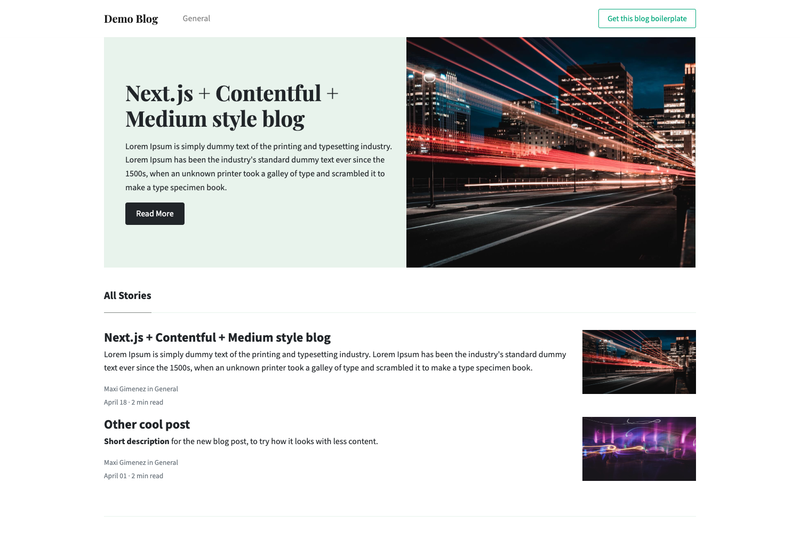
Next.js Medium Blog Boilerplate is an open-source Next.js starter that produces a Medium-style blog wired to Contentful as its default content management system.
What is Next.js Medium Blog Boilerplate?
Next.js Medium Blog Boilerplate is a Next.js project bootstrapped with create-next-app that serves as a ready-to-run blog template with a visual design modeled on Medium. It takes a Contentful space as the content source and outputs a blog site with dummy posts already loaded. The project runs on Node.js, is built with TypeScript, and is maintained by developer maxigimenez.
Key Features
- Contentful setup automation — runs
yarn setup:contentfulto prompt for a space ID and Management/Delivery API tokens, then imports the schema defined inschemas/contentful.jsonso the blog displays dummy content immediately. - Data source abstraction — models and a service structure live in the
core/folder, designed to support any data source, with Contentful as the only pre-built integration. - Medium-style design via Mundana — uses the free Mundana HTML Bootstrap template from wowthemes.net for the blog's look and feel.
- TypeScript support — repository topics indicate the boilerplate is built with TypeScript, giving typed models and components.
- One-command local development —
yarn devruns the project locally at http://localhost:3000. - Simplified deployment — a
now.jsonconfiguration is included, pointing to Zeit.co (now) for hosting.
Who is it for?
- Next.js developers who want a functional Medium-like blog starter without building layout and CMS plumbing from scratch.
- Content editors or bloggers who want a clean editorial interface with Contentful as the publishing backend and pre-seeded sample posts.
- Developers experimenting with headless CMS architectures who want to study or extend a data-source abstraction layer under
core/.
Use cases
- Indie bloggers: launch a Medium-styled blog in minutes by connecting a Contentful space and running the included setup script.
- Agency developers: use the boilerplate as a client project base and restyle the Mundana template for different brands.
- Developers learning Next.js: inspect a working Next.js + TypeScript + Contentful codebase with clear separation between models, services, and the UI template.
How does it work?
- Clone the repository and run
yarn installto install dependencies. - Run
yarn setup:contentful, enter your Contentful space ID, and provide Management and Delivery API access tokens when prompted; the script imports the schema fromschemas/contentful.json. - Run
yarn devand open http://localhost:3000 to view the blog populated with dummy content that is ready to be edited.
Pros and cons
- Pros: one-command Contentful schema setup; data source abstraction for future backends;
now.jsonincluded for quick Zeit.co deployment. - Cons: Contentful is the only data source with a built-in setup script; other sources must be implemented manually.
Alternatives
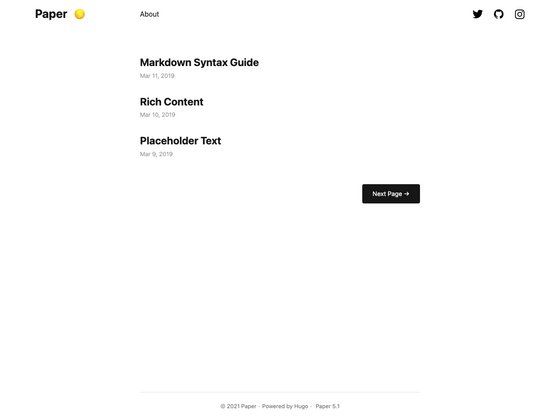
- Tailwind Nextjs Starter Blog — a Next.js blog starter that uses Markdown/MDX files instead of a headless CMS.
FAQ
Does the boilerplate only work with Contentful?
Contentful is the only integration with a pre-built setup script and schema. The core/ models and service structure are designed to support any data source, so alternatives can be added by implementing new services, but none are provided out of the box.
How do I connect my own Contentful space?
Run yarn setup:contentful and enter your space ID along with your Contentful Management API and Delivery API tokens. The script imports the schema from schemas/contentful.json, after which the blog shows dummy data that you can edit.
How do I start the blog locally?
After installing dependencies, run yarn dev and open http://localhost:3000 in your browser. The site is served from your local machine.
Can I deploy this boilerplate to a host other than Zeit?
The repository includes a now.json file for Zeit.co deployment, but because it is a standard Next.js application, it can be deployed to any platform that supports Next.js.