Newsletter
Join the Community
Subscribe to our newsletter for the latest news and updates

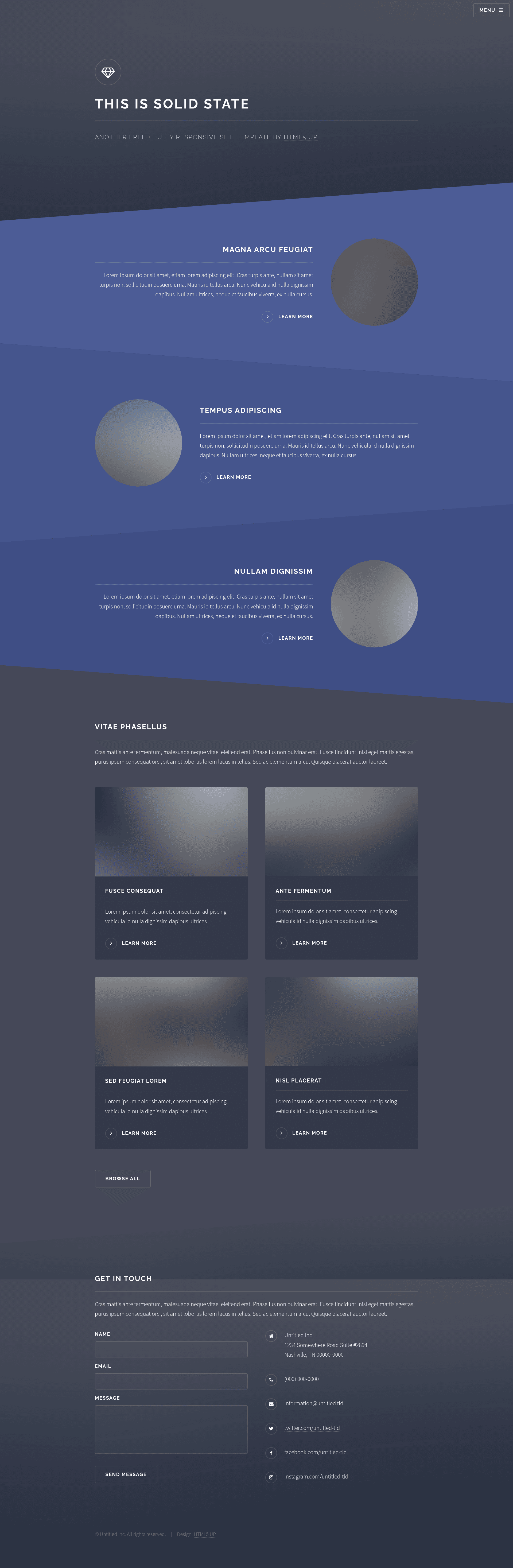
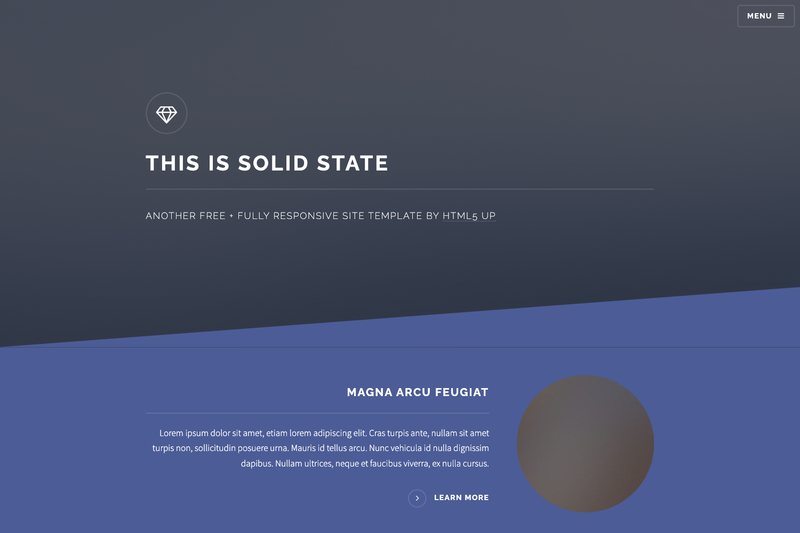
A Jekyll version of the 'Solid State' theme by HTML5 UP.
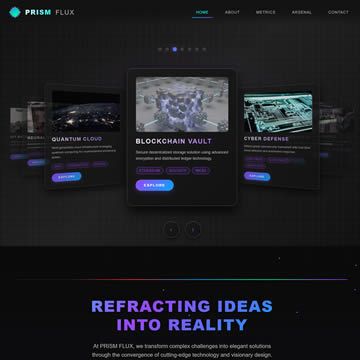
Prism Flux is a free dark-themed HTML portfolio template with a 3D coverflow carousel and carbon fiber aesthetic.
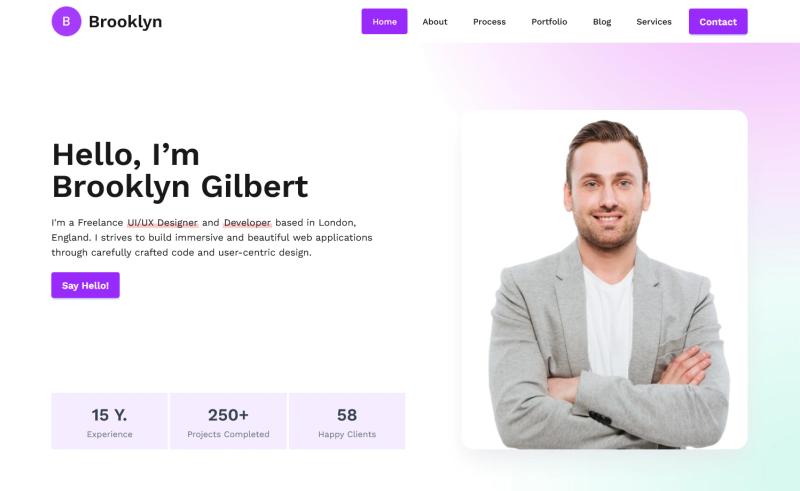
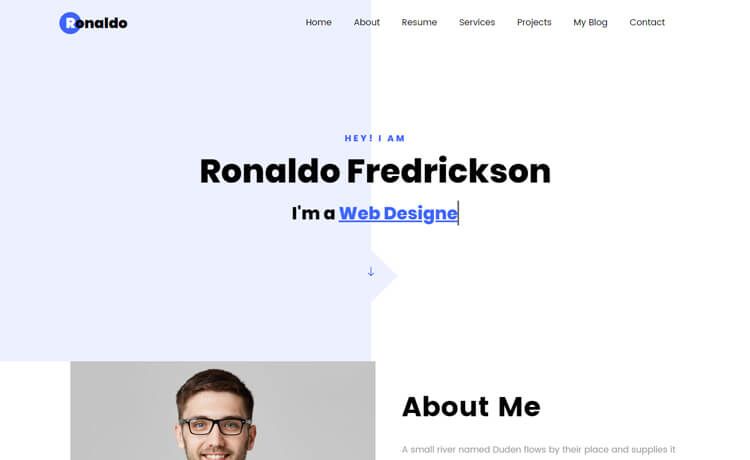
Free one-page portfolio website template built with Tailwind CSS v4 for developers, freelancers, and creative professionals.
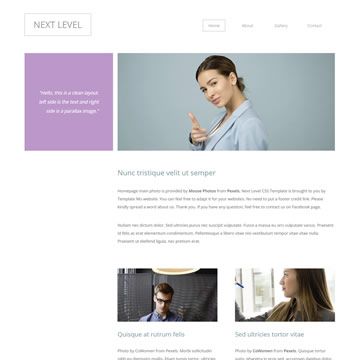
Next Level is a simple CSS Bootstrap template with 4 pages: parallax homepage, tabbed About, categorized Gallery, and a Contact form. Free to download.
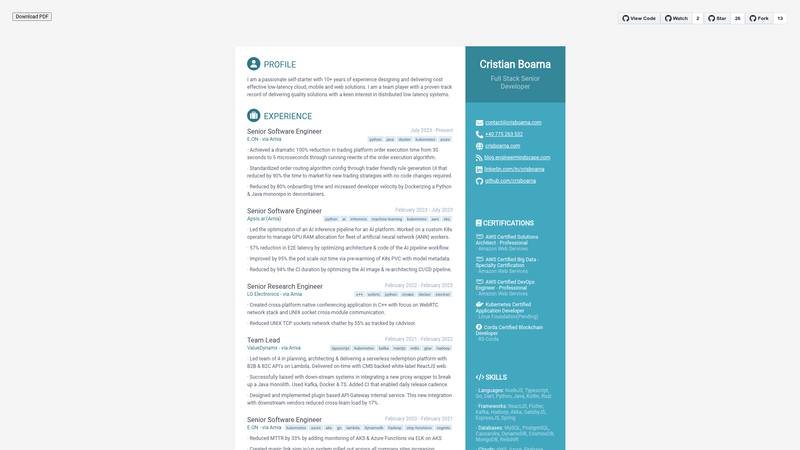
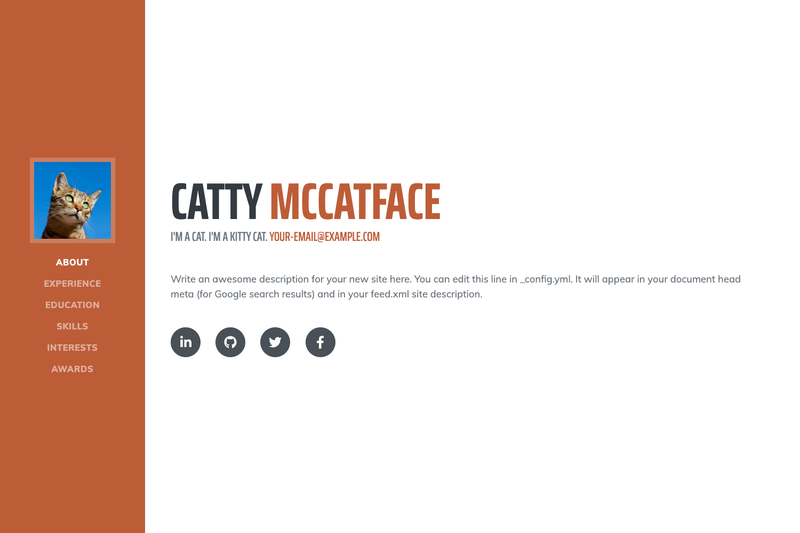
ReactJS CV/resume template that renders a personal CV as a website and generates a downloadable PDF via serverless headless Chrome.
Solid State Jekyll Theme is a Jekyll port of the HTML5 UP "Solid State" design, a multi-page site template adapted for the Jekyll static site generator and maintained by Andrew Banchich. It takes standard Jekyll content — front matter, posts, and pages — and renders a static multi-page website with the original "angular" visual style, aimed at portfolios and business sites.
The template is a Jekyll adaptation of the "Solid State" theme originally designed by HTML5 UP (html5up.net) and ported to Jekyll by Andrew Banchich. It runs on Jekyll, so it consumes Markdown posts, pages, and _config.yml site settings, and outputs a static HTML site. According to the README, the theme is free for personal and commercial use under the Creative Commons Attribution 3.0 (CCA 3.0) license, and the original credits list Font Awesome icons, jQuery, html5shiv.js, Respond.js, and Skel.
_config.yml after forking.gh-pages, which works with GitHub Pages' default publishing._config.yml, and adding your own Markdown pages.The README gives a simple setup: fork the repository, edit the _config.yml file with your site settings, and for GitHub specifically, create a branch named gh-pages. For GitLab, you can start editing the configuration file directly after forking. The static site is then generated by Jekyll from your Markdown content.
The template is free to use for personal and commercial projects under the Creative Commons Attribution 3.0 (CCA 3.0) license, as stated in the included HTML5 UP README. No paid tiers are mentioned in the repository.
Yes, the theme is free for personal and commercial use under the Creative Commons Attribution 3.0 (CCA 3.0) license. The license is mentioned in the included HTML5 UP README and applies to both the original theme and this Jekyll port.
Fork the repository, edit the _config.yml file with your site details, and add your content as Jekyll posts and pages. If you are hosting on GitHub, create a branch named gh-pages so the generated site is served automatically.
Yes. The README specifically instructs GitHub users to fork the repository and create a branch named gh-pages. Jekyll then builds the static site, and GitHub Pages serves it at your site's URL. GitLab hosting is also supported by forking the repository.