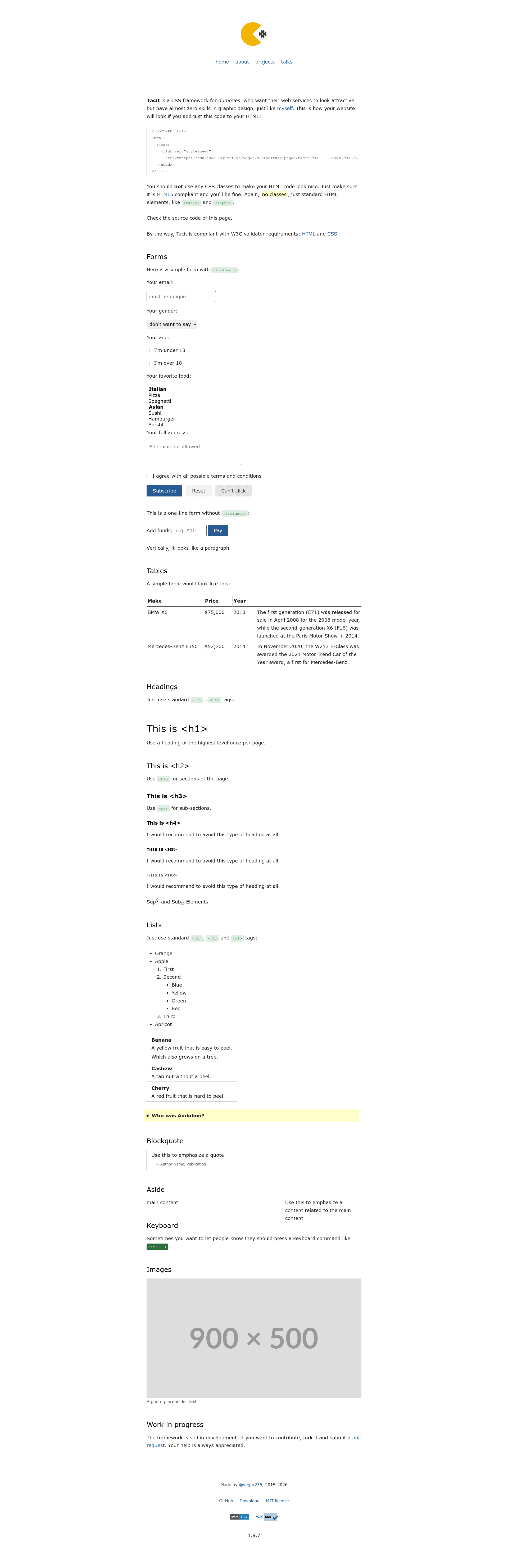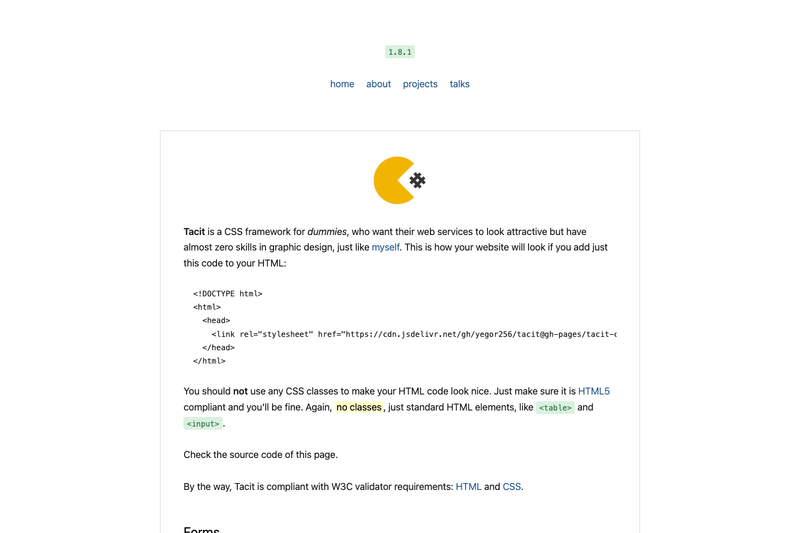
Tacit is a classless CSS framework that automatically styles plain HTML5 pages into a readable, responsive design without requiring any CSS classes. It is a single CSS file you link in the head of any properly formatted HTML5 document, and it styles semantic elements such as headings, paragraphs, tables, forms, and links so that even a developer with zero graphic design experience can ship a presentable web service. Created by yegor256, Tacit is distributed as the tacit-css package on npm and available via the jsDelivr CDN, and it is released under the MIT license.
What is Tacit?
Tacit is a primitive, classless CSS framework built for people who know nothing about graphic design but still want their web services to look presentable. It takes a standard HTML5 document that uses only semantic tags and outputs a fully styled, responsive page by linking one stylesheet. The framework does not rely on CSS classes, JavaScript, or a layout system — you simply write valid HTML5 and Tacit handles the visuals. The source is written in SCSS and compiled with Grunt, and the resulting minified tacit-css.min.css can be loaded from a CDN or downloaded directly.
Key Features
- Zero CSS classes — Tacit styles semantic HTML5 elements directly, so you never write
class="..."orid="..."in your markup. - Responsive and mobile-friendly — The framework adapts typography and layout to the device width, and the README tells you to add a viewport meta tag so it works on smaller screens.
- Wide browser support — Officially tested compatible with Chrome 60+, Firefox 56+, Safari 11+, Opera 48+, Edge 14+, Chrome iOS, Safari iOS, and Internet Explorer 11+, with minor known issues tracked in the GitHub issue tracker.
- Single-file delivery — One minified CSS file is all you include; there is no build step or configuration for consumers.
- CDN and npm distribution — Install via
npm install tacit-cssor link directly tocdn.jsdelivr.net/npm/[email protected]/dist/tacit-css.min.csswith an SRI integrity hash. - SCSS source and Grunt build — Developers can edit the SCSS source files and run
grunt devto recompile the CSS automatically while developing. - MIT license — Free to use, modify, and distribute for personal and commercial projects.
Who is it for?
- Backend developers — Quickly style internal tools, API documentation, or admin panels without writing any CSS or learning a component library.
- Design-averse programmers — Build a personal blog, portfolio, or project landing page from plain HTML5 and get a clean, readable look within minutes.
- Prototypers — Create clickable HTML mockups with semantic markup and skip the layout and visual design work entirely.
- Open-source maintainers — Add a presentable stylesheet to a GitHub Pages site, documentation page, or project example by linking one file.
What can you do with Tacit?
The Tacit README lists real websites and services built with the framework:
- CDN services — jare.io, a free and instant CDN, uses Tacit for its front end.
- Web wallets and fintech tools — wts.zold.io, the web wallet for Zold cryptocurrency, is styled with Tacit.
- Developer tools — jpeek.org, a Java code-cohesion analyzer, and wring.io, a GitHub notification filter, both use Tacit.
- Blogs and personal sites — filfreire.com, a software testing and development blog, and golang.cafe, a Go job board with clear salary ranges, run on Tacit.
How does Tacit work?
Using Tacit is a two-step process: link the stylesheet in the head of your HTML and make sure your content uses semantic HTML5 elements. The README provides a minimal head snippet that loads tacit-css.min.css from jsDelivr with an SRI integrity hash, plus a second snippet that adds the viewport meta tag for responsive behavior. You do not need to install anything or configure any build tools — drop in the link and the framework restyles your page automatically.
FAQ
Does Tacit work with CSS classes or component frameworks?
No. Tacit intentionally ignores CSS classes entirely and styles only HTML elements like h1, p, table, and form. If you use a class-based framework such as Bootstrap in the same page, the two will conflict, so Tacit is meant for pages written with plain semantic HTML.
Is Tacit free to use?
Yes. Tacit is released under the MIT license, which permits free use, modification, and distribution, including in commercial products. The project is open source on GitHub, and no fees or subscriptions are required.
What browsers does Tacit support?
According to the README's compatibility table, Tacit supports Chrome 60 and above, Firefox 56 and above, Safari 11 and above, Opera 48 and above, Edge 14 and above, and Internet Explorer 11 and above on desktop, plus Chrome and Safari on iOS. The maintainers note there are no guarantees for browsers not listed.
Can I customize Tacit?
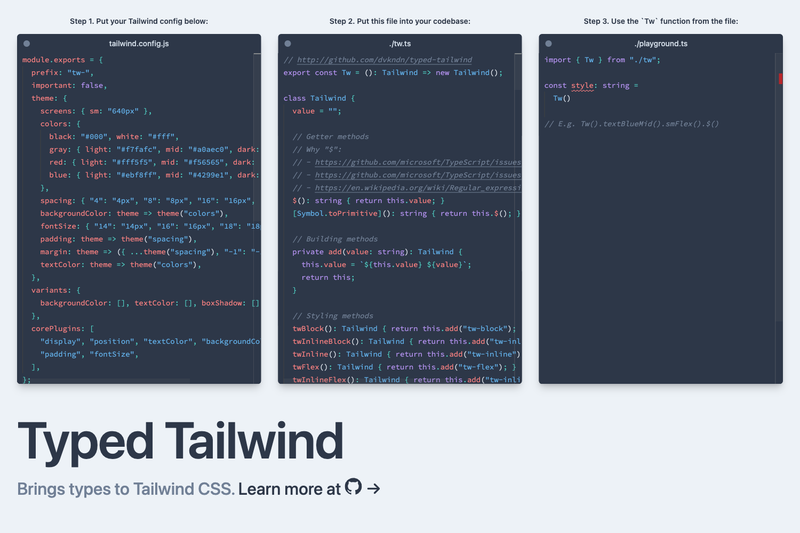
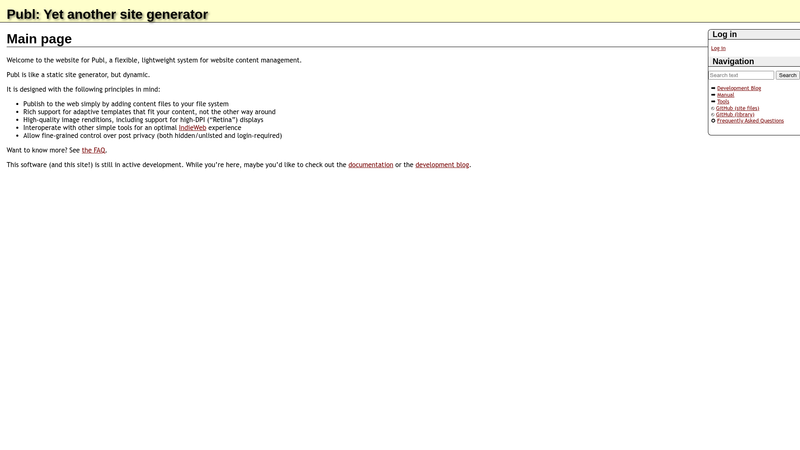
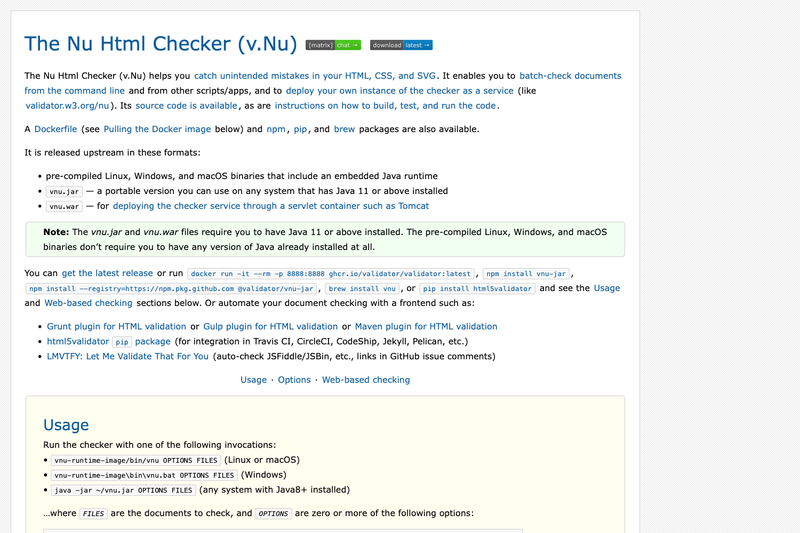
Yes. The repository includes SCSS source files, and the build is managed with Grunt. You can run grunt dev to watch and recompile CSS while editing locally. Derived frameworks such as kacit (a yellow-accented theme) and Bahunya (a classless framework with responsive typography, a navbar, and syntax highlighting) show how to extend Tacit's design.