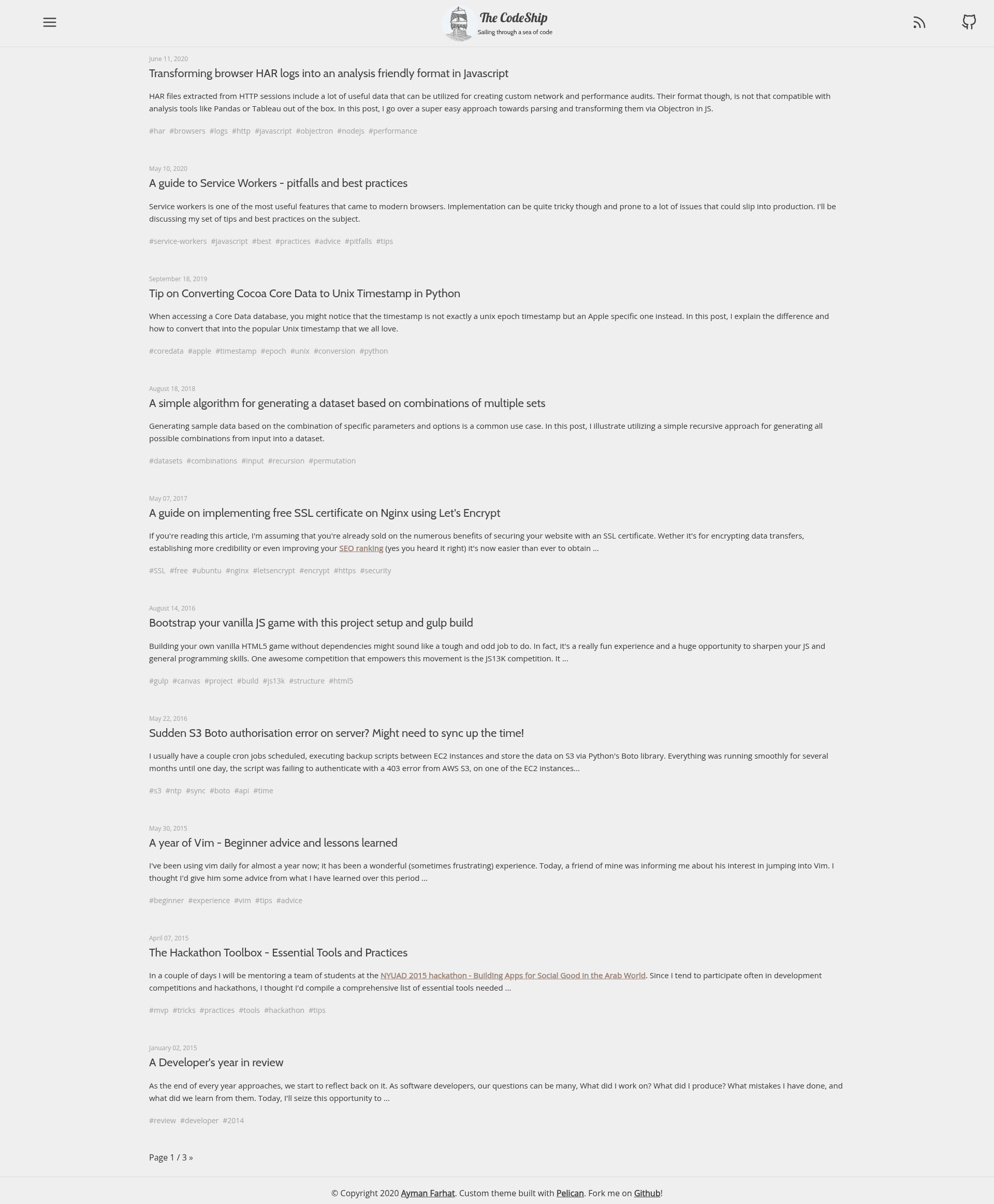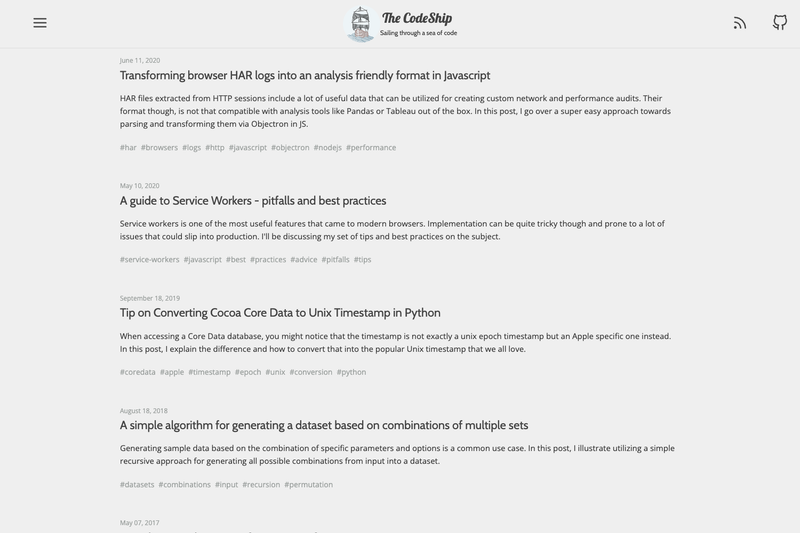
TheCodeShip is the open-source source code for a programming blog built with Python's Pelican static site generator, providing a Makefile-based workflow for generating and serving static HTML.
What is TheCodeShip?
TheCodeShip is a GitHub repository containing the source of a personal blog discussing programming and software development. It uses Pelican, a Python-based static site generator, to convert content into static HTML files. The repository includes sample configuration files (sample.pelicanconf.py, sample.publishconf.py, sample.fabfile.py, and sample.Makefile) that you rename and customize before building the site. It is authored by an individual developer and has 166 stars on GitHub.
Key Features
- Pelican static site generator — Uses Python's Pelican to generate static HTML pages from content files, with no database required.
- Separate configuration files —
pelicanconf.pyfor local development andpublishconf.pyfor publishing settings, allowing environment-specific behavior. - Fabric deployment support — Includes a
fabfile.py(Fabric) script, indicating integration with Fabric for automating deployment tasks. - Makefile commands — Provides standard
make htmlandmake servetargets to build the site and preview it locally on a development server. - Sass styling — Requires Sass preprocessor (
gem install sass), so styles are written in Sass and compiled to CSS during the build. - Python dependencies via requirements.txt — Lists all required Python packages for a reproducible environment.
Who is it for?
- Developers writing technical blogs — Use the pre-built Pelican configuration to focus on writing content instead of setting up a static site generator from scratch.
- Python programmers — Comfortable with
pip install,make, and command-line workflows can easily adapt and extend the site. - Pelican learners — The sample files and Makefile show a minimal, working Pelican project structure to study.
What can you do with TheCodeShip?
- Launch a programming blog: Copy the sample configs, install the listed requirements, and run
make htmlto generate a working static blog that you can then fill with your own posts. - Preview posts locally: Run
make serveto start a local web server and browse the generated site in your browser. - Automate publishing: Use the included
fabfile.pyto script publishing steps, though the exact deployment commands depend on your hosting setup.
How does TheCodeShip work?
- Rename the sample configuration files to their active names, e.g.,
sample.publishconf.pytopublishconf.py. - Install Python dependencies with
pip install -r requirements.txt. - Install Sass globally with
sudo gem install sass. - Run
make htmlto build the static HTML output. - Run
make serveto start a local server and preview the site.
Pros and cons
Pros
- Simple, familiar Makefile workflow for building and serving.
- Clean separation of development and publishing configurations.
- Uses Sass, making CSS authoring more maintainable with variables and nesting.
Cons
- Requires a system-wide Ruby gem (
sudo gem install sass), which may be undesirable in some environments. - No visible theme or sample content in the provided excerpt, so you must bring your own templates and posts.
Alternatives
- Hugo — A fast static site generator written in Go, using Markdown content and its own templating system.
- Jekyll — A Ruby-based static site generator that powers many GitHub Pages blogs.
FAQ
How do I set up TheCodeShip?
Rename the sample configuration files to their real names, then run pip install -r requirements.txt and sudo gem install sass. After that, use make html to build the site and make serve to preview it locally.
Does TheCodeShip require Sass?
Yes. The setup instructions explicitly include sudo gem install sass, meaning the site's stylesheets are preprocessed with Sass and need the Sass gem installed on your system.
What kind of blog is this?
The repository description states it is a blog discussing everything related to programming and software development, built with Python's Pelican static site generator.