Newsletter
Join the Community
Subscribe to our newsletter for the latest news and updates

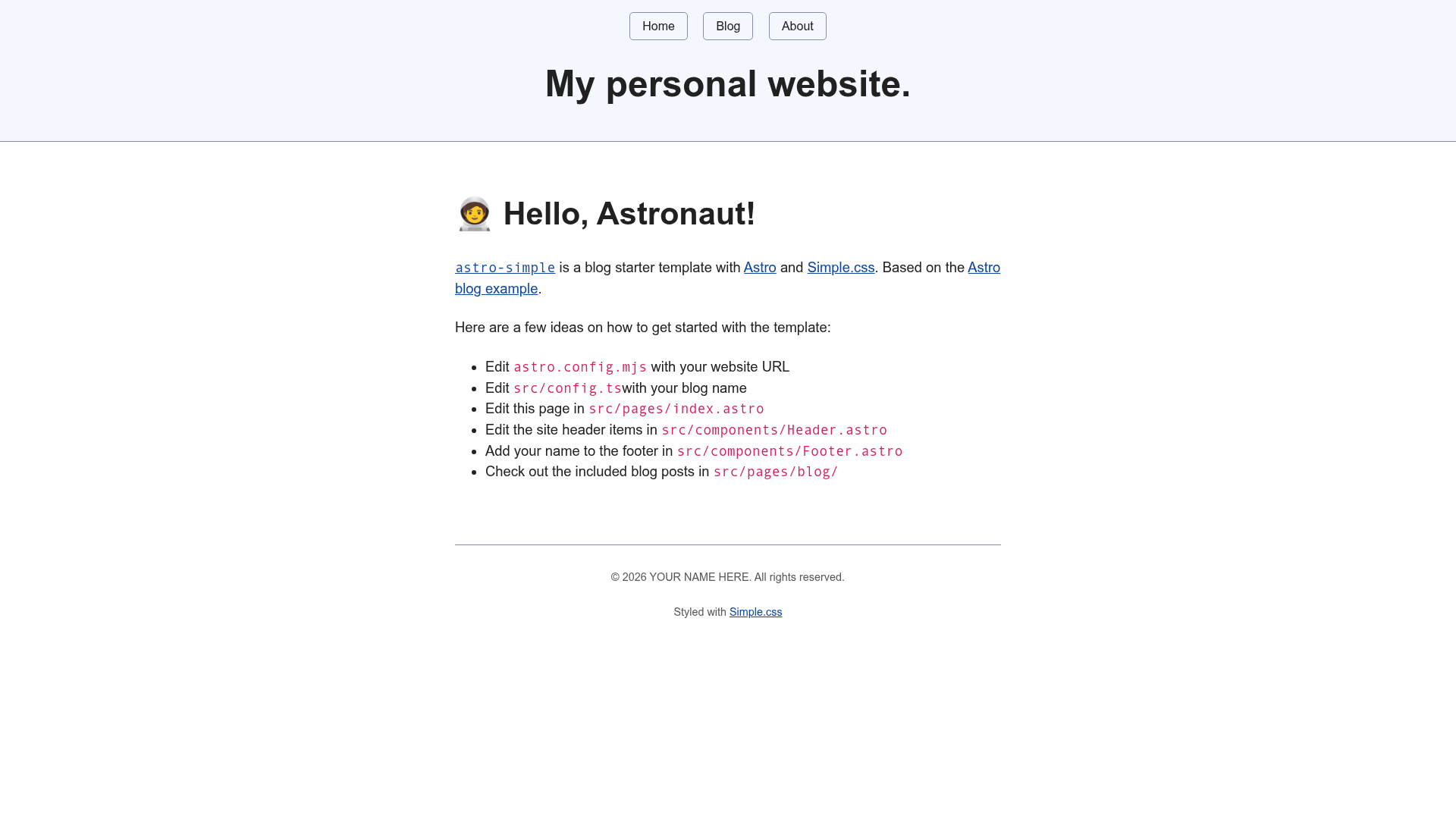
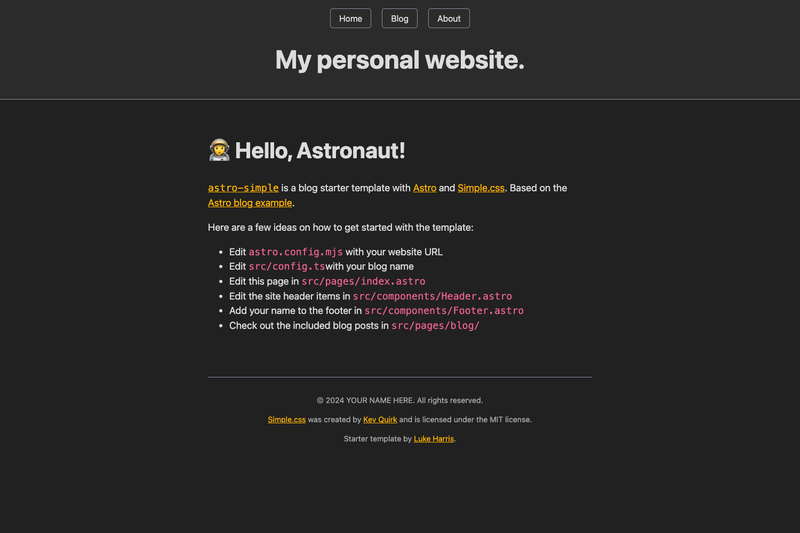
A blog starter template with Astro and Simple.css.

My Russian blog about politics and social problems

A card-style Hexo blog theme with built-in donation, comment, search, lazy-loading, and custom payment features.
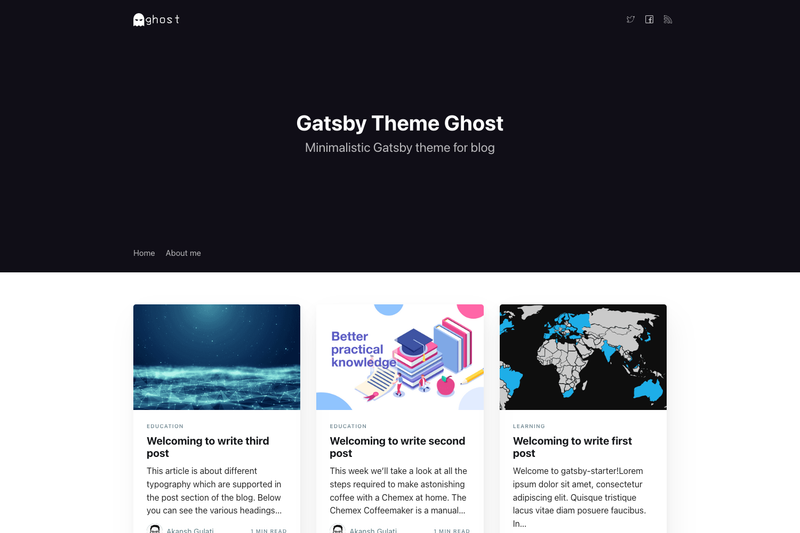
Minimalistic Gatsby theme, mobile and SEO friendly and supports author, tag and static pages.

Free Bootstrap 4 magazine template for news websites, featuring breaking news ticker, stock price update, carousel sliders, and right sidebar.
Astro Simple is a blog starter template built with Astro and Simple.css that generates a static blog with SEO metadata, RSS, and a sitemap from Markdown and MDX content. It is a community-made variant of the official Astro blog example, reducing the styling to the minimal Simple.css framework while keeping Astro's routing, build pipeline, and content handling untouched.
Astro Simple is a blog starter template that takes Markdown or MDX files placed in src/pages/ and compiles them into a static website using Astro's build system. The output is a production-ready dist/ folder containing HTML, CSS, and asset files. The project is hosted on GitHub in the lkhrs/astro-simple repository and is derived from the official Astro blog example, with Simple.css replacing the original example's hand-rolled styles.
sitemap.xml that lists all public routes for search engines..md or .mdx format; MDX allows embedding exposed components directly inside your content.Astro Simple is for individual bloggers who want a fast, minimal site without configuring a theme. It is also a good starting point for developers who are new to Astro and want to see how pages are generated from content files. Technical writers who prefer writing in Markdown and need built-in RSS and sitemap support will find the template ready to publish.
src/pages/, run npm run build, and deploy the static dist/ output to any hosting service.src/pages/ directory structure, so every .astro or .md file becomes a route based on its filename, making it easy to follow how Astro maps files to URLs.The workflow follows standard Astro commands. Run npm install to install dependencies, npm run dev to start a local development server on localhost:3000, and npm run build to produce a static version in ./dist/. The npm run preview command lets you inspect that build locally before deploying.
Yes, the template is published as a public GitHub repository, so you can clone it and use it at no cost.
Yes, MDX support is listed as a feature. Posts written as .mdx files are accepted, and you can import and use components inside them.
The readme claims a perfect 100/100 on all four Lighthouse categories: performance, accessibility, best practices, and SEO.
Yes, RSS feed support is included. After building the project, an RSS feed is generated automatically from the blog content.