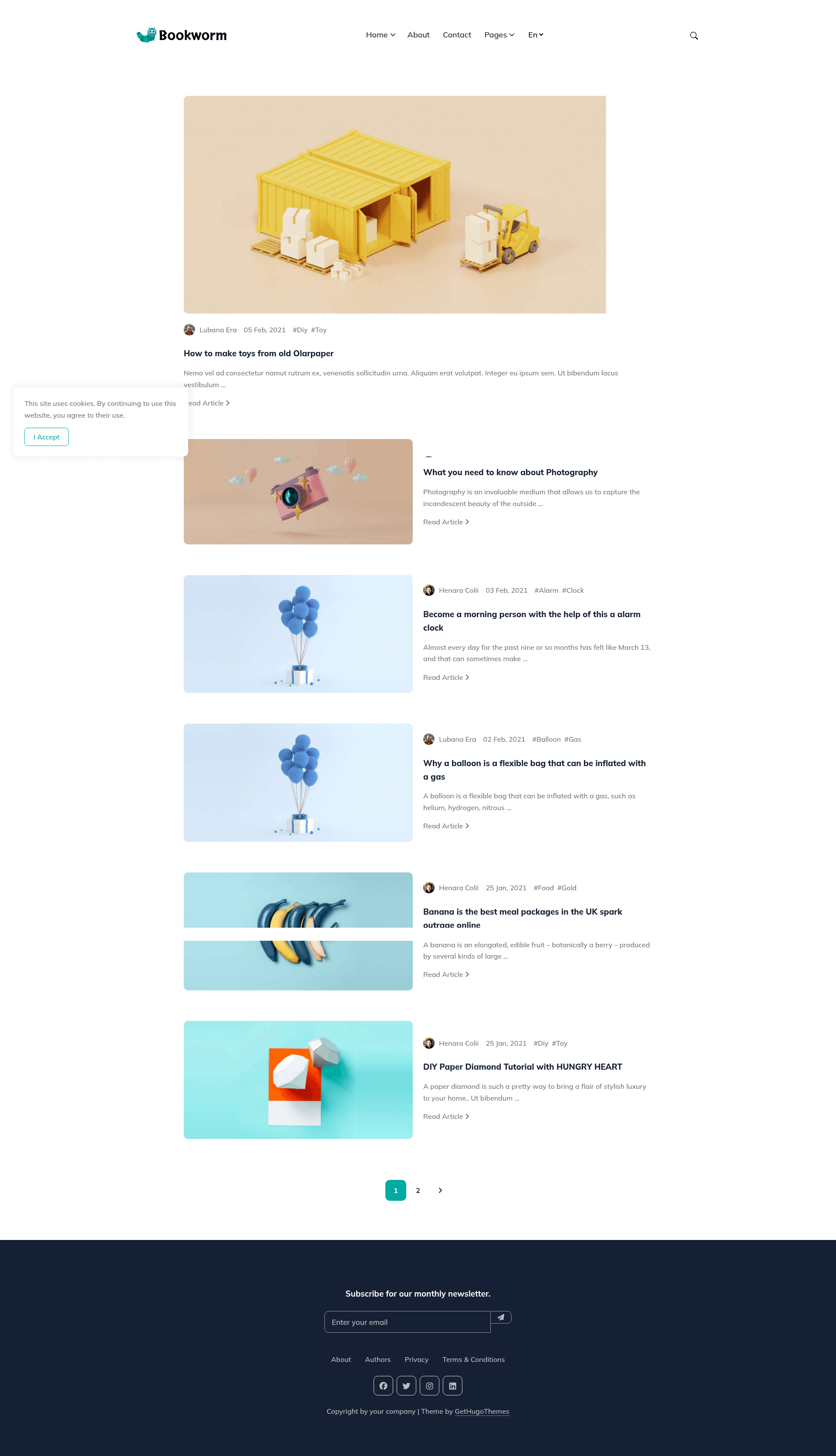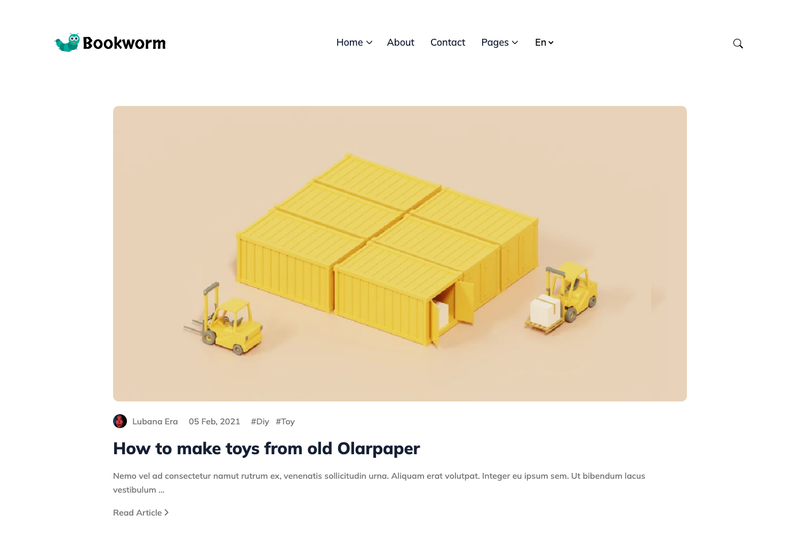
Bookworm Light is a free, MIT-licensed Hugo blog theme from Gethugothemes that builds fast-loading, multi-author blog websites for niches like food, travel, photography, and lifestyle.
What is Bookworm Light?
Bookworm Light is a free Hugo blog theme developed by Gethugothemes and designed by Themefisher, built to create fast-loading blog websites with a clean reading layout. It takes Hugo content files written in Markdown and generates a static HTML site with built-in search, contact forms, newsletter signup, and an Instagram feed. The theme runs on Hugo version 0.163.3 or later and is available under the MIT license from the gethugothemes/bookworm-light GitHub repository. The feature comparison page shows a free Bookworm Light tier and a paid Bookworm Premium tier.
Key Features
- Google Analytics support — Add Google Analytics tracking by setting the site ID in the Hugo config file; no extra code needed.
- Search with Fuse.js and mark.js — Users get client-side fuzzy search that highlights matching terms without any backend service.
- Contact form via Formspree — The prebuilt contact form submits directly to Formspree, so no server-side form handler is required.
- Mailchimp integration — Capture newsletter subscribers through a Mailchimp signup form included in the theme.
- Instagram feed with Instafeed.js — Display a recent Instagram feed on the site using the Instafeed JavaScript library.
- Netlify deployment presets — The repository ships with preconfigured Netlify settings so you can deploy by connecting the repo.
- GDPR consent banner — A consent notice is enabled by default to comply with EU cookie rules.
- Hugo Pipes asset bundling — CSS and JavaScript are concatenated and minified through Hugo Pipes for faster page loads.
- Open Graph and Twitter Card meta tags — Social sharing previews are generated automatically from page front matter.
- Color and font variables — Theme colors and fonts are defined as variables in the config file for quick changes.
- Sitepins CMS integration — The template is preconfigured for Sitepins, a Git-based headless CMS, so content and images can be updated visually without touching code.
Who is it for?
Food and recipe bloggers can publish step-by-step recipes with images and searchable categories. Travel photographers can create photo-heavy posts that load quickly thanks to the theme's 96% Google PageSpeed score. Lifestyle and health writers can run a multi-author blog, since the theme explicitly supports multiple authors. Non-technical site owners who want to update content without editing code can use the Sitepins CMS button to manage the site visually.
What can you do with it?
- Food bloggers: Publish recipes with step-by-step instructions, ingredient lists, and a searchable archive.
- Travel photographers: Build a fast portfolio-style blog with large images and an Instagram feed to show recent work.
- Multi-author editorial teams: Manage posts from several authors with the theme's built-in author support.
- Newsletter-driven sites: Collect email subscribers through the Mailchimp integration embedded in the theme.
How does Bookworm Light work?
Bookworm Light is a standard Hugo theme. After cloning the repository, run npm install to install dependencies and npm run dev:example to start a local development server. To deploy, connect the repository to Netlify using the provided Netlify presets. For content updates, click the "Edit with Sitepins" button to clone the site into Sitepins and edit text and images through a visual interface.
Pros and cons
- Pros: Free under MIT license, includes search, contact form, Mailchimp, Instagram feed, GDPR consent, and Google Analytics integration out of the box; optimized for page speed with a 96% score.
- Cons: The free version lacks multi-language support (French and English are only in Bookworm Premium), and also omits sidebar options, multiple post layouts, and menu alignment customization that are available in the paid tier.
Pricing
Bookworm Light is free and open source under the MIT license. A paid version called Bookworm Premium adds multilingual support, menu alignment choices, multiple post layouts, sidebar options, four or more premium pages, and priority support. No specific prices are listed on the page.
FAQ
Is Bookworm Light free?
Yes. Bookworm Light is released under the MIT license, so you can use it for personal or commercial projects without paying. The paid Bookworm Premium tier adds extra features like multilingual support and sidebar options.
What Hugo version does Bookworm Light require?
The theme requires Hugo version 0.163.3 or later, as shown by the version badge in the repository.
Can I edit Bookworm Light content without writing code?
You can. Bookworm Light is preconfigured for Sitepins, a Git-based headless CMS. Click the "Edit with Sitepins" button to clone the repository and edit text, images, and configuration through a visual interface.
Does Bookworm Light support multiple languages?
The free version does not. French and English language support is listed as a feature only in the Bookworm Premium version.
What is the difference between Bookworm Light and Bookworm Premium?
Bookworm Premium adds multi-language support, menu alignment customization, multiple post layouts (grid or list), sidebar options, extra premium pages, and priority support. Bookworm Light includes the core blog features listed above.