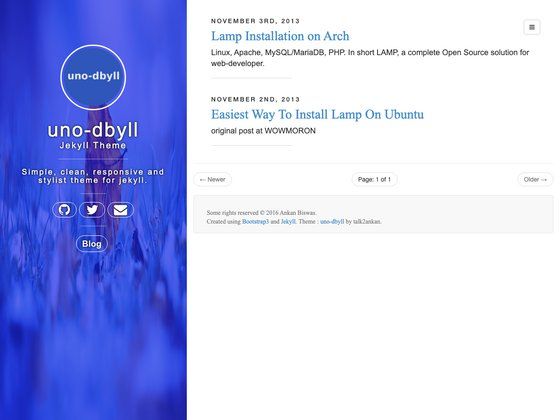
Uno-dbyll is a Jekyll theme for personal blogging that emphasizes a simple, clean, responsive, and stylist design, released under the MIT License by Ankan Biswas.
What is Uno-dbyll?
Uno-dbyll is a static-site theme built on Jekyll, the Ruby-based static site generator, created by Ankan Biswas as the source code for his personal blog. It takes Jekyll content—posts and pages written in Markdown or HTML—and outputs a fast, static, responsive website. The theme is distributed under the MIT License, meaning all directories and files are free to use, copy, modify, merge, publish, distribute, sublicense, and sell. The repository metadata for this project lists 42 stars, and the author's website is at http://www.ankanbiswas.in.
What makes Uno-dbyll stand out?
- Simple and clean design — The theme strips away clutter to focus on content, making it suited for writers who want their posts front and center.
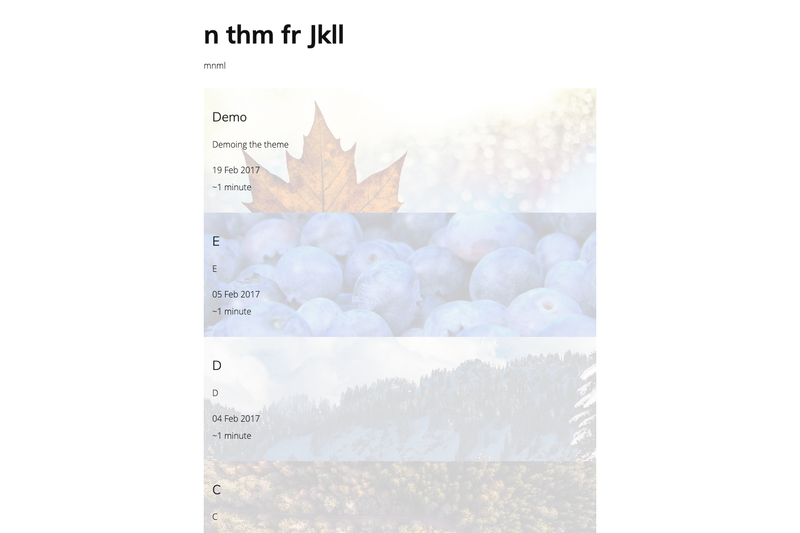
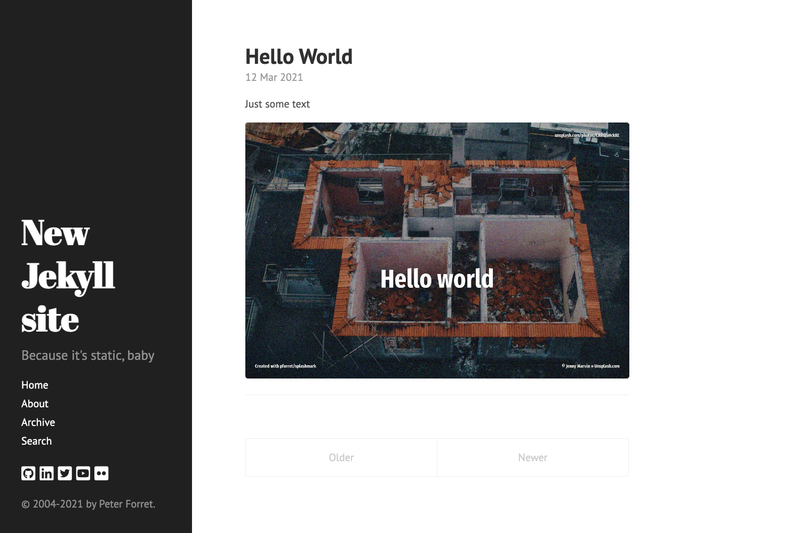
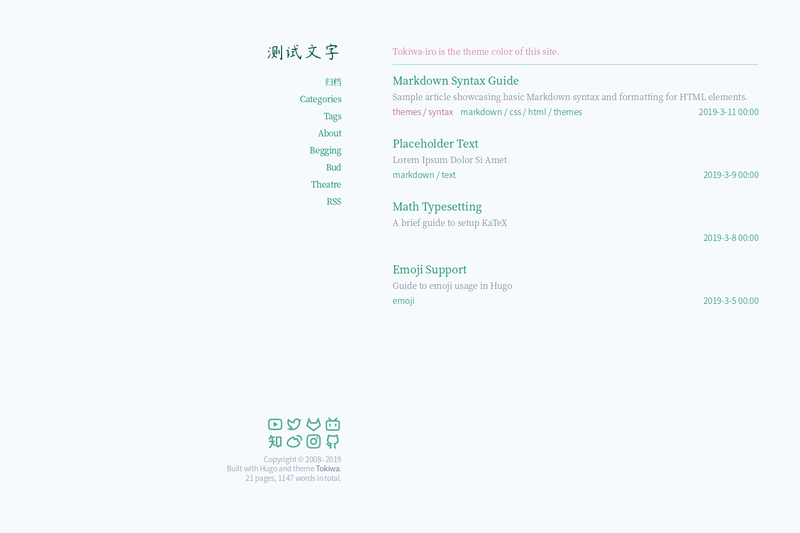
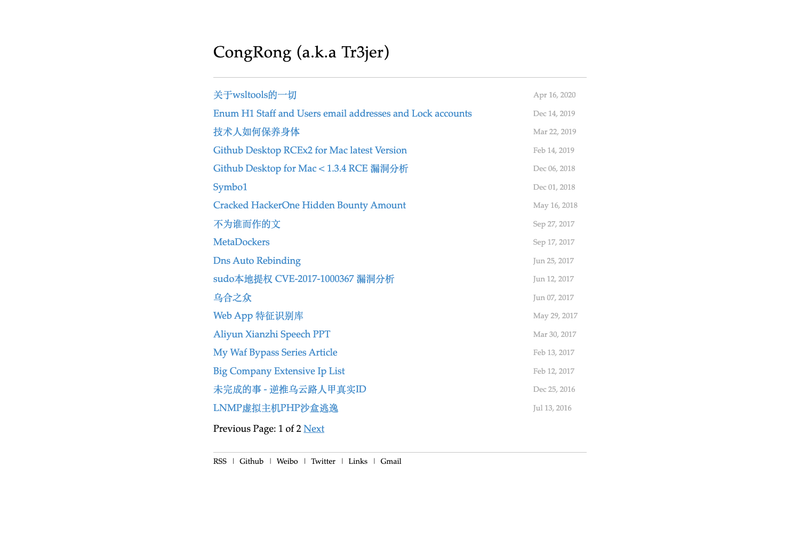
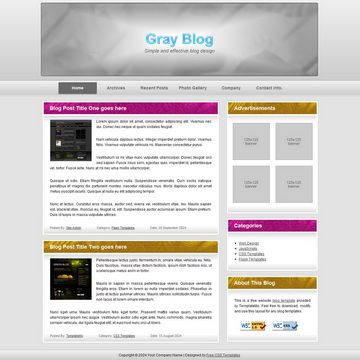
- Responsive layout — The theme adapts to different screen sizes, and the repository includes desktop snapshots showing the design.
- Built for Jekyll — It follows Jekyll's conventions, so you can run it with a standard Jekyll installation and host it on GitHub Pages or any Jekyll-compatible service.
- MIT licensed — All files are freely reusable, modifiable, and distributable, with no copyleft restrictions; only attribution in the license text is retained.
- Personal blogging focus — The author built it as his own personal blogging theme, so it's tailored to the needs of individual bloggers rather than large publications.
- Learning-friendly — The author started the project as part of his learning and curiosity, and the code is simple enough to serve as a reference for Jekyll beginners.
Who should use Uno-dbyll?
- Personal bloggers — If you want a clean, responsive Jekyll blog without a lot of configuration, Uno-dbyll gives you a simple starting point for publishing posts.
- Jekyll learners — Developers studying Jekyll can read the theme's source as a concise example of how Jekyll layouts, includes, and styles fit together.
- Open-source enthusiasts — Because it's MIT licensed, anyone can fork it, modify it, and even use it in commercial projects at no cost.
What can you do with Uno-dbyll?
- Set up a personal blog — Create a Jekyll site with Uno-dbyll, write posts in Markdown, and generate a static blog that can be hosted anywhere Jekyll runs.
- Learn Jekyll by example — Dig into the theme's templates and configuration to see how a minimal Jekyll theme is structured.
- Customize a theme — Use the MIT license to modify colors, fonts, and layouts, or combine it with other Jekyll plugins to extend functionality.
Pricing
Uno-dbyll is free. It is released under the MIT License, so there is no cost to download, use, or modify it.
FAQ
Is Uno-dbyll free?
Yes, Uno-dbyll is completely free. It is released under the MIT License, which permits free use, modification, distribution, and even commercial use.
What license does Uno-dbyll use?
Uno-dbyll uses the MIT License. This means all directories and files are free to use, copy, modify, merge, publish, distribute, sublicense, and sell, subject to including the copyright notice and permission notice.
Is Uno-dbyll responsive?
Yes, the theme is described as responsive. It is designed to adapt to different screen sizes, and the repository includes desktop snapshots demonstrating the layout.
Can I use Uno-dbyll for commercial projects?
Yes, the MIT License allows commercial use. You can incorporate the theme into commercial websites and products as long as you retain the license text.