Newsletter
Join the Community
Subscribe to our newsletter for the latest news and updates

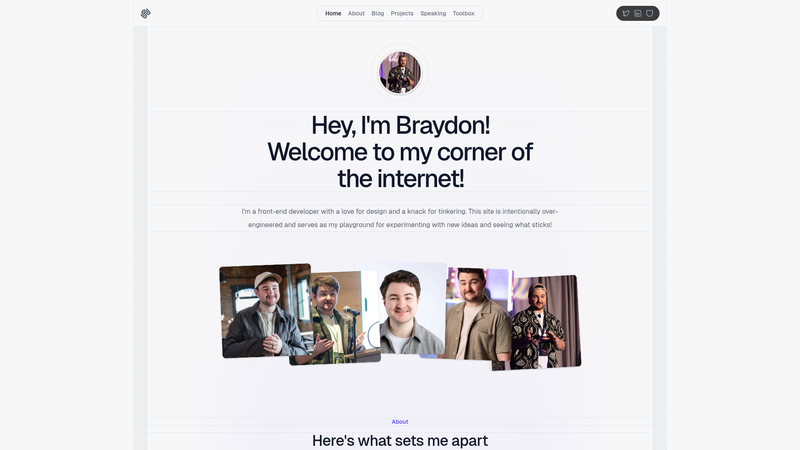
My portfolio rebuilt from the ground up using Next.js 15, Tailwind, Supabase, and Framer Motion! Deployed on Vercel
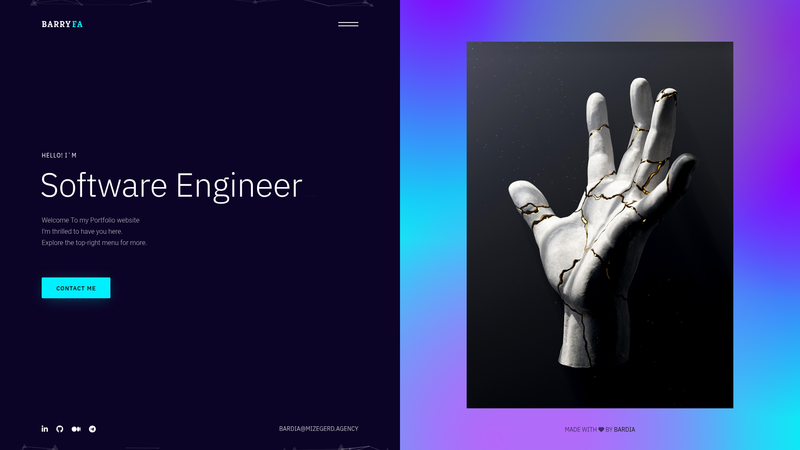
MIT-licensed personal portfolio website template with HTML, CSS, Sass, and JavaScript, deployable via GitHub Pages.

Free responsive multipage portfolio website template built with Bootstrap 5, HTML5, and CSS3.
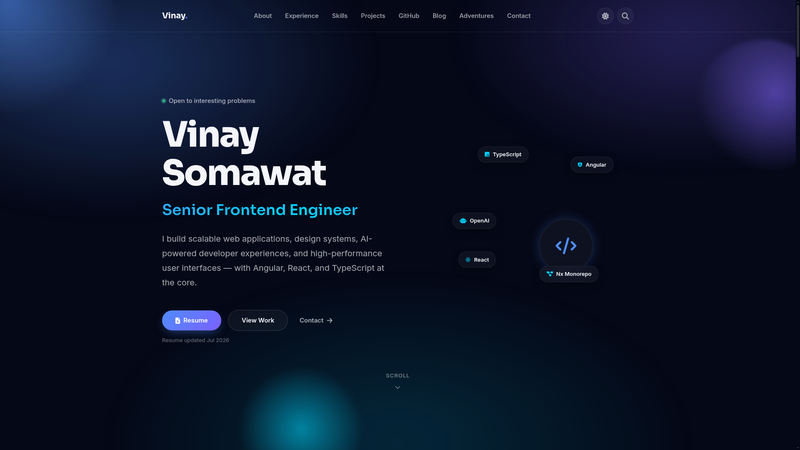
Zero-build developer portfolio powered by lit-html and vanilla ES modules, pulling live GitHub, Medium, and StackOverflow data from a single data file.
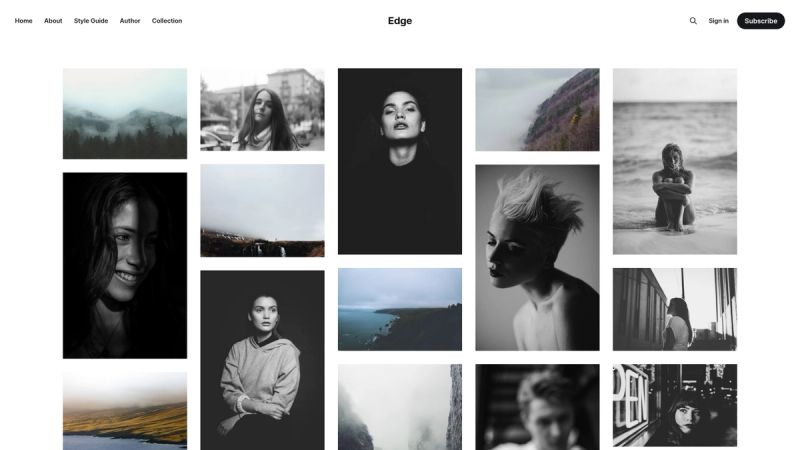
A visually aesthetic portfolio theme for Ghost

Osprey Delight is the free-minded artist's choice for a clutter-free and blazingly fast single-page portfolio.
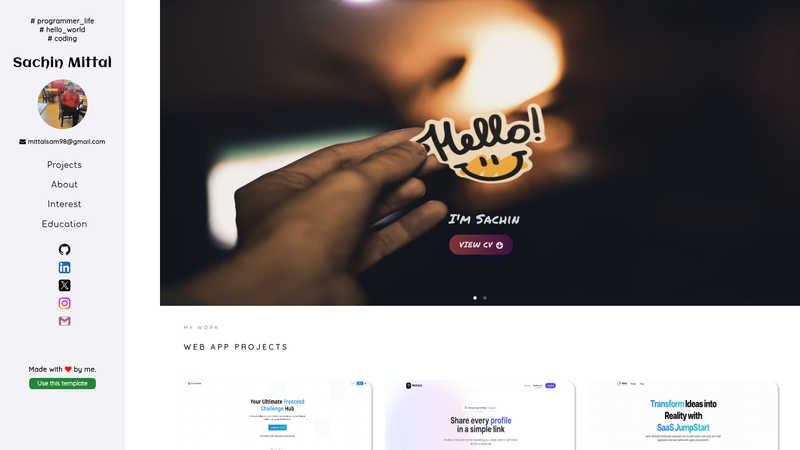
React Portfolio made with love ❤ from India
braydoncoyer.dev is a portfolio website template built on Next.js 15, Tailwind CSS, Supabase, and Framer Motion, designed for developers and designers to showcase their work and blog on Vercel.
braydoncoyer.dev is the personal portfolio of developer Braydon Coyer, built as a public repository so others can use it as a starting point. It pairs a Next.js 15 front end with a Supabase backend, using Cloudinary for image delivery. The project is bootstrapped with create-next-app, so it includes the standard app directory structure with app/page.tsx as the entry point, and it outputs a fast, deployable static and server-rendered site ready for Vercel.
Run npm run dev to start the development server at http://localhost:3000, then edit app/page.tsx to see live updates. To build for production, use the standard Next.js build command, and deploy by connecting the repo to Vercel, which recognizes the framework automatically.
Run 'npm run dev' (or yarn/pnpm/bun dev) in the project root. The site will be live at http://localhost:3000 with hot reloading, so changes to app/page.tsx appear instantly.
The template uses Next.js 15 with the App Router, Tailwind CSS for styling, Framer Motion for animations, Supabase for backend data and authentication, and Cloudinary for image delivery. It is designed for deployment on Vercel.
The easiest path is to import the repository into Vercel, which auto-detects Next.js. Run the standard build step and push; Vercel handles server-side rendering and static generation automatically.