Newsletter
Join the Community
Subscribe to our newsletter for the latest news and updates

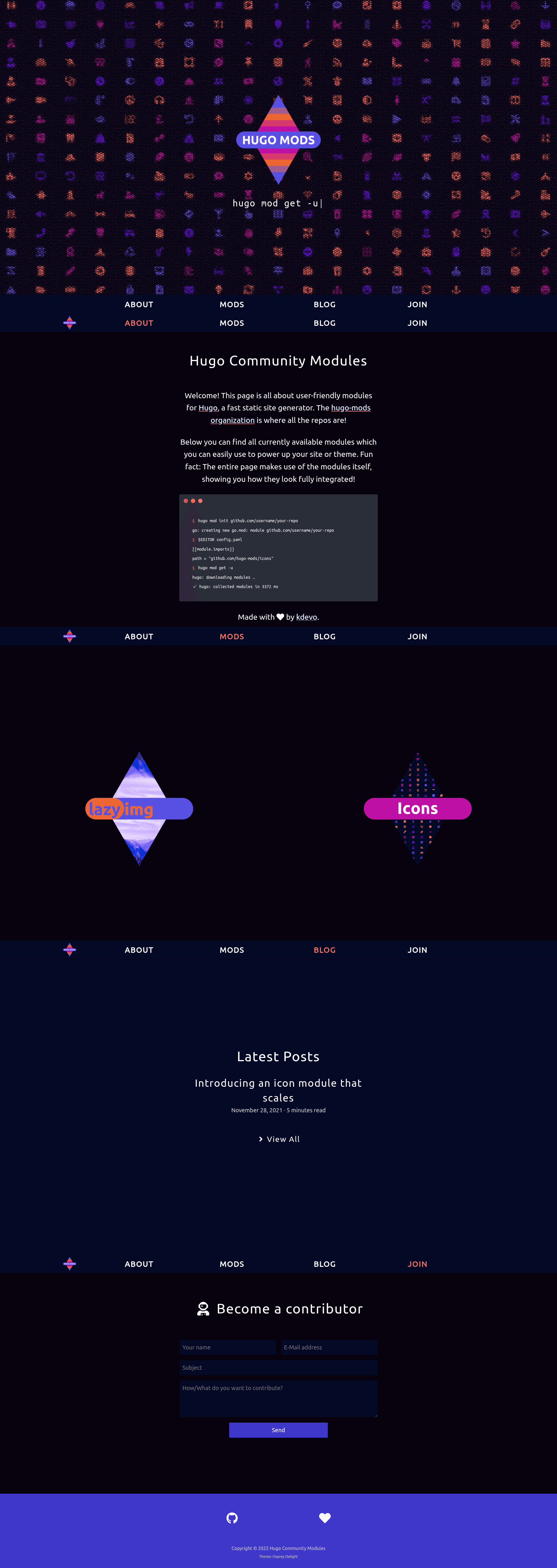
Osprey Delight is the free-minded artist's choice for a clutter-free and blazingly fast single-page portfolio.
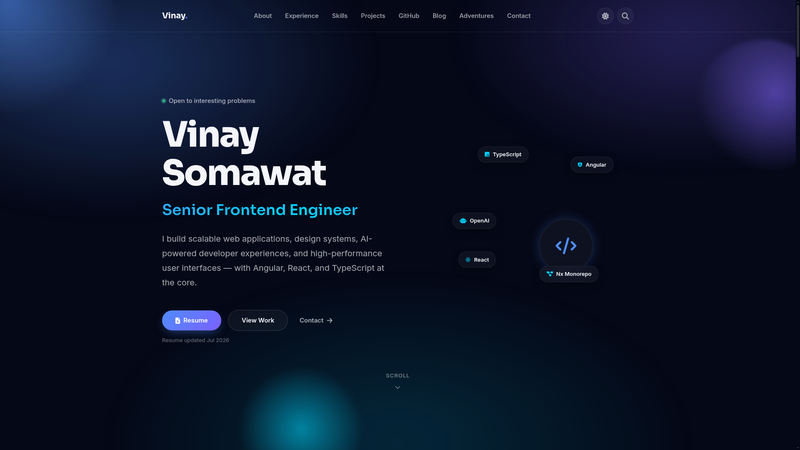
Zero-build developer portfolio powered by lit-html and vanilla ES modules, pulling live GitHub, Medium, and StackOverflow data from a single data file.
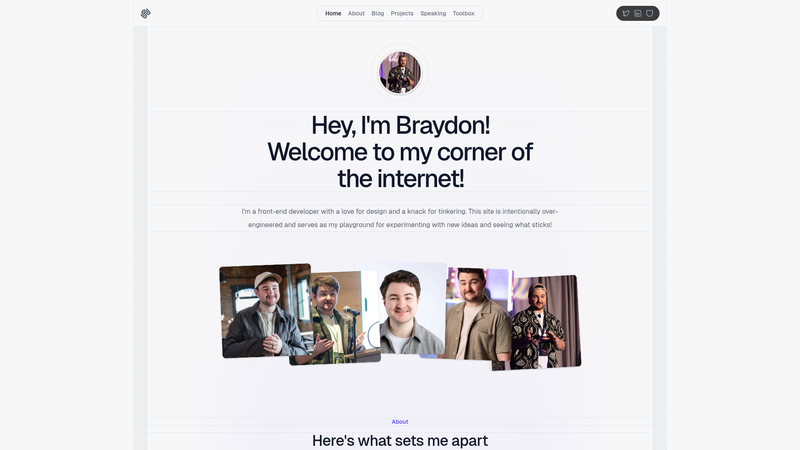
My portfolio rebuilt from the ground up using Next.js 15, Tailwind, Supabase, and Framer Motion! Deployed on Vercel
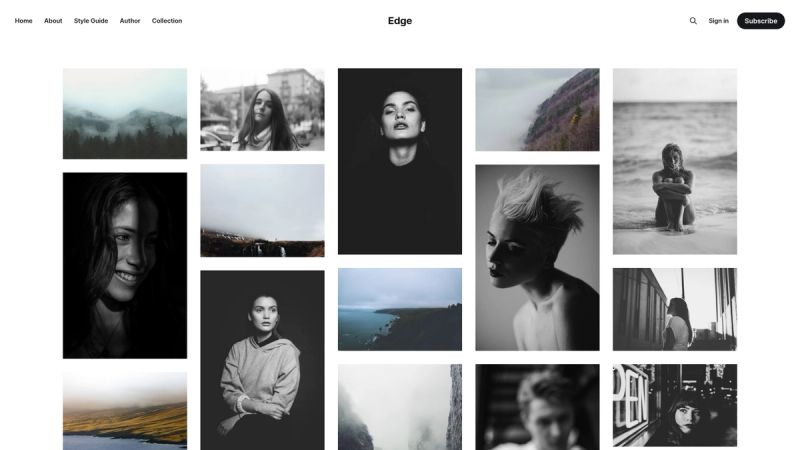
A visually aesthetic portfolio theme for Ghost
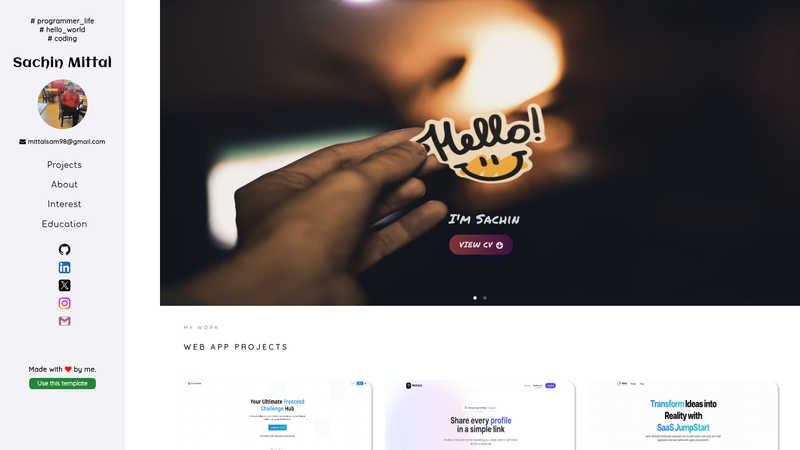
React Portfolio made with love ❤ from India
Osprey Delight is a free, open-source Hugo theme for building clutter-free, fast-loading single-page portfolio websites.
Osprey Delight is a Hugo-based single-page portfolio theme created by kdevo as an enhanced fork of the original Osprey theme by Toma Nistor. It takes Hugo content files (about, gallery, blog, contact) and produces a static site with modular sections, lazy-loaded images, and built-in SEO optimization. The theme requires Hugo's extended version and Go for module installation.
Osprey Delight is aimed at artists, freelancers, and developers who want a fast personal portfolio site without managing complex JavaScript frameworks. It suits those comfortable with Hugo's file-based content workflow and editing a YAML config file.
Osprey Delight is installed as a Hugo module. After running hugo mod init, you download the example config.yaml, create content files with hugo new about.md and hugo new gallery/my-item.md, and start the Hugo server. Images placed in the assets directory are automatically optimized at build time.
Osprey Delight is free and open-source. There is no paid tier, but sponsorships are accepted through GitHub Sponsors to support ongoing maintenance.
Alternatives include the original Osprey theme by Toma Nistor, which offers a similar single-page layout but lacks the lazy-loading and modular features added by Osprey Delight.
Yes, Osprey Delight is free and open-source. The source code is publicly available on GitHub, and you can install it as a Hugo module at no cost.
You need Hugo's extended version and Go installed. The theme is installed as a Hugo module via hugo mod init, and you'll need a config.yaml file from the example site.
Yes, it includes a lightweight blog section in addition to About, Gallery, and Contact sections. You can create blog posts using Hugo's content creation commands.
The theme is heavily customizable through the config.yaml file. Further granular customization is covered in the CUSTOMIZING.md file, and users can also modify the theme modules directly.