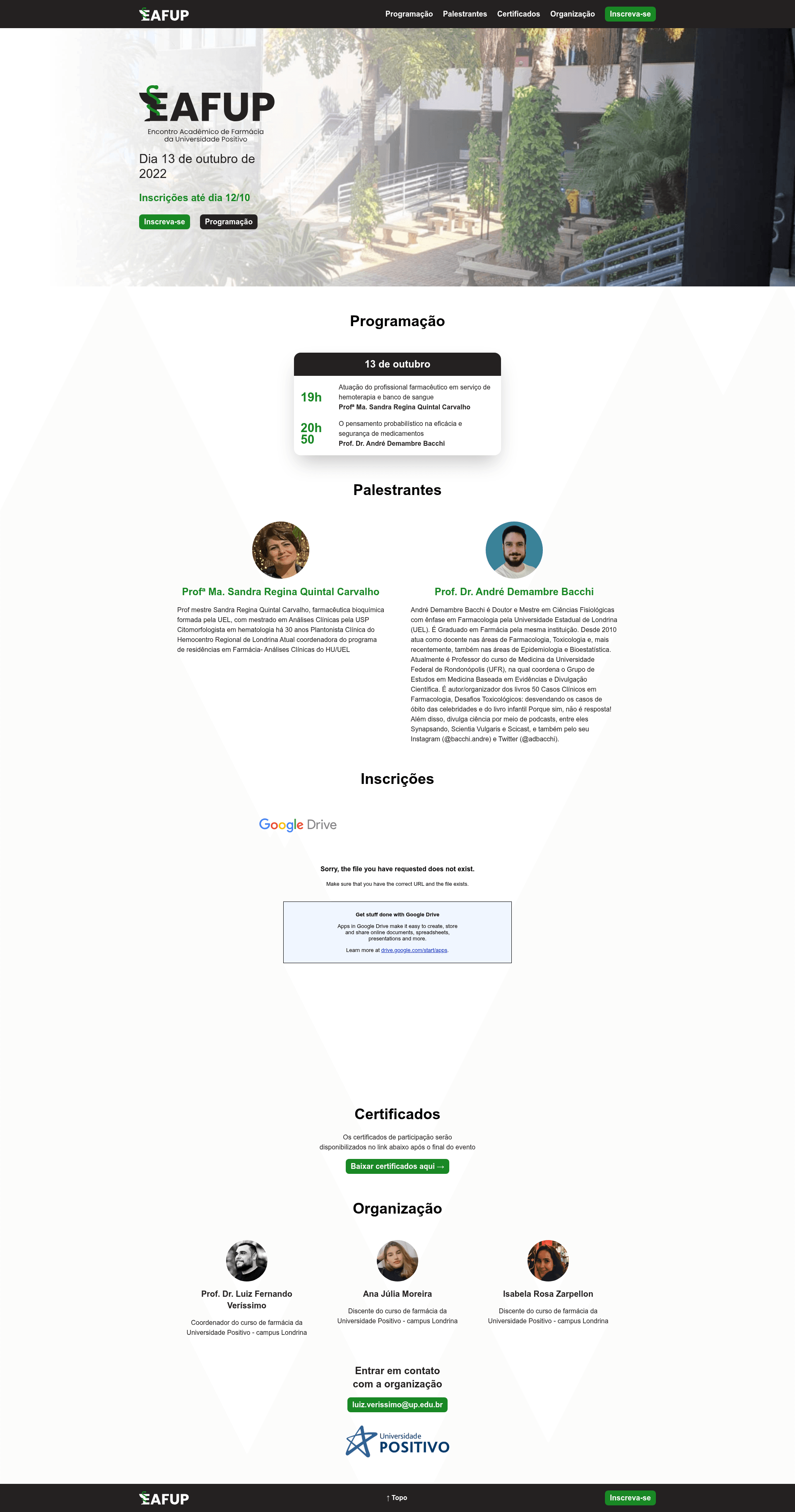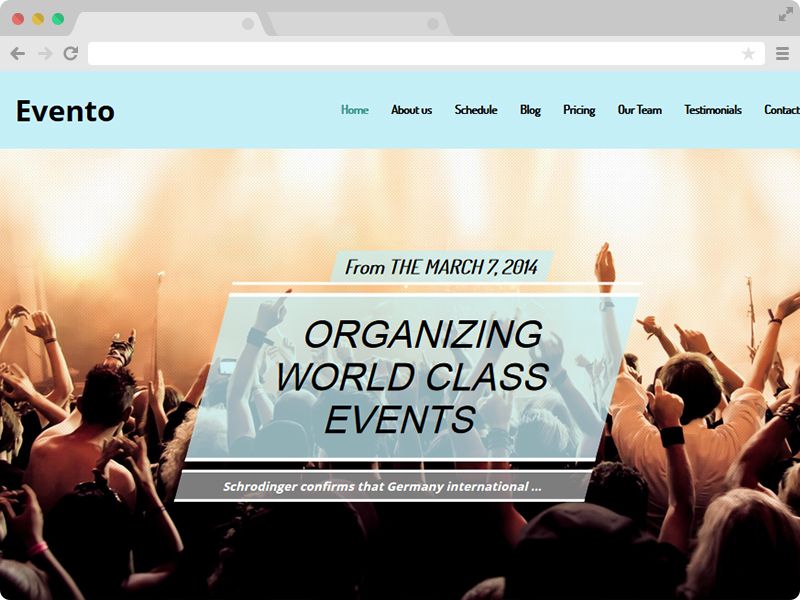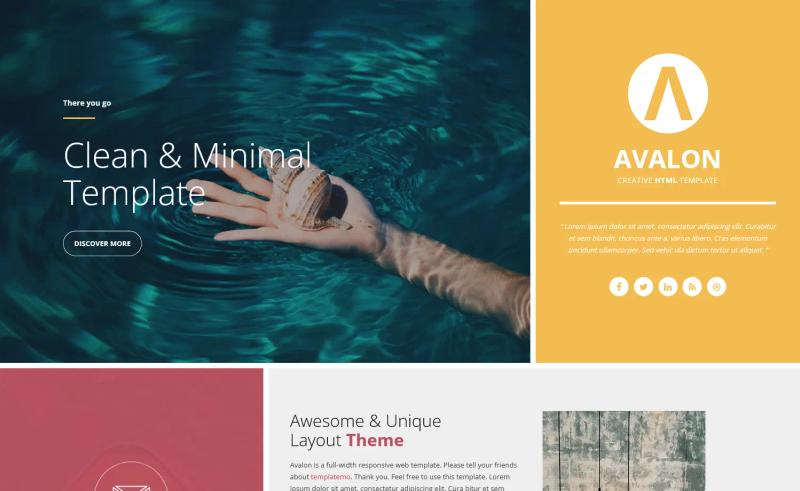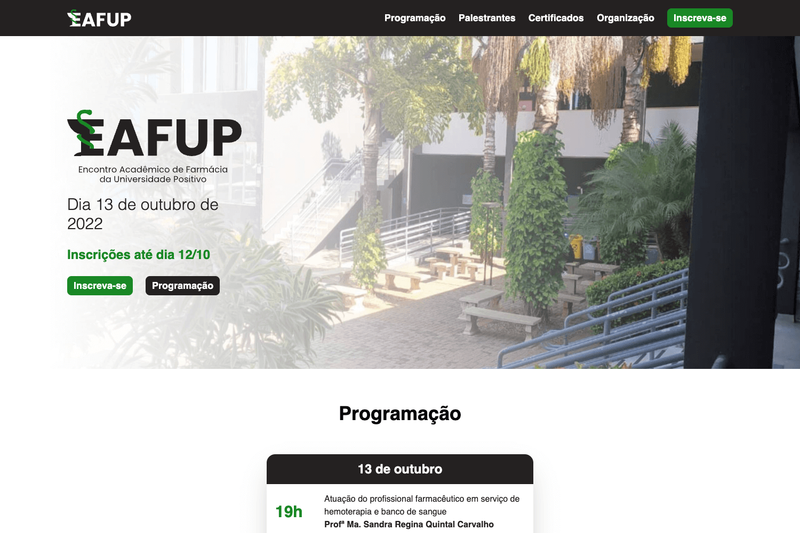
EAFUP Landing Page is a minimal event landing page template built with Next.js and Tailwind CSS, created to promote the EAFUP event and can be deployed to Vercel.
What is EAFUP Landing Page?
EAFUP Landing Page is an open-source landing page template for the EAFUP event, authored by LF Verissimo and available on GitHub. It is built with Next.js, a React-based framework, and styled with Tailwind CSS, combining server-side rendering with utility-first styling. The project is versioned at 0.1.0 and includes a live demo at eafup.vercel.app. It provides a starting point for creating a single-page promotional site that can be customized for any event.
Key Features
- Built with Next.js — Uses the React framework for fast static rendering and a component-based architecture.
- Tailwind CSS styling — Employs utility classes for responsive, mobile-first design without custom CSS files.
- Live demo — The deployed version at eafup.vercel.app shows exactly how the template looks in production.
- Simple Yarn workflow — Install with
yarn installand launch development withyarn dev; no complex configuration. - Open source — Hosted publicly on GitHub, allowing free use, modification, and contributions.
- Author support — The creator provides links to his website, GitHub, and LinkedIn in the README.
Who is it for?
- Event organizers — Can use this template to create a landing page for conferences, meetups, or workshops, replacing the placeholder content with their event's details.
- Frontend developers — Can clone this repository as a lightweight real-world example of Next.js and Tailwind integration, useful as a personal starter project.
- Freelancers — Can quickly produce a professional-looking event page for clients, benefiting from the pre-configured tooling and Vercel deployment.
What can you do with EAFUP Landing Page?
- Share event information — Use the single-page layout to present event name, date, location, and registration links, then share the demo URL with potential attendees.
- Learn the codebase — Study the small project structure to understand how a Next.js page and Tailwind styles are organized in a minimal setup.
- Deploy on Vercel — Connect the GitHub repository to Vercel and publish your customized landing page with a few clicks, since the demo already runs there.
How does EAFUP Landing Page work?
The README documents a straightforward local workflow: clone the repository, run yarn install to install dependencies, then run yarn dev to start the development server. The project is ready to edit immediately, and the included demo link indicates compatibility with Vercel's deployment pipeline.
Pricing
EAFUP Landing Page is free to use. It is an open-source GitHub project with no mention of licenses or paid tiers; you can fork, adapt, and deploy it without cost.
FAQ
Is EAFUP Landing Page free?
Yes, the template is open source. It is hosted on GitHub and does not have any payment requirement, so you can use it freely for personal or commercial projects.
What tech stack does EAFUP Landing Page use?
It uses Next.js as the React framework, Tailwind CSS for styling, and JavaScript as the language. Dependency management is done with Yarn.
How do I run the template locally?
After cloning the repository, run yarn install to install dependencies and then yarn dev to start the development server. The landing page will be served on your local machine.
Is there a demo I can see?
Yes, the live demo is accessible at https://eafup.vercel.app. It demonstrates the template in action as the EAFUP event landing page.
Who is the author of the template?
LF Verissimo created the project. His personal website is lfverissimo.com, and his GitHub and LinkedIn profiles are linked in the repository's README.