Newsletter
Join the Community
Subscribe to our newsletter for the latest news and updates

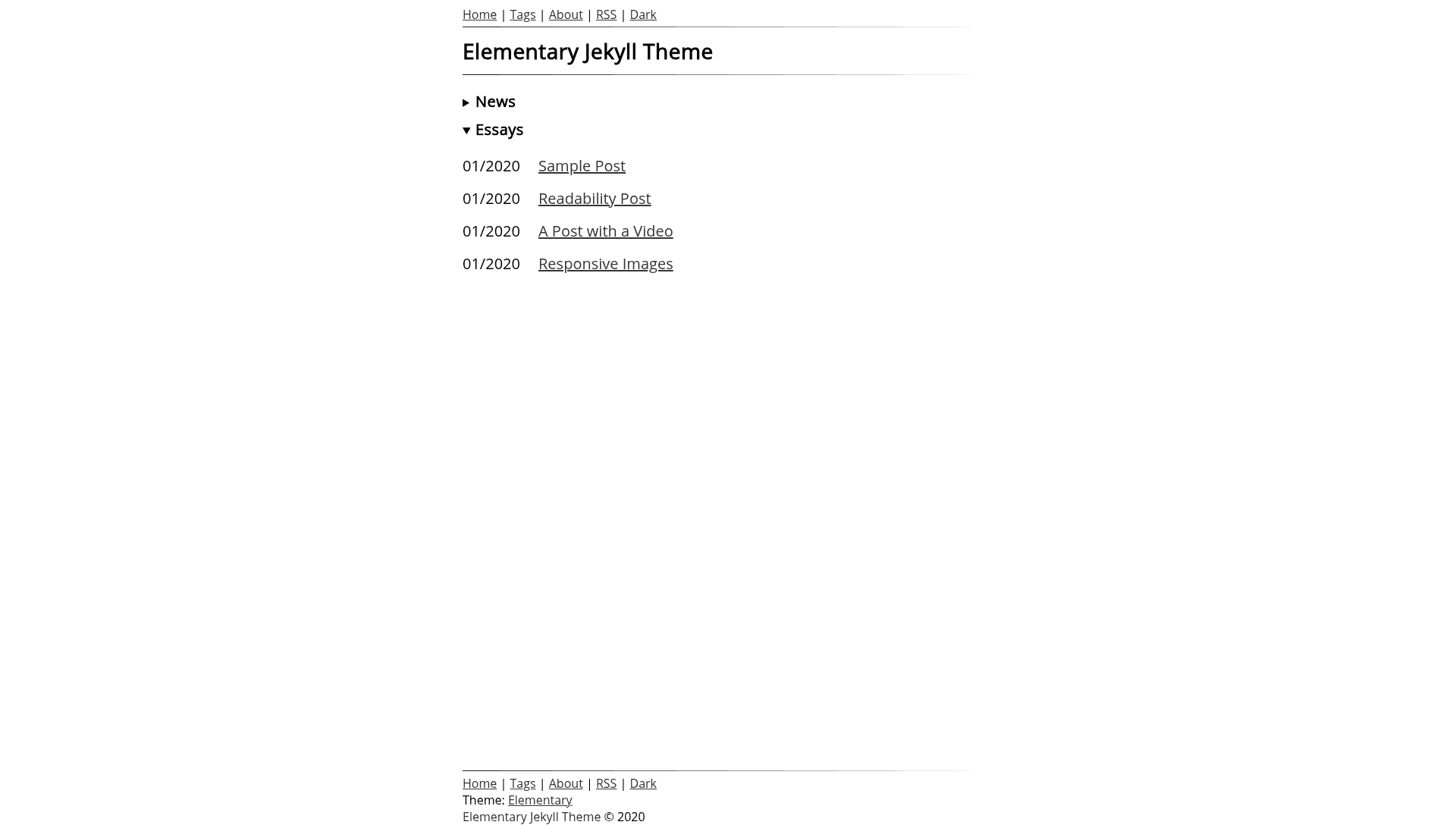
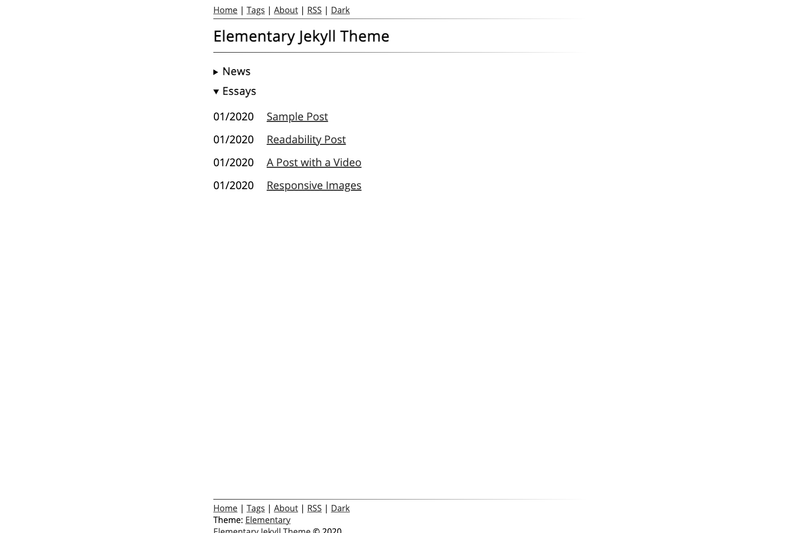
Minimal Jekyll theme optimized for performance, accessibility, usability and readability.
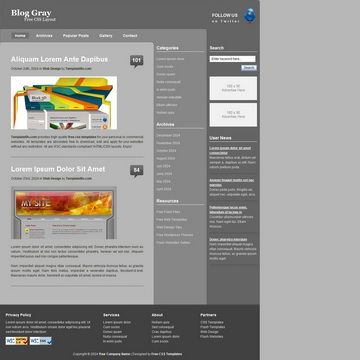
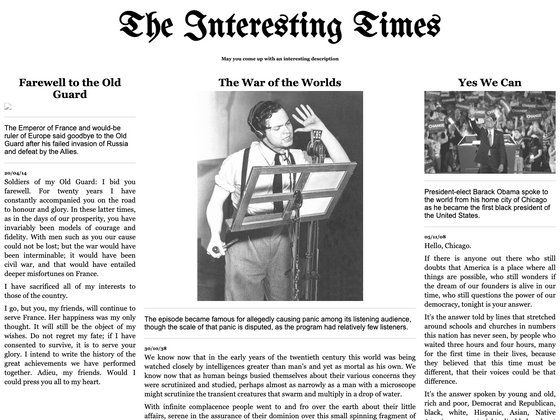
Free HTML CSS template with a 3-column layout that can be applied to any blog CMS theme.

Free Bootstrap 4 HTML5 news portal website template with hero header, sticky nav, and YouTube video player.
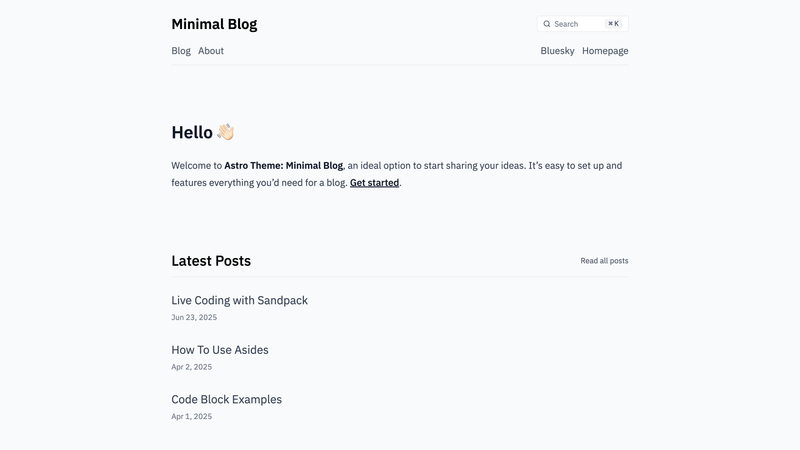
A minimal Astro blog theme with MDX, Tailwind, live code playgrounds, and Pagefind search.
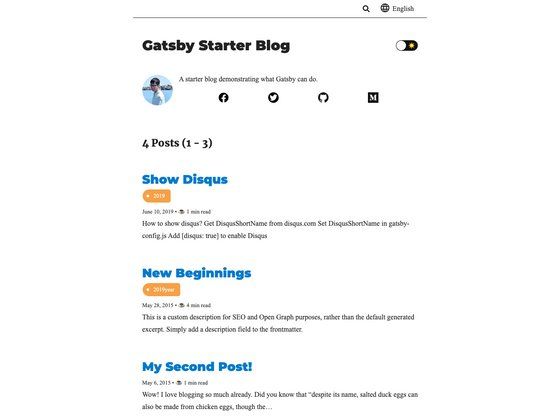
A Gatsby starter blog with overreacted design, tags, Algolia search, i18n, Disqus, breadcrumbs, and ESLint support.
Elementary is a minimal Jekyll theme for personal blogs, built around performance, accessibility, and a no-tracker policy, producing static HTML pages with optional JavaScript enhancements.
Elementary is a Jekyll theme created by the author of nagekar.com as the template for their own personal blog. It takes Jekyll content written in Markdown or HTML and generates a static website with semantic HTML, structured data for blog posts, and a total weight of under 10KB of CSS plus under 3KB of optional JavaScript, with a 15KB Open Sans font file. The theme runs on any standard Jekyll installation and is distributed as a GitHub repository that can be added as a submodule.
git submodule add and explore a clean, readable codebase.Elementary is installed as a git submodule and activated by setting theme: elementary in your Jekyll _config.yml, then adding gem 'elementary', path: 'elementary' to your Gemfile and running bundle install. After that, you run bundle exec jekyll serve for a local preview or bundle exec jekyll build to generate the production site in the _site directory.
Elementary is open source and licensed under the GNU General Public License v3, so it is free to use and modify.
Yes, Elementary is released under the GNU General Public License v3, which means you can use, modify, and distribute it freely, even for commercial purposes, as long as you keep the same license and make source changes available.
The core theme works without JavaScript; you can disable it in the configuration file. However, the dark mode toggle and the reading progress bar are JavaScript-dependent features and will not function when scripts are turned off.
Add the Elementary repository as a submodule with git submodule add [email protected]:abhn/Elementary.git elementary, set theme: elementary in your _config.yml, add the gem to your Gemfile, run bundle install, and then build with bundle exec jekyll build.
The GitHub README states the project is unmaintained because the author moved their blog to WordPress and ported the theme to a WordPress version. Updates to the Jekyll theme may happen sporadically, but you can check the WordPress theme repository for continued work.