Newsletter
Join the Community
Subscribe to our newsletter for the latest news and updates

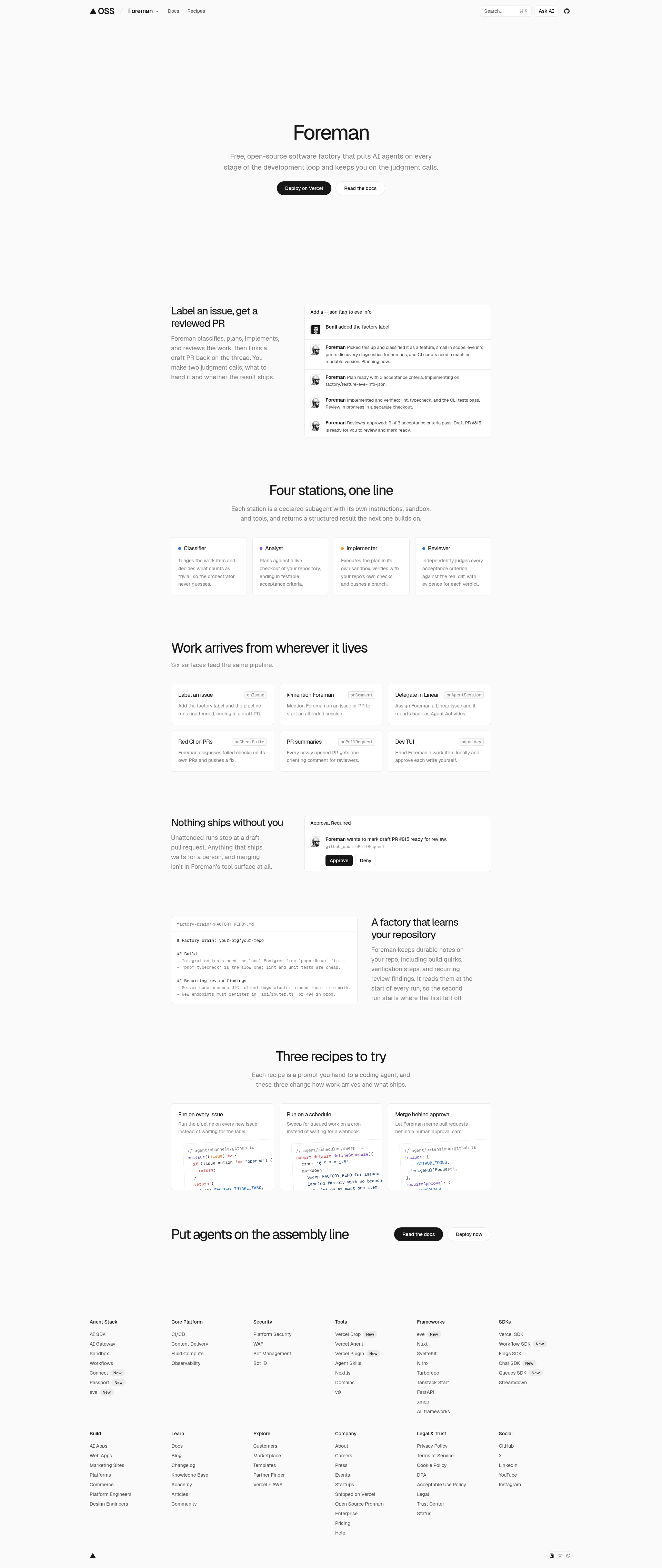
Software factory built on eve: AI agents work each stage of the development loop, and people make the judgment calls.

A clone of dede-digital.com featuring an animating search bar, built entirely with HTML and CSS as a static website template.

Static-first Astro framework for brand sites, Sanity CMS, and read-only Shopify retail catalogs. 0.x preview.
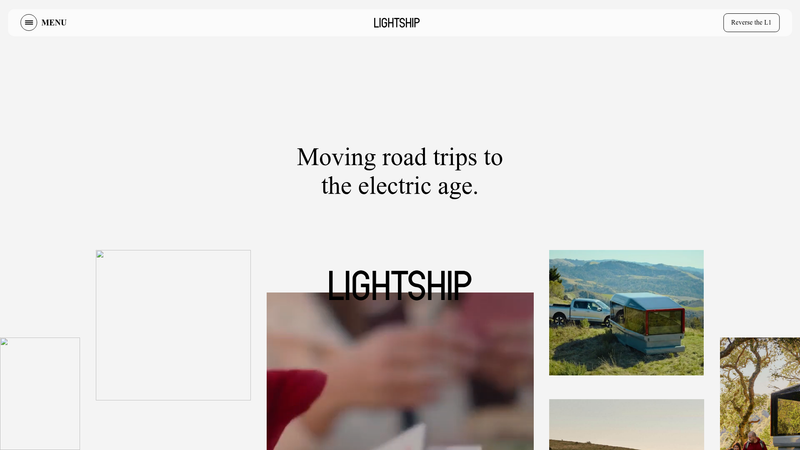
A static clone website of Lightship's all-electric RV site, built with GSAP and Locomotive Scroll.
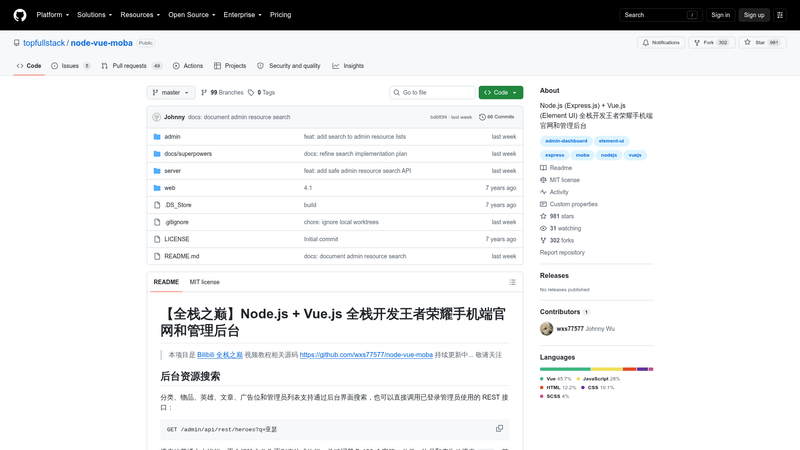
Node.js + Vue.js full-stack code for a Honor of Kings mobile site and admin dashboard, from the Bilibili 全栈之巅 tutorial.
The eve Software Factory (Foreman) is an open-source Vercel template that deploys an AI-powered development pipeline, turning GitHub and Linear tasks into reviewed draft pull requests with humans making the final judgment calls.
The eve Software Factory is a deployment template built on the eve agent framework, created by Vercel Labs. It accepts tasks from GitHub issues, GitHub pull requests, and Linear issues, then moves each task through four AI agent stations — Classifier, Analyst, Implementer, and Reviewer — and outputs a reviewed draft pull request linked to the original task. The template runs on Vercel and uses Vercel Connect to integrate GitHub and Linear connectors out of the box.
factory, @mention Foreman on an issue or PR (for owners, members, and collaborators), delegate via Linear Agent Sessions, hand a task through the local dev TUI, or trigger on red CI.FACTORY_BRANCH_PREFIX (default factory/) to avoid touching your branches.FACTORY_REPO and FACTORY_LABEL environment variables.FACTORY_SETUP_COMMAND (runs once at build time to install dependencies), FACTORY_BRANCH_PREFIX, and FACTORY_BOT_NAME (resolved from the GitHub App slug when unset).factory to trigger the pipeline automatically; Foreman posts progress as stations complete and ends with a draft PR linked to the issue.pnpm dev after linking and pulling environment variables, and watch the four stations fire in order on a real task.The pipeline starts when a task arrives (e.g., an issue labeled factory). The Classifier first triages the task — type, priority, complexity, and whether it's actionable; if not, it asks the requester instead of building the wrong thing. The Analyst then turns the task into a plan with acceptance criteria against a live checkout of the repository. The Implementer executes the plan in a sandbox, verifies with your repo's own checks, and pushes a branch. Finally, the Reviewer independently examines the real diff with evidence for each verdict. Between runs, the factory brain persists notes about the repository so future runs start with that context.
FACTORY_REPO environment variable do?FACTORY_REPO names the GitHub repository the factory works on, in owner/repo format. The deployment clones this repo up front to prewarm station sandboxes, and the connected GitHub App must have access to it; otherwise the deploy fails with a Cannot access error.
Label the issue with FACTORY_LABEL (default factory). You can also @mention Foreman on an issue or PR (if you're an owner, member, or collaborator), or use Linear Agent Sessions. Each trigger runs the same four-station pipeline and ends in a draft PR.
Foreman automatically diagnoses the failure and pushes a fix to its own branches only — those matching FACTORY_BRANCH_PREFIX (default factory/). It never pushes directly to your branches, so you keep control.
No. The Vercel deploy flow creates the GitHub connector, Linear connector, and Vercel Blob store for you. You only need to provide FACTORY_REPO and optionally FACTORY_LABEL, and ensure the GitHub App has access to the repository.