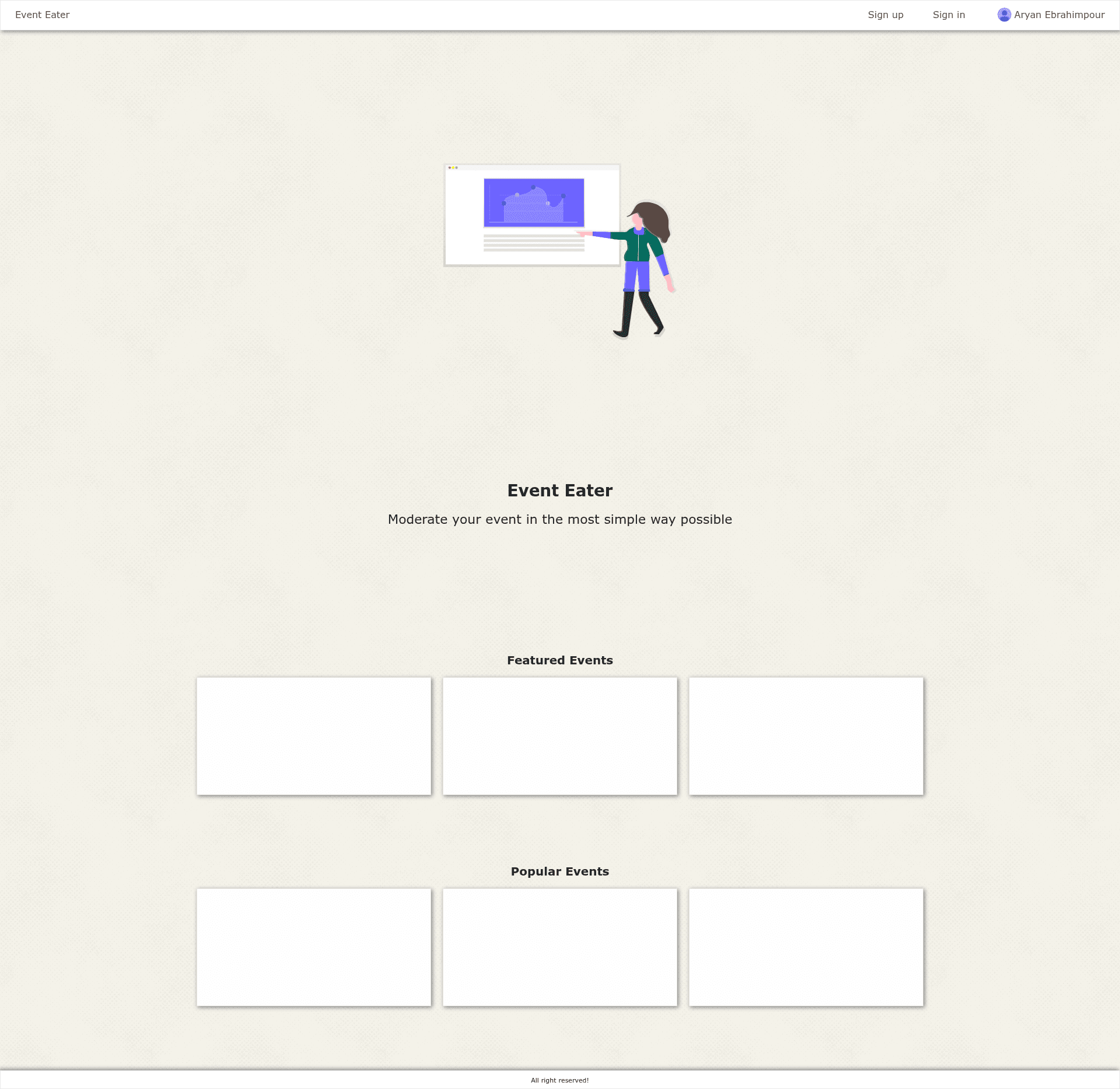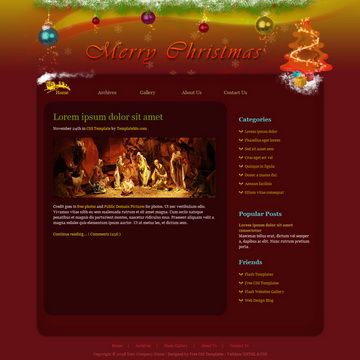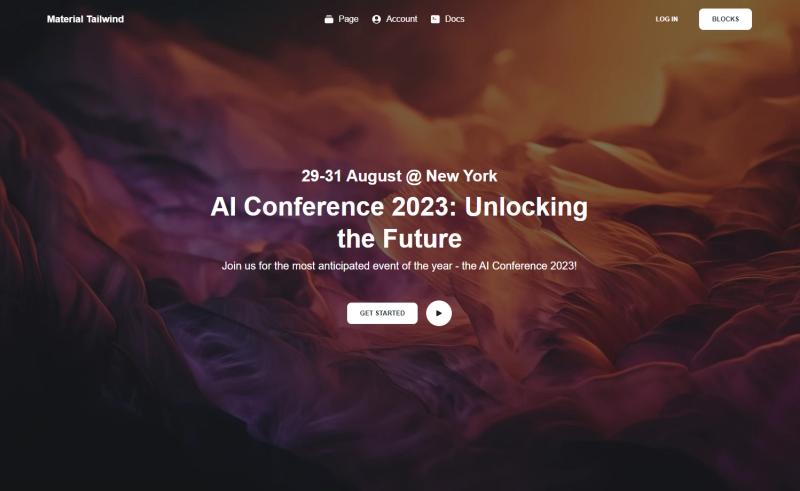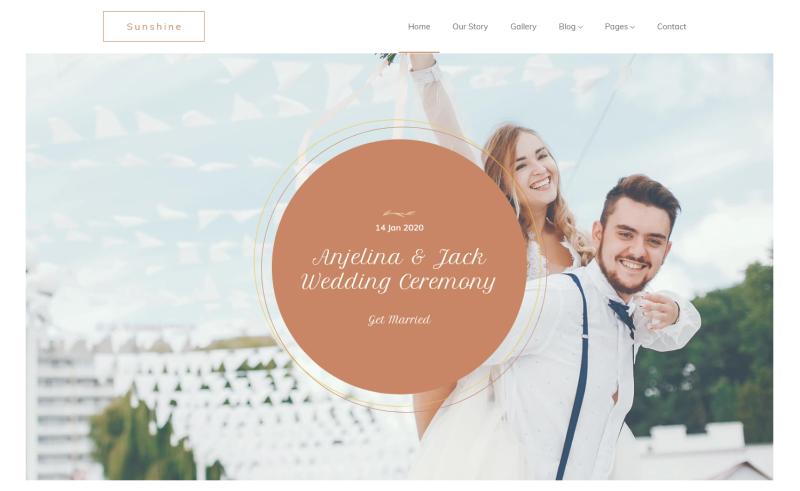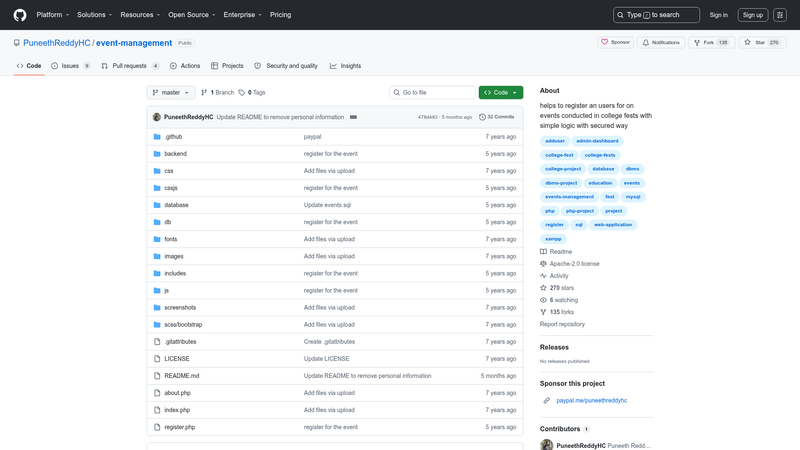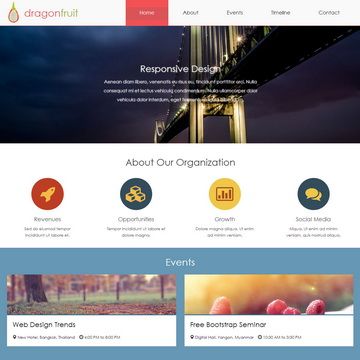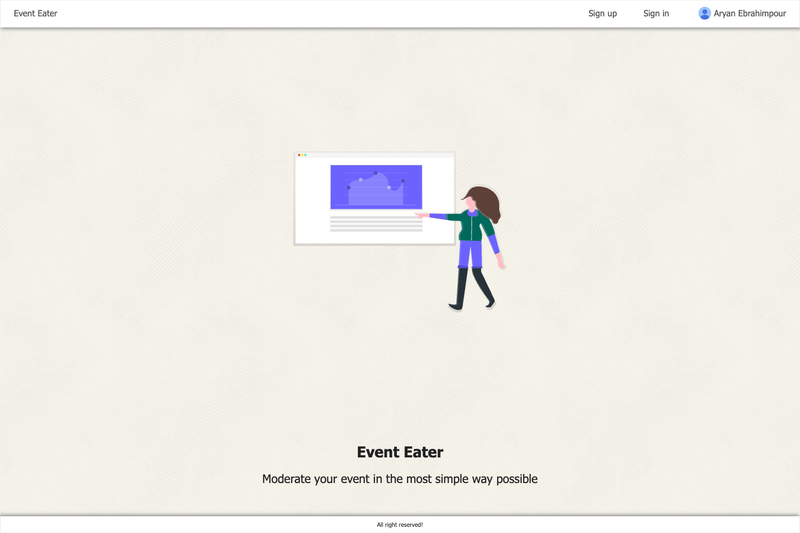
EventTemplate is a zero-dependency HTML/CSS website template, built with flexbox, that provides a simple starting point for event information pages. It is maintained by avestura and is currently labeled "Under Heavy Construction" on its GitHub repository.
What is EventTemplate?
EventTemplate is a plain HTML/CSS/JavaScript web template for event management pages, created as a lightweight alternative to framework-heavy solutions. It takes content such as event titles, descriptions, and other organizing details, and renders them as a styled webpage using CSS flexbox for layout. The template runs entirely in the browser with no build step, and is authored by avestura. The repository additionally notes that it is undergoing active changes.
Key Features
- Zero-dependency — The template uses only HTML, CSS, and JavaScript; there are no external libraries, build tools, or package dependencies to install.
- Flexbox layout — Page sections are arranged using CSS flexbox, making it easier to align and distribute content without relying on a CSS framework.
- Event-focused content structure — The repository topics include event-management and events, indicating the template is organized around presenting event information.
- Lightweight styling — Styling is kept minimal and intentionally simple, suitable for fast-loading static pages.
- JavaScript included — A JavaScript file is part of the project, though the specific behaviors it adds are not detailed in the repository description.
- Live preview available — You can view the current version at http://avestura.dev/EventTemplate/ and see the layout before making changes.
Who is it for?
- Event organizers — People setting up a page for a conference, workshop, or meetup who want a no-frills static site instead of a full CMS.
- Students and self-taught developers — Those learning CSS layout can study the flexbox usage in a compact, readable codebase.
- University clubs and departments — The guilan-university topic suggests the template may have been created with campus events in mind, making it a practical choice for student group pages.
- Developers who prefer plain files — Anyone who wants to edit HTML directly and deploy to any static host without configuring a generator.
What can you do with EventTemplate?
- Publish an event announcement: Replace the placeholder content with your event name, date, and description and host the HTML file on any static server.
- Practice flexbox layouts: Inspect the CSS to see how flex containers and items are used to build the page structure.
- Create a quick event landing page: Use the template as a temporary or permanent page for a single event, then extend it with additional sections as needed.
- Learn project structure: Study how a minimal zero-dependency template organizes HTML, CSS, and JavaScript files without requiring a build pipeline.
How does EventTemplate work?
Because the template is static, it works like any other plain HTML page: you open the file in a browser and it renders the event content. To customize it, you edit the HTML for text, the CSS for visual properties, and the JavaScript for any interactive elements. No server-side processing or package installation is needed, so you can host it on GitHub Pages, Netlify, or any other static host.
FAQ
Is EventTemplate production-ready?
The repository includes a prominent "Note: Under Heavy Construction" message, so it is not yet considered stable or complete. Use it for learning or prototyping, but be prepared to fix or add things before deploying publicly.
Does EventTemplate require any dependencies?
No. The template is described as zero-dependency, meaning you only need a web browser and a text editor to use it. There is no npm install, bundler, or build step involved.
How do I run EventTemplate locally?
Simply download or clone the repository and open the main HTML file in your browser. Since there is no build process, changes you make to the HTML, CSS, or JS files appear after refreshing the page.
What kind of events is this template suitable for?
Based on the repository topics, it targets event management generally, and the guilan-university topic points to campus events such as conferences, seminars, or student gatherings. You can adapt it to any single-page event layout.
Does EventTemplate use any front-end framework?
No, it avoids frameworks entirely. The layout is done with CSS flexbox, and the interactivity (if any) is handled by plain JavaScript, keeping the template lightweight.