Newsletter
Join the Community
Subscribe to our newsletter for the latest news and updates

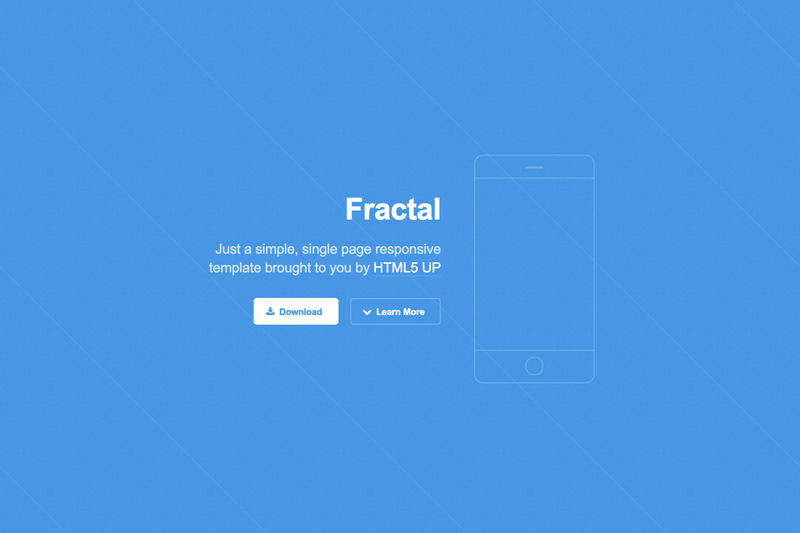
A Jekyll version of the 'Fractal' theme by HTML5 UP, a responsive landing page template for showcasing mobile apps.

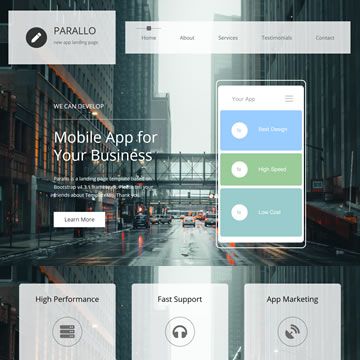
A free Bootstrap 5 HTML & CSS nonprofit website template with 9+ pages, donation and contact forms, and responsive carousels.

Free Bootstrap 4 HTML5 multi-page education template with hero header, parallax, pricing table, and contact form for schools and courses.
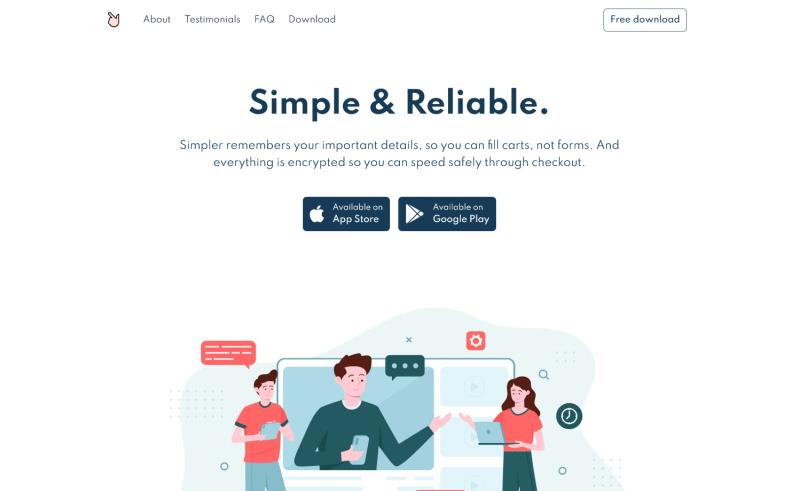
Free single-page Bootstrap 5 template to showcase mobile apps with sticky nav, FAQ, testimonials, and newsletter form.
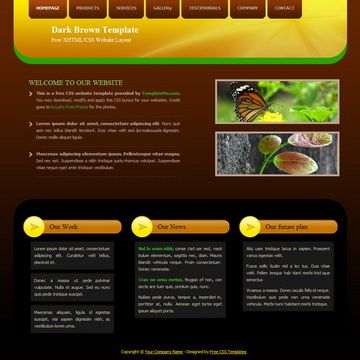
Free HTML/CSS website template with top menu, 2-column content area, and 3-column footer.
Fractal is a Jekyll port of the "Fractal" theme by HTML5 UP, a lightweight and fully responsive landing page template originally designed for showcasing mobile apps. It converts the static HTML5 UP design into a Jekyll-powered static site, letting you manage content through Markdown and a _config.yml file, and it is maintained by Andrew Banchich on GitLab.
Fractal is a Jekyll theme that wraps the HTML5 UP "Fractal" landing page template into the Jekyll static site generator. It takes a _config.yml configuration file plus standard Jekyll content (front matter, posts, and pages) as input, and outputs a static, production-ready landing page. The theme is distributed as a Ruby gem (per the repository topics) and runs on any Jekyll environment, including GitHub Pages and GitLab Pages.
_config.yml, so you can edit site metadata without touching HTML._config.yml; for GitHub, create a gh-pages branch; for GitLab, just fork and push.The README outlines a simple two-step workflow: fork the repository and edit _config.yml, then deploy. On GitHub, you create a branch named gh-pages; on GitLab, you simply fork and push. Jekyll then renders the Markdown content and YAML configuration into the static landing page.
Yes. The original HTML5 UP theme is free for personal and commercial use under the Creative Commons Attribution 3.0 license, and the Jekyll port inherits that license.
Yes. The README explicitly instructs GitHub users to fork the repository, create a branch named gh-pages, and edit _config.yml. Jekyll on GitHub Pages will build the site automatically.
The original HTML5 UP Fractal theme is built on Skel 3, Sass, and flexbox, and it includes Font Awesome icons, jQuery, html5shiv.js, CSS3 Pie, and Respond.js. The Jekyll port adds standard Jekyll front matter and _config.yml support.
The original credits say demo images are from Unsplash and are not included (* = not included). So you'll need to supply your own images for the page.
The README directs users to the GitLab repository (andrewbanchich/fractal-jekyll-theme) for bug reports, questions, and feature requests. The GitHub repository is a mirror of the GitLab one.