Newsletter
Join the Community
Subscribe to our newsletter for the latest news and updates

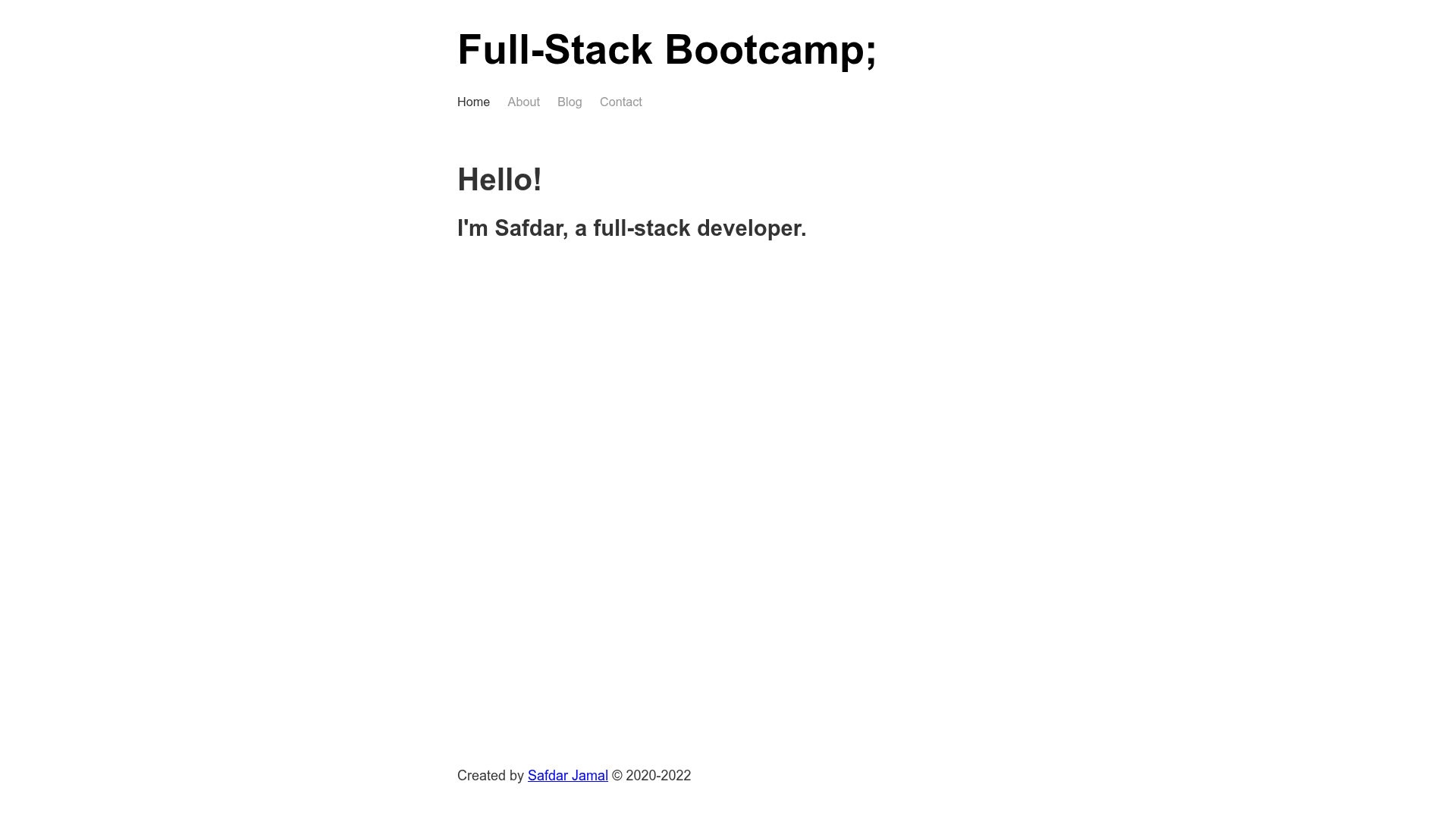
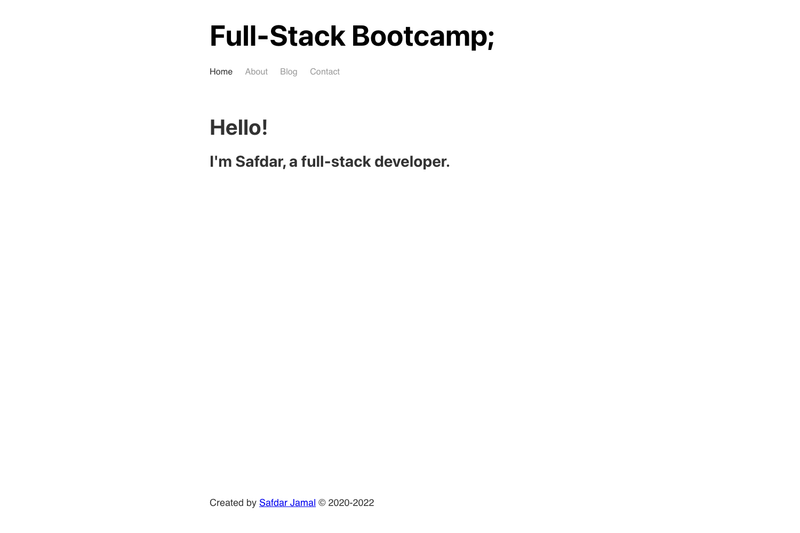
A minimal blogging site built with Gatsby using Contentful and hosted on Netlify.
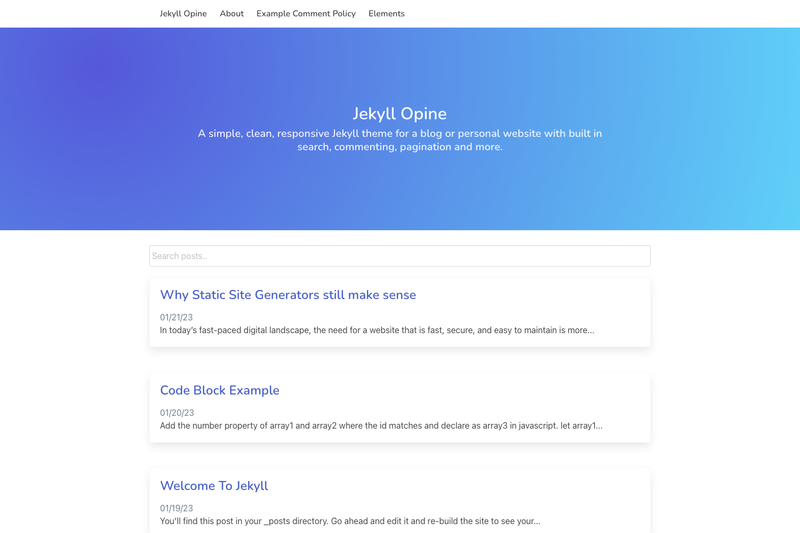
A simple, clean, responsive Jekyll theme for a blog or personal website with built in search, commenting, and more.
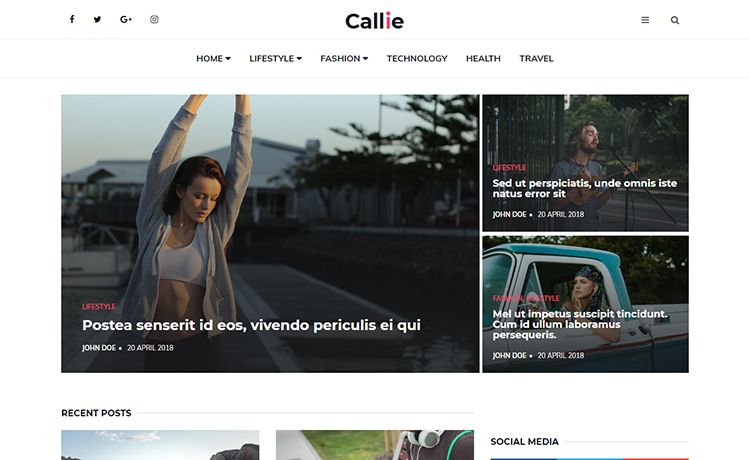
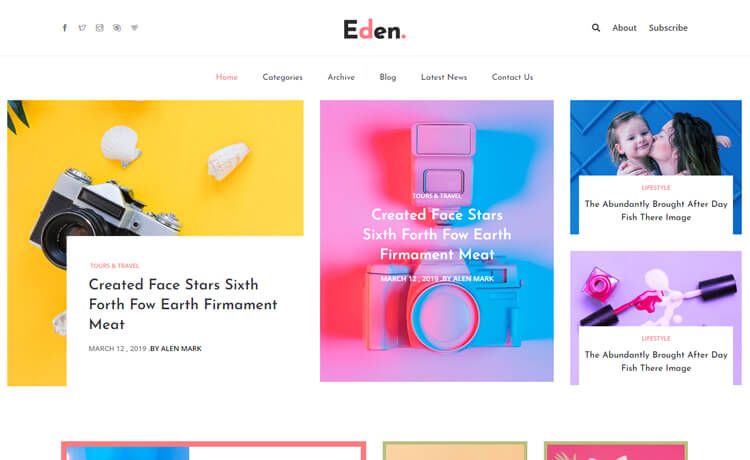
Free multi-page HTML5 fashion blogging template with Bootstrap 3, dropdown/mega menus, Instagram feed, and a magazine-style layout.
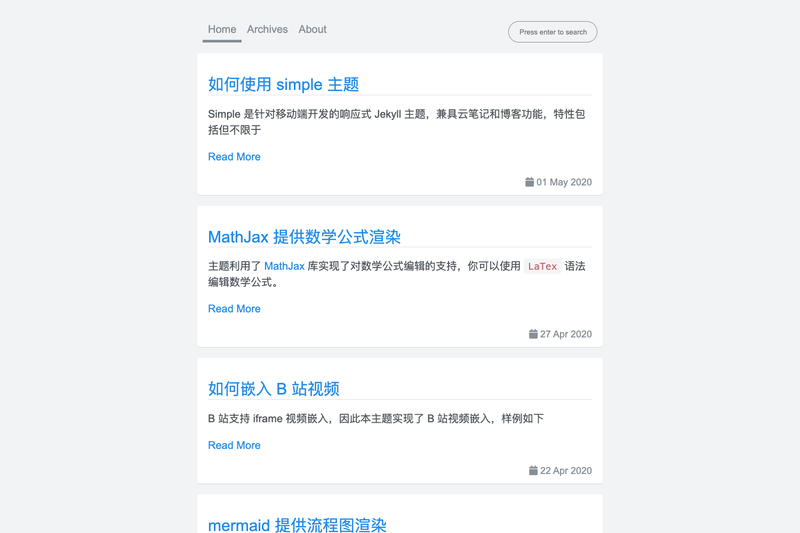
A responsive Jekyll theme for mobile with online editing, MathJax, mermaid, video embeds, and Gitalk comments.
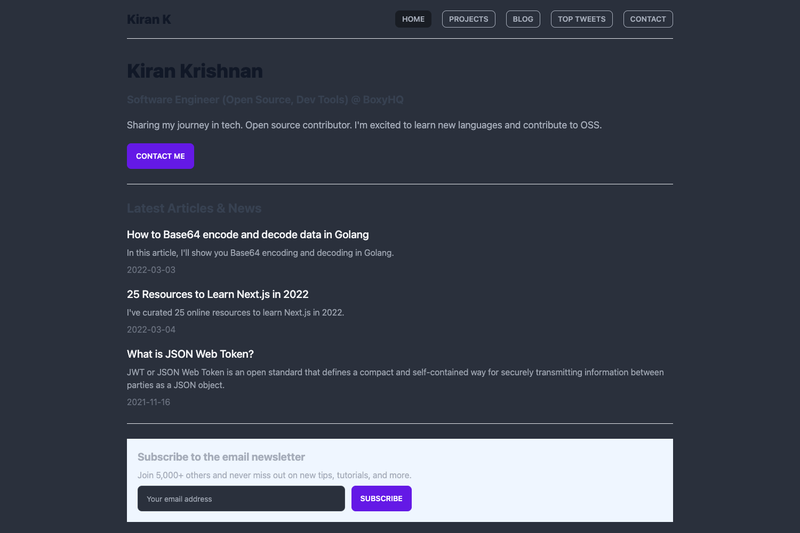
This is a simple NextJS blog template for developers.
Gatsby Bootcamp Blog is a minimal blog starter template built with Gatsby, Contentful CMS, and Sass, offering pre-rendered React pages for Landing, About, Blog, and Contact.
Gatsby Bootcamp Blog is an open-source Gatsby starter that creates a static blog site with posts managed through Contentful CMS. The template takes a Contentful space as its content source and outputs a pre-rendered HTML site with automatic JS chunk loading, plus a GraphQL data layer accessible via GraphiQL. It was built by Safdar Jamal while following the Gatsby Bootcamp tutorial, is released under the MIT license, and is designed to be deployed to Netlify or Vercel with one click.
gatsby new my-blog-starter https://github.com/SafdarJamal/gatsby-bootcamp-blog.gatsby develop to start a development server at http://localhost:8000, with the GraphiQL explorer at http://localhost:8000/___graphql.Yes, the starter is licensed under the MIT license, so it is free to use, modify, and distribute for personal or commercial projects.
You need the Gatsby CLI installed. The template also assumes a Node.js environment with npm, since it uses package.json and package-lock.json for dependency management.
Blog posts are created in Contentful CMS. The Gatsby site pulls the content at build time, so after adding a post in Contentful you trigger a rebuild (for example, on Netlify) to publish it.
Yes, the README includes one-click Deploy to Netlify and Deploy with Vercel buttons that point to the GitHub repository.
Navigate into the project directory, run gatsby develop, and open http://localhost:8000. The site updates in real time when you save changes to source files.