Newsletter
Join the Community
Subscribe to our newsletter for the latest news and updates

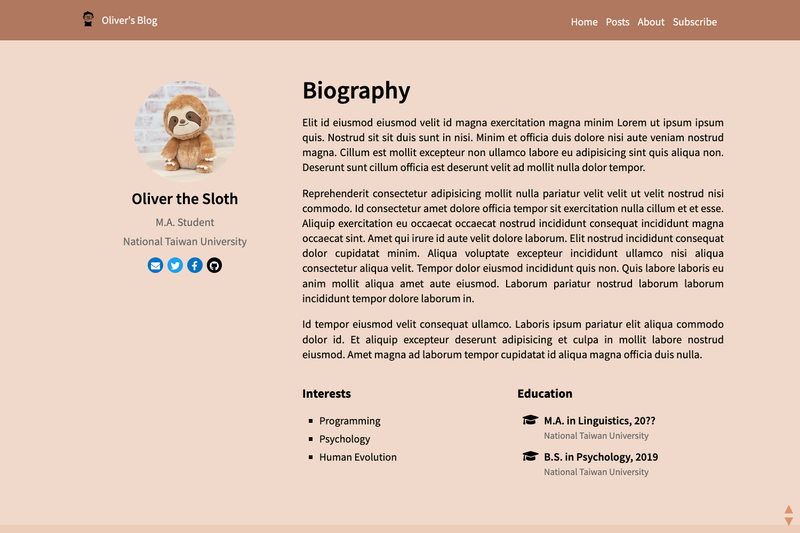
A simple Hexo theme with Valine and Disqus comments, code highlighting, and custom pages for tags, about, search, and friend links.
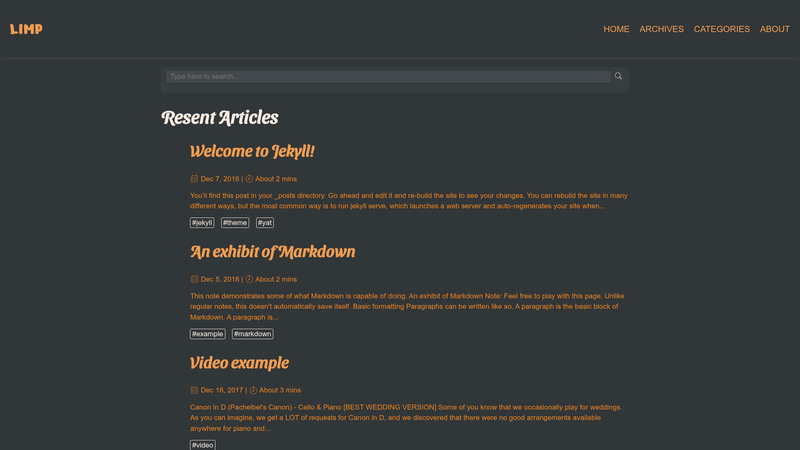
A lightning-fast dark Jekyll theme with a modern flat design, distributed as a Ruby gem for writers and developers.
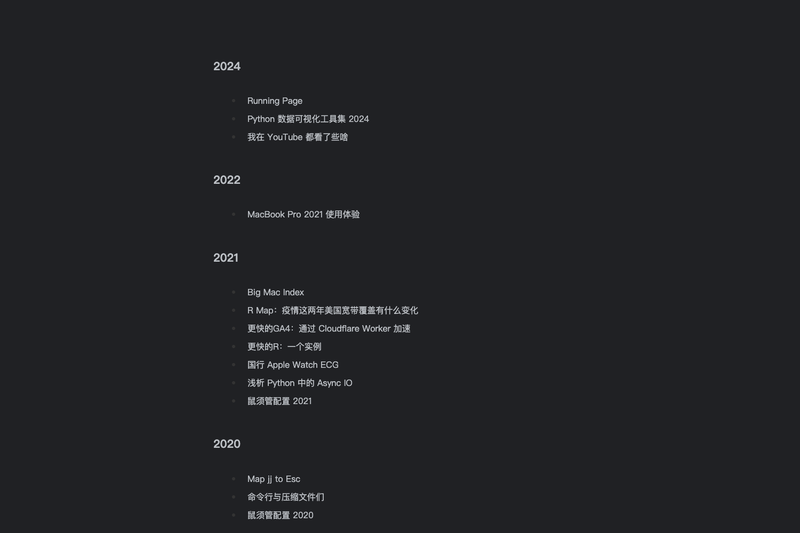
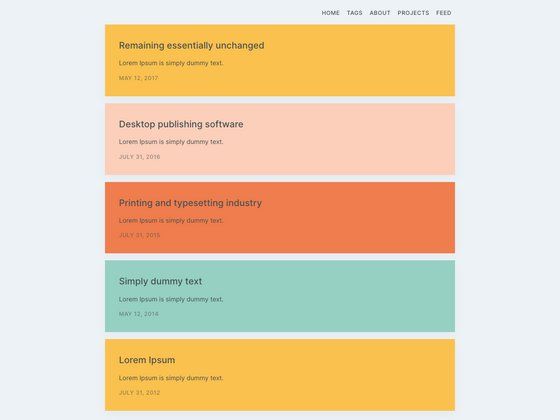
A minimal static Jekyll theme with Chinese-optimized typography for markdown blogs.
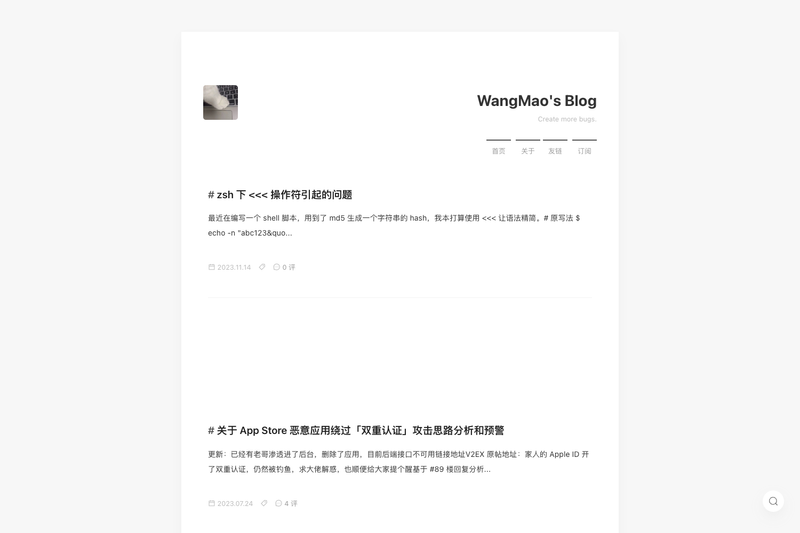
A clean, minimalist Hexo theme for personal blogs, with optional footer word count and easy git installation.
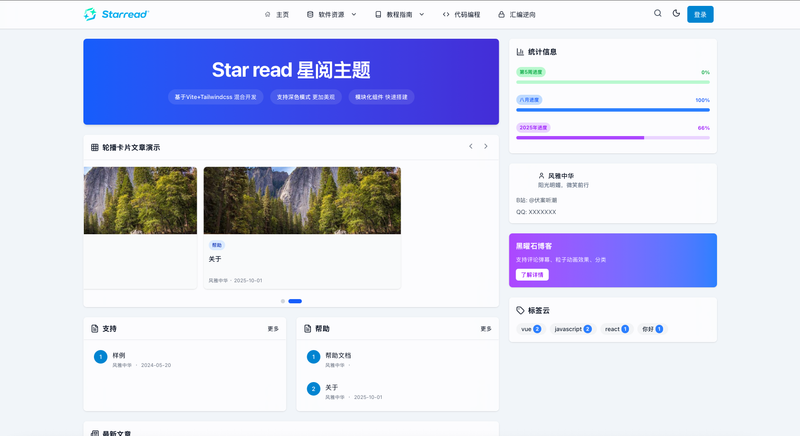
A clean, modern Astro blog theme with local and Algolia search, dark/light mode, and Twikoo comments.
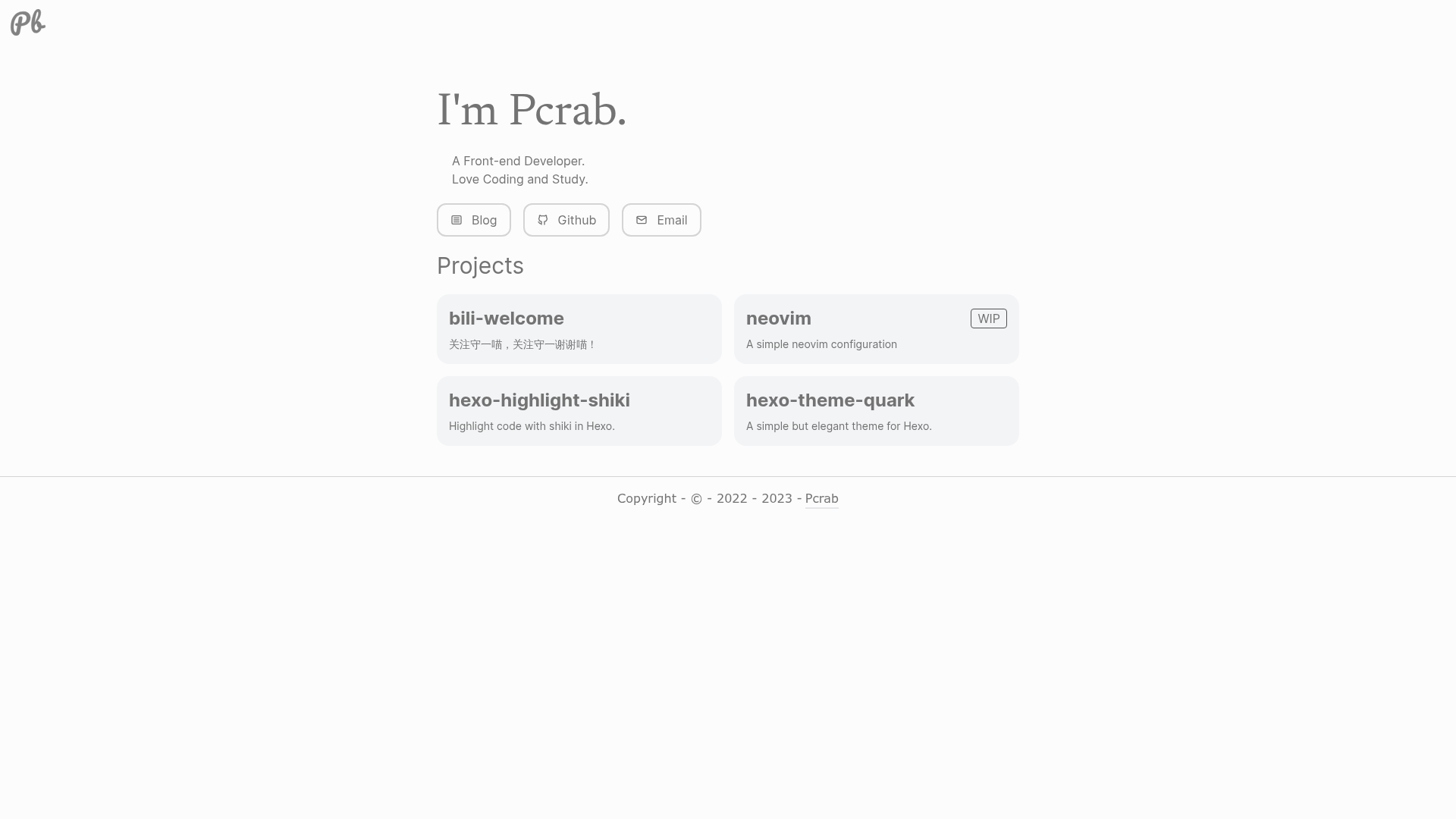
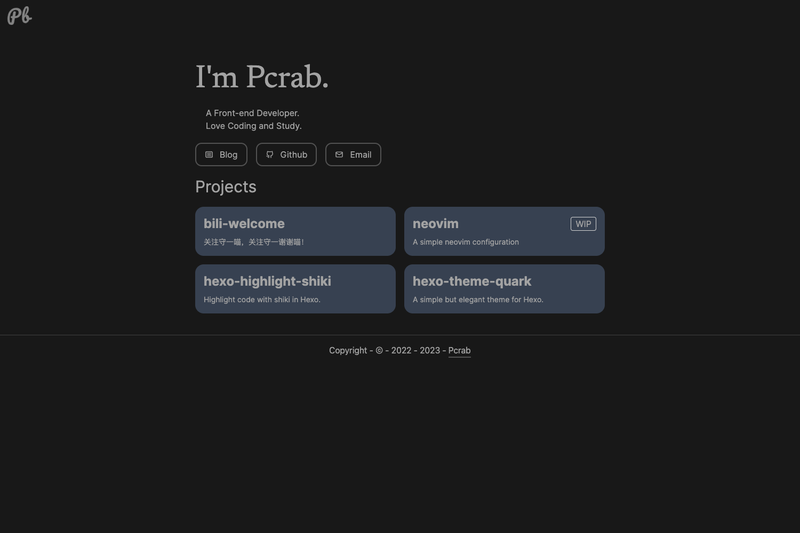
Hexo Theme Quark is a minimal open-source theme for the Hexo static site generator, designed to give personal blogs a clean layout with configurable comments, syntax highlighting, and four built-in custom pages.
This theme runs on Hexo and turns a standard Hexo blog into a lightweight personal blog with a clean, minimal design. It takes a Hexo site as input and produces static pages with support for Valine or Disqus comments, highlight.js code highlighting, and custom pages for tags, about, search, and friend links. The theme is authored by Pcrab and is still under development, with all configuration handled through the theme's _config.yml file.
hexo new page and the matching layout.highlight.pack.js to highlight.min.js, replace it in /source/js/, and disable Hexo's built-in highlight.syntax option in _config.yml controls whether highlighting is global and which highlight.js theme (e.g., xcode) is applied.dark setting toggles night mode.startYear, showTheme, and beian options let you control footer text and add an ICP filing number.author option powers the about page, and friendlinks supports friend links with image descriptions.hexo-generator-feed for RSS and hexo-generator-search for a search page, both configured in the site's root _config.yml.theme field._config.yml (icon, favicon, dark mode, copyright, syntax) and expects manual file swaps for highlight.js, making it suitable for users who want hands-on control.beian) to the footer to meet Chinese hosting requirements.The README outlines a manual setup: clone the repository into the Hexo site's themes directory, set theme: quark in the root _config.yml, and then edit the theme's _config.yml to customize options. For search, install hexo-generator-search and add a search block; for RSS, install hexo-generator-feed and add a feed block. To use code highlighting, replace the default highlight.js file in /source/js/ and set highlight.enable: false in the root config.
Yes, the theme is open-source and available on GitHub; the repository has 56 stars at the time of writing.
It supports Valine and Disqus. Valine requires registering for a Leancloud account; the README suggests the international version to avoid domain filing.
Yes, but both require third-party plugins: hexo-generator-feed for RSS and hexo-generator-search for search. Configuration blocks must be added to the root _config.yml.
Visit the highlight.js download page, choose the languages you need, download the pack, rename highlight.pack.js to highlight.min.js, and place it in /source/js/. Then disable the theme's built-in highlight by setting highlight.enable: false in the root config.