Octopress is a framework for Jekyll blogging that adds a responsive HTML5 theme, code-embedding tools, and pre-built integrations for analytics, comments, and social bookmarks. It wraps Jekyll's static site generator with a polished theme and a set of plugins and rake tasks that streamline building and deploying a blog.
What is Octopress?
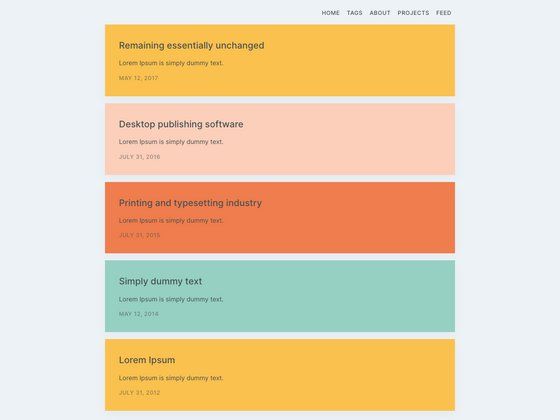
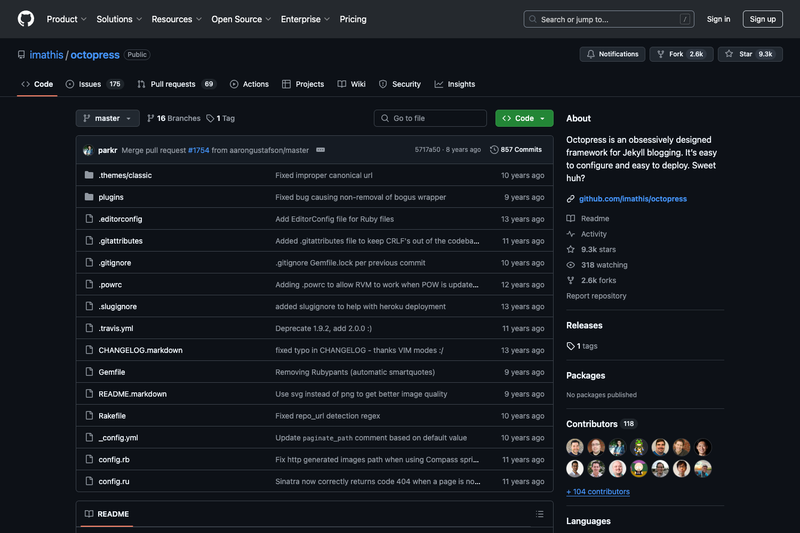
Octopress is a blogging framework built on top of Jekyll, the static site generator. It takes Jekyll's core and adds a clean, responsive theme written in semantic HTML5, plus plugins and rake tasks that simplify development and deployment. Octopress is maintained by Brandon Mathis (copyright 2009-2013) and its source code is on GitHub; version 3.0 is listed as under development.
Key Features
- Responsive HTML5 theme — A mobile-friendly theme focused on readability, built with semantic HTML5.
- Code blogging support — Embed code from gists, jsFiddle, or files on your filesystem, with Solarized syntax highlighting.
- Third-party integrations — Built-in support for Pinboard, Delicious, GitHub Repositories, Disqus Comments, and Google Analytics.
- Easy deployment — A collection of rake tasks simplifies development and makes deploying to a web host straightforward.
- Plugin collection — Ships with plugins, some original and some from the Jekyll community, tested and improved.
- Ruby requirement — Requires a minimum Ruby version of 1.9.3-p0.
Who is it for?
- Jekyll users — Those who want a ready-made theme and plugins without configuring everything from scratch.
- Technical writers and developers — Who want to blog about code with easy embedding of snippets from files, gists, or jsFiddle.
- Self-hosted site owners — Who prefer static-site generation and need built-in Disqus comments and Google Analytics tracking.
What can you do with Octopress?
- Developers: Publish code-heavy posts with syntax-highlighted snippets pulled directly from your filesystem or gists.
- Bloggers: Quickly set up a mobile-friendly blog with a responsive theme that works on phones and tablets.
- Site admins: Wire up Disqus for comments, Google Analytics for traffic tracking, and Pinboard or Delicious for social bookmarks.
How does Octopress work?
Octopress runs on Jekyll, the static site generator. You write posts in Markdown or other formats, use rake tasks to build the site, and then deploy the generated static files to any web host. The rake task system handles common workflows, and plugins extend Jekyll's native capabilities.
Frequently asked questions
Is Octopress free?
Yes, Octopress is open source and released under the MIT License, so it is free to use and modify.
What are the system requirements for Octopress?
Octopress requires a minimum Ruby version of 1.9.3-p0. Since it sits atop Jekyll, you also need a Ruby environment to install and run it.
Does Octopress support code highlighting?
Yes, code embedded in posts gets Solarized styling, a popular color scheme for syntax highlighting.
Can I use Octopress with my own domain?
Yes, because it generates static files, you can host the output on any web server or static hosting service, including one that uses your own domain.