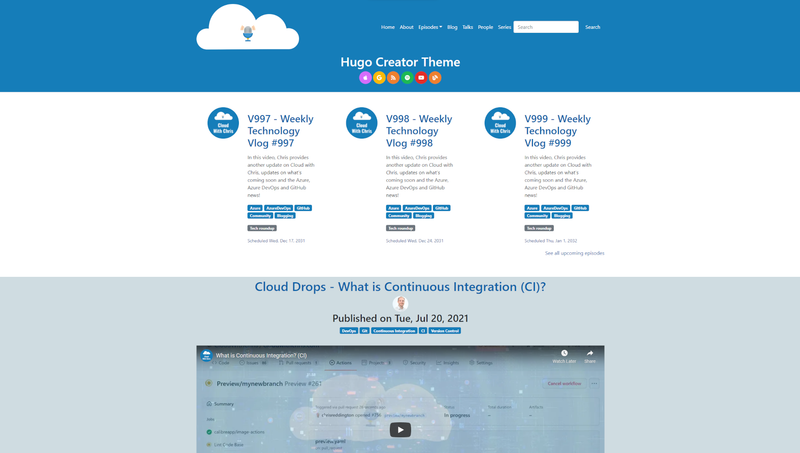
Hugo Creator is a free, MIT-licensed theme for the Hugo Static Site Generator, built specifically for content creators who want a blog, podcast, or video companion site without spending time on front-end work. The theme is maintained by CloudWithChris and is available as an open-source repository that you can install into a Hugo project with a single git submodule command.
What is Hugo Creator Theme?
Hugo Creator is a theme that plugs into Hugo, a fast static site generator that compiles Markdown content into static HTML pages. It accepts the standard Hugo content structure — post files, config values, and front matter — and produces a ready-to-deploy website. The project's README states it is intended for content creators of all varieties, explicitly naming bloggers, podcasters, and YouTubers. The theme is distributed under the MIT License, giving you freedom to use, modify, and redistribute it, and it is created by Chris, the author of the Cloud With Chris site.
Key Features
The theme gives you the essential pieces of a content-focused site with minimal setup. Here are the concrete features you can rely on:
- Hugo native — built for the Hugo static site generator, so you get fast, secure static output with no database.
- Content-creator focus — explicitly designed for bloggers, podcasters, and YouTubers, covering common content formats.
- Quick install — add it as a git submodule with
git submodule add https://github.com/CloudWithChris/hugo-creator themes/hugo-creator. - Config-driven — activate the theme by setting
theme: "hugo-creator"in your Hugo config.yaml. - MIT licensed — free to use and modify; the license is included in the repository.
- Reference documentation — a REFERENCE.md file explains configuration options and best practices for different use cases.
- Netlify integration — the repository includes a Netlify deploy status badge, showing the theme is compatible with Netlify deployments.
Who is it for?
Hugo Creator is built for people who publish content online and want a static site that's easy to maintain. Bloggers can use it to publish Markdown posts and generate a site quickly. Podcasters who need a hub for their episodes are explicitly mentioned as a target audience in the README. YouTubers wanting a companion website for their channel will find the theme designed with them in mind. Developers comfortable with Hugo and git submodules will appreciate the straightforward install and the MIT license that lets them customize the theme.
What can you do with Hugo Creator?
With Hugo Creator, you can set up a content site using the tools you already know. Here are a few concrete uses:
- Bloggers: Install the theme into your Hugo project, write posts in Markdown, and build a static website that deploys anywhere Hugo does.
- Podcasters: Use the theme as a foundation for an episode archive, given the project's stated support for podcasters.
- Developers: Tweak the theme's templates and styles because the source is open and MIT-licensed, and manage version updates through git submodule tags.
How does Hugo Creator work?
To use Hugo Creator, run git submodule add inside your Hugo project to pull the theme into the themes/hugo-creator folder. Then edit config.yaml to set the theme name to "hugo-creator". Hugo will automatically pick up the theme's templates and layout files when building your site. Optionally, you can pin a specific branch, tag, or commit for the submodule, as described in the README.
FAQ
Is Hugo Creator free?
Yes. Hugo Creator is released under the MIT License, which also appears in the repository's LICENSE file. That means you can use it for personal and commercial projects, modify it, and distribute your modifications.
How do I install Hugo Creator?
Run git submodule add https://github.com/CloudWithChris/hugo-creator themes/hugo-creator inside your Hugo project, then set the theme name in config.yaml. The README also suggests using Visual Studio Code's submodule UI to manage the version.
Does Hugo Creator work with Netlify?
The repository includes a Netlify status badge that points to a live demo site and deploy logs, indicating Netlify deployments are used in the project. Since Hugo generates static files, it can be deployed on any static hosting service.
What content types does Hugo Creator support?
The README explicitly mentions bloggers, podcasters, and YouTubers as target users, so the theme is meant to handle various content types. For the detailed configuration of each content type, the project provides a REFERENCE.md file.