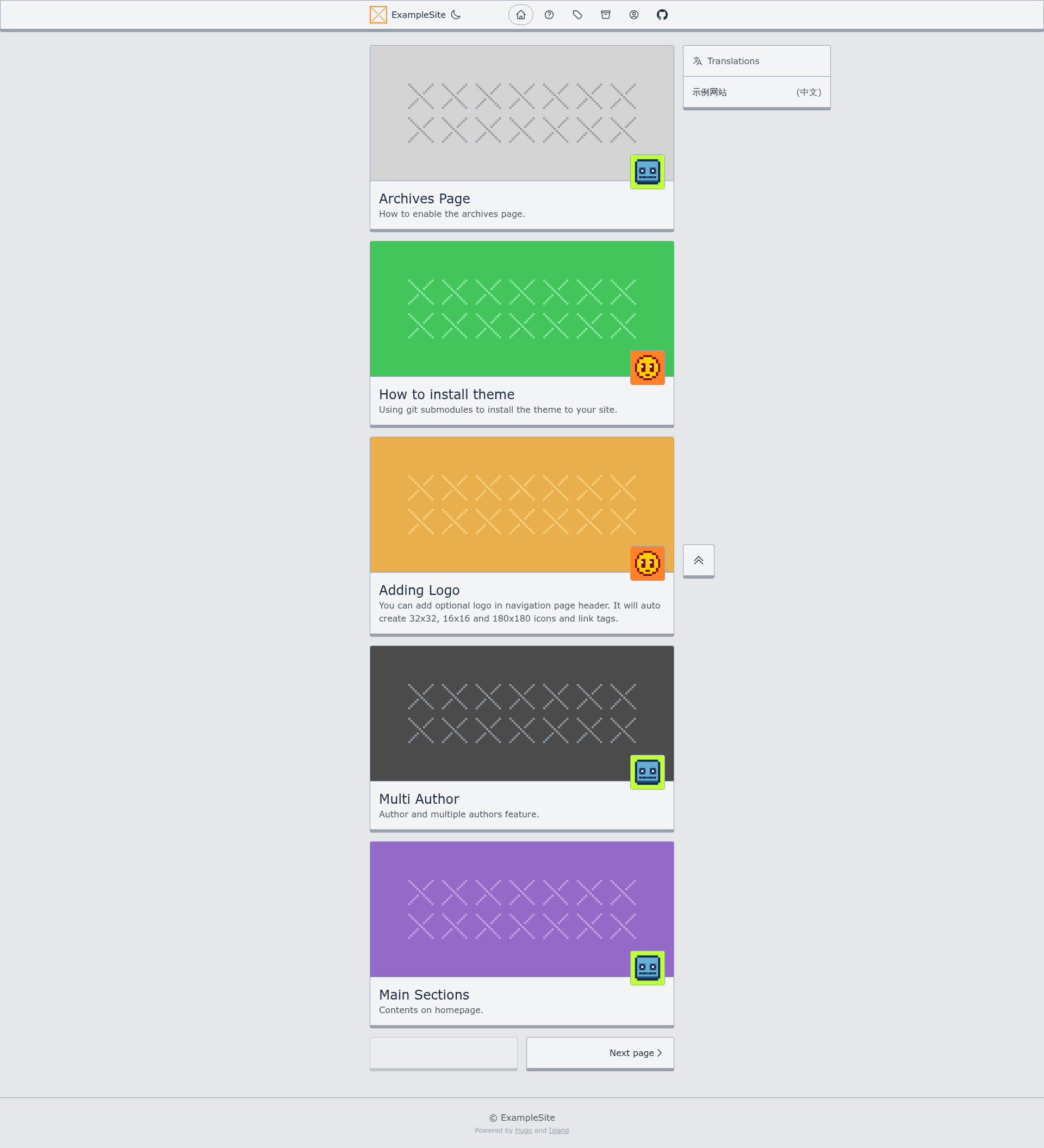
Hugo-Theme-Island is an open-source Hugo theme built on Tailwind CSS 4.0 that turns Markdown content into a fast static blog or documentation site. Developed by GitHub user bin16, it ships with a pre-compiled main.css so site builders don't need Node.js, while offering dark mode, multilingual i18n, multi-author support, and more.
What is Hugo-Theme-Island?
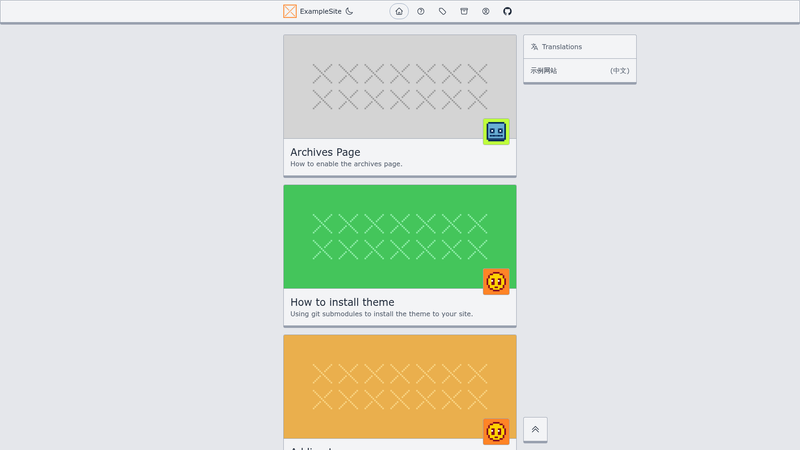
Hugo-Theme-Island is a Hugo theme based on Tailwind CSS 4.0, designed for building blog and documentation websites from Hugo content. It takes standard Hugo Markdown files, taxonomy terms, and config as input, and outputs a static HTML site through Hugo's build pipeline. The theme is maintained by GitHub user bin16 and is marked as a work in progress, with a live demo hosted on Netlify (hugo-theme-island.netlify.app) and documentation covering every feature.
Key Features
- Dark mode — Built-in dark/light theme switching is included, letting visitors toggle their preferred color scheme without any extra configuration.
- Multilingual and i18n — Hugo's multilingual mode is supported, along with translation strings, with a dedicated docs page explaining how to set up multiple languages.
- Multi-author support — A taxonomy-based system allows sites to assign posts to multiple authors, each of whom can have a profile page.
- Archives page — The theme includes an archives layout that groups posts chronologically, making older content easy to browse.
- Cover and avatar images — Posts can display cover images and authors can add avatars that appear on their content, both documented in the theme's docs.
- Code block styling — Code blocks are styled for readability, with a demo page showing the output.
- Alerts and blockquotes — Special callout boxes and styled blockquotes are supported using Hugo's shortcode-like syntax.
- Pre-built Tailwind CSS — Instead of relying on Hugo's
css.TailwindCSSat build time, the generatedassets/css/main.cssis committed to the repository, so users can build a site with just Hugo installed.
Who is it for?
- Bloggers using Hugo — Writers who want a modern, clean theme with dark mode and cover images without managing a frontend toolchain.
- Multilingual site owners — Anyone publishing in several languages, since the theme handles Hugo's i18n and content translation workflows.
- Multi-author publications — Teams that need to attribute posts to different authors and give each author a dedicated archive page.
- Tailwind CSS developers — Developers who want a Hugo theme whose styles are already compiled, avoiding a Node build step in production.
What can you do with Hugo-Theme-Island?
- Personal bloggers: create a full blog with posts, chronological archives, and dark mode by adding Markdown files to a Hugo site that uses this theme.
- Technical documentation teams: publish docs with styled code blocks and alert callouts, leveraging the theme's documentation-focused components.
- Multilingual content teams: manage a single Hugo site with content in multiple languages and automatic language-specific navigation.
- Community or magazine sites: run a multi-author site where each contributor has a profile built from Hugo taxonomies.
How does Hugo-Theme-Island work?
You install the theme into your Hugo site's themes directory and reference it in your site configuration. Content is written as normal Hugo Markdown files, and running hugo builds the complete static site using the theme's committed CSS. For theme development, the repository includes npm scripts (npm run watch-css and npm run hugo) that watch and compile the Tailwind CSS during iteration.
FAQ
Does Hugo-Theme-Island require Node.js to build a site?
No. Because the compiled assets/css/main.css is committed to the repository, you only need Hugo installed to build a site using the theme. Node.js and npm are only necessary if you are developing or modifying the theme's CSS.
Does the theme support multiple languages?
Yes. The theme supports Hugo's multilingual mode and includes i18n functionality. The official documentation provides specifics on configuring language switchers and translating interface strings.
Is Hugo-Theme-Island free to use?
The theme is open source and published on GitHub, so it can be freely used in personal and commercial Hugo projects. It is currently marked as a work in progress, so you should watch the repository for updates.