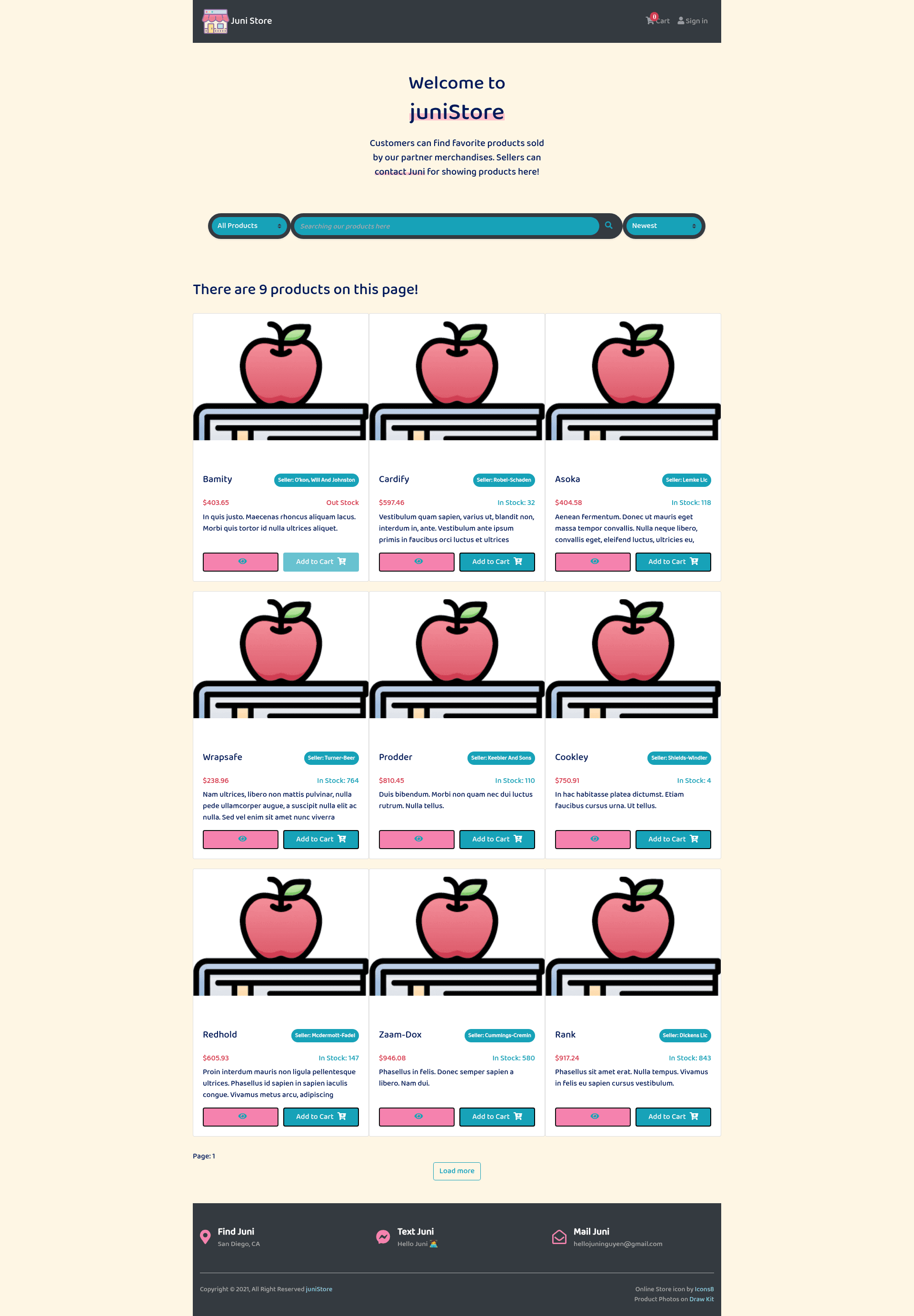
Juni E-commerce is an open-source JAMstack ecommerce template built with Next.js and MongoDB, providing a ready-made storefront and an admin dashboard for managing products and orders.
What is Juni E-commerce?
Juni E-commerce is a full-stack ecommerce starter project created by Juni Nguyen. It takes MongoDB product data and renders it through Next.js server-side rendering into a public storefront, with a separate admin page for store management. The template uses Bootstrap for styling, Cloudinary for image hosting, and is configured for deployment on Vercel, where a live demo is published.
Key Features
- Next.js framework — The project is built on Next.js, using its server-side rendering and file-based routing to serve both the customer-facing storefront and the admin pages.
- MongoDB database — Product and store data are stored in MongoDB; the connection is configured in a local environment file, making it easy to swap in your own cluster.
- Cloudinary integration — Product images are hosted and served through Cloudinary, so you don't need to manage image files locally.
- Bootstrap styling — The UI is built with Bootstrap, giving responsive layouts and standard components out of the box.
- Vercel deployment — The repository is set up for easy deployment to Vercel, with the demo running at a Vercel-hosted URL.
- Admin dashboard — A dedicated admin page is included for managing the store, separate from the public shopping interface.
- MIT license — The project is open source under the MIT License, allowing free use, modification, and redistribution.
Who is it for?
- Independent developers — who want a working ecommerce boilerplate without building product listing, cart, or admin features from scratch.
- Small businesses — that need a simple JAMstack storefront backed by MongoDB and want to deploy it quickly on Vercel.
- Next.js learners — who can study a real-world project combining Next.js, MongoDB, Bootstrap, and Cloudinary in one codebase.
- Agencies — that need a customizable starter for client ecommerce projects, especially since the MIT license permits reuse in commercial work.
What can you do with it?
- Launch a storefront — Connect your MongoDB database, add product data, and run the Next.js app to display products on a public shopping page.
- Manage inventory — Use the included admin page to maintain products and related data, with images uploaded through Cloudinary.
- Deploy to production — Connect the repository to Vercel and ship the store with the provided deployment setup, just like the live demo.
- Customize the design — Modify the Bootstrap-based layout and components to match your brand, since the full source code is available.
How does it work?
To run the project locally, clone the repository, install npm packages, create a local environment file with your MongoDB connection string, and start the development server on localhost:3000. The Getting Started section in the README walks through each step, and the project includes a documentation site for continued updates.
FAQ
Is Juni E-commerce free?
Yes, the project is distributed under the MIT License, so it is free to use, modify, and redistribute for personal or commercial projects.
What database does it use?
The template uses MongoDB as its database. You provide the connection string by creating a local environment file and filling in your MongoDB credentials before running the project.
Does it include an admin panel?
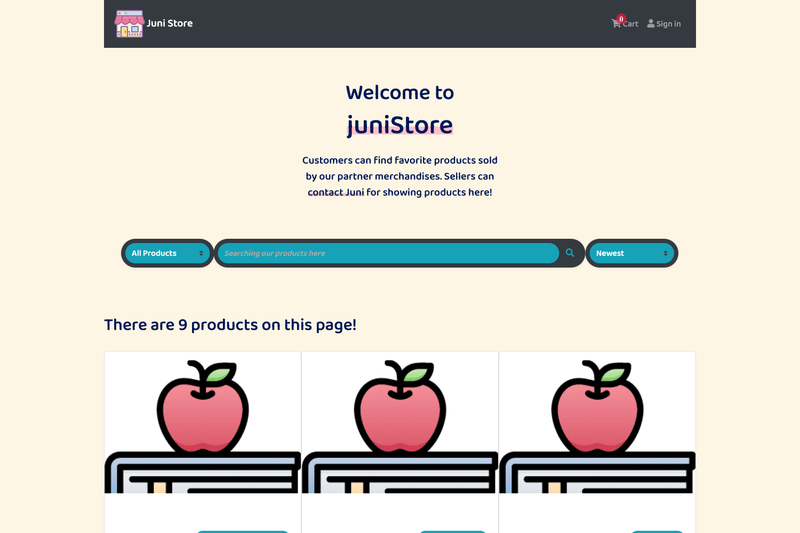
Yes, Juni E-commerce includes a separate admin page alongside the public storefront. Screenshots in the README show both the public page and the admin page.
Can I deploy it to Vercel?
Yes, the project is designed for Vercel deployment, and a live demo is hosted on Vercel. The README includes a link to the demo and the repository is structured for easy Vercel integration.