Newsletter
Join the Community
Subscribe to our newsletter for the latest news and updates

Boilerplate and starter for Next.js 14, Tailwind CSS 3.3, and TypeScript with a full developer experience toolchain.
Opinionated boilerplate for NextJS, Tailwind, and ReScript with preconfigured bindings and Fast Refresh support.
A Chinese-friendly LaTeX CV/resume template based on ModernCV, compiled with XeLaTeX.
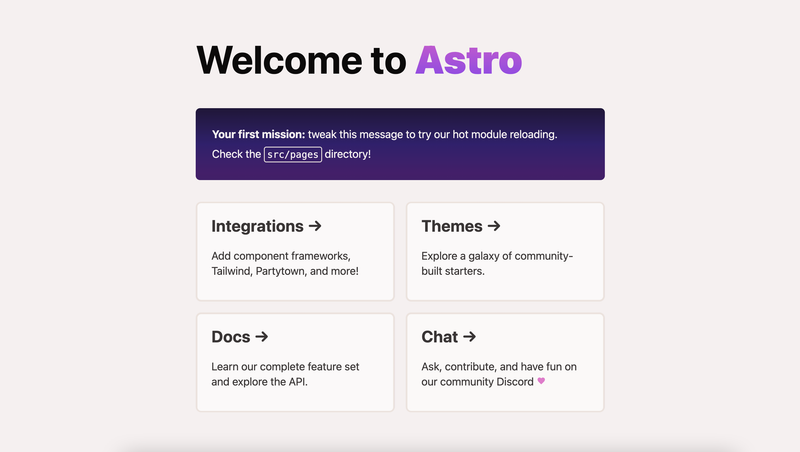
Astro starter template for Vercel with static, SSR, SWR-cached, and image-optimized routes, deployable with zero configuration.

A free Jekyll website template based on TailwindCSS, built for hosting on GitHub Pages.
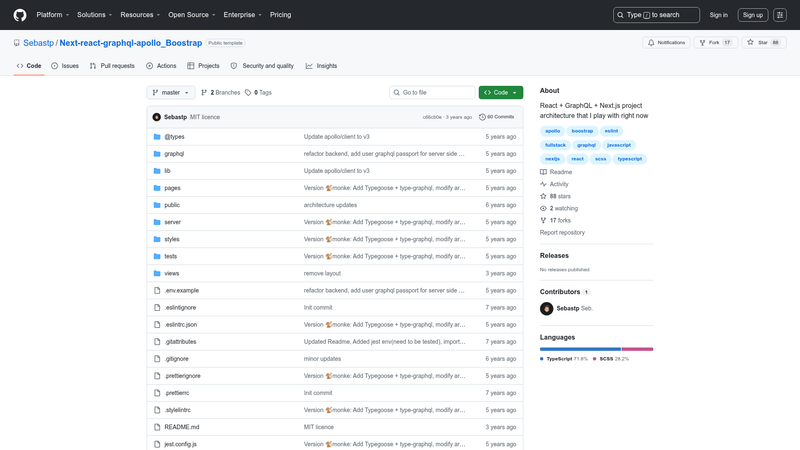
MIT-licensed full-stack Next.js starter with TypeScript, GraphQL (Apollo), SCSS styling, and preconfigured ESLint, Prettier, and Jest.
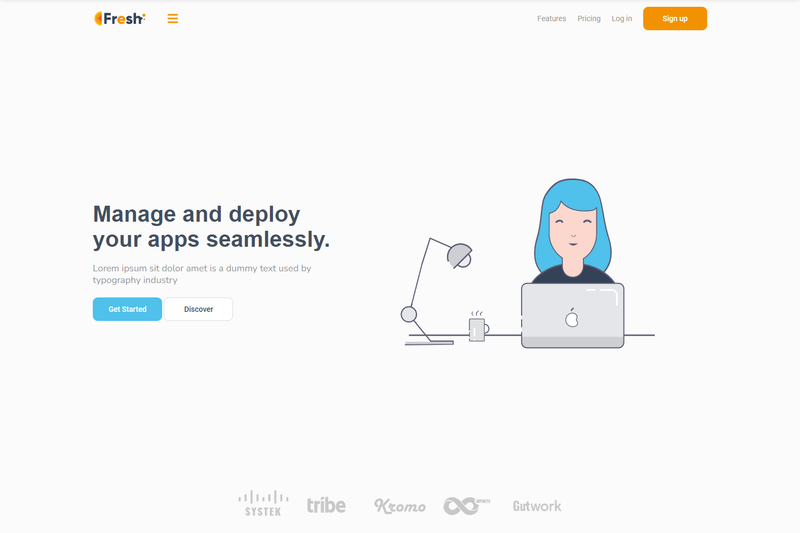
Fresh is a free landing page starter built with Astro, Bulma and Alpine JS.
Lightning is an opinionated Next.js 14 boilerplate that bundles TypeScript, Tailwind CSS, ESLint, Prettier, and Husky into a single starter kit for creating production-ready web applications.
Lightning is a boilerplate and starter kit for Next.js 14 projects, created by Rik Vermeulen and distributed as an MIT-licensed open-source template. It takes a new Next.js app and pre-configures TypeScript in strict mode, Tailwind CSS 3.3, ESLint with Airbnb rules, Prettier formatting, Husky git hooks, and lint-staged. The output is a project scaffold with a src folder structure, type-safe environment variables via env.mjs, and a .env.example file to copy for local development.
Lightning stands out by bundling a complete developer experience toolchain into a single Next.js starter, so you don't have to wire these tools yourself. The features below are the concrete defaults it ships with.
tailwind.config.cjs and integrated PostCSS, so utility classes work out of the box.prettierrc.cjs file standardizes code style, and Husky + lint-staged run formatters and linters on staged git files.@ prefix maps to the src directory in both TypeScript and bundler config, removing relative import chains.Lightning is for developers who want a pre-configured, opinionated Next.js 14 foundation without spending time assembling a toolchain. It suits:
npm create lightning-app@latest, answer the prompts, and get a project with linting, formatting, and testing already wired.With Lightning you can scaffold a complete Next.js 14 project in a few commands and customize it to your needs. Common tasks:
.env.example to .env.local, and run npm run dev to start at localhost:3000.env.mjs to validate environment variables at runtime, catching misconfigurations early.src/app, src/components, src/lib, and src/types folders provide a starting layout for routes, UI components, and utilities.Lightning works through an interactive CLI or a direct git clone. The recommended path is running npm create lightning-app@latest, answering the command prompts, and then copying .env.example to .env.local to set your variables. After that, npm run dev launches the dev server, and the pre-configured toolchain (ESLint, Prettier, Husky) runs on every commit to keep the codebase consistent.
Yes, Lightning is open source under the MIT License, so you can use, modify, and distribute it freely without licensing fees.
The requirements state Node.js 18+ and npm. The starter also works with Yarn and pnpm, with alternate create commands for each.
Yes, Lightning provides yarn create lightning-app and pnpm create lightning-app@latest as alternative installation commands alongside the npm version.
It includes a GitHub Actions workflow that runs tests on pull requests, and the VSCode settings mention a Jest extension for running tests with coverage, though the README shows no sample test file.
The scaffold uses src/app for routes and API, src/components for default components, src/lib for utilities, src/styles for global styles, and src/types for type definitions.