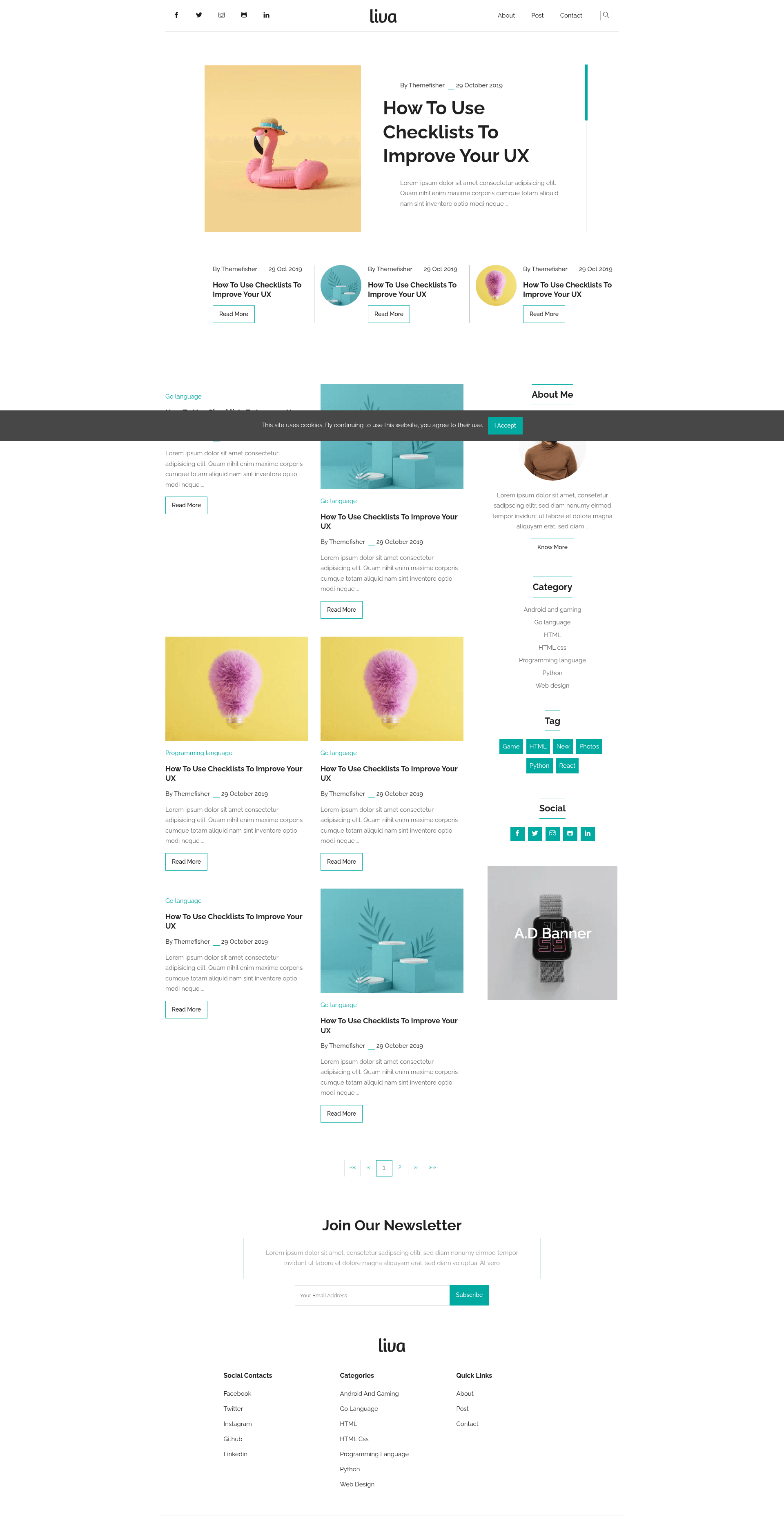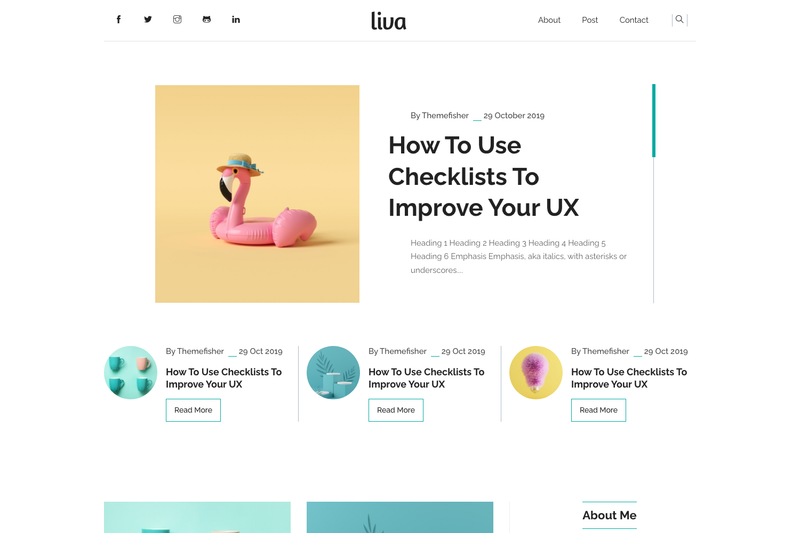
Liva Hugo is a personal blog theme built on the Hugo static site generator, offering seven-plus pre-designed pages, a Bootstrap-based layout, and built-in SEO, analytics, and search features.
What is Liva Hugo?
Liva Hugo is a minimal blog theme for Hugo that turns Markdown content into a fast static website. It takes Markdown posts and Hugo configuration as input and produces a fully static HTML site that can be deployed to any hosting service. The theme was designed by Themefisher and developed by Gethugothemes, and is released under the MIT license. It is fully customizable through Hugo's config files and includes predefined Netlify settings for one-click deployment.
What makes Liva Hugo stand out?
- 7+ pre-designed pages — The theme includes an About page, a post page, a post single page, a categories page, a categories single page, and a contact page, covering the core sections of a blog.
- Bootstrap-based layout — The theme is built on Bootstrap and bundles CSS and JavaScript with Hugo Pipe for optimized asset loading.
- Google Analytics support — Add your tracking ID to the Hugo config and the theme injects the analytics script on every page; the demo site reports a 90% Google Page Speed score.
- Netlify settings predefined — A Netlify configuration file is included, so you can deploy the site with minimal setup.
- Contact form support — The contact page is pre-built to work with a form backend, letting visitors submit messages without custom code.
- Search by fuse.js — Client-side search via Fuse.js lets readers find posts by title or content without a server.
- GDPR consent enabled — A cookie consent banner is included to help comply with European privacy regulations.
- Open Graph and Twitter Card meta tags — Predefined social meta tags display rich previews when links are shared on Facebook, Twitter, and other platforms.
Who should use Liva Hugo?
- Personal bloggers — who want a minimal static site with no database or server-side dependencies, and they can get started in minutes with the pre-designed pages.
- Travel and food writers — who publish photo-heavy stories and can organize them with the categories page and single-category template.
- Developers and agencies — who need a minimal Hugo starting point that is easy to customize, deploy to Netlify, and extend with a Git-based CMS like Sitepins.
What can you do with Liva Hugo?
- Personal bloggers: Publish articles with Markdown, tag them with categories, and give readers a multi-page blog structure and a client-side search box.
- Tech writers: Write tutorials with the post single template and integrate Google Analytics to track readership.
- Photographers and creatives: Use the Bootstrap-based gallery and contact page to present a portfolio-style personal site, though the demo images are not licensed for redistribution.
How does Liva Hugo work?
Liva Hugo runs as a standard Hugo site. To start locally, clone the GitHub repository, run npm run project-setup to configure the project, then npm run dev to launch the development server. The theme is pre-configured for Netlify deployment, and content can be edited visually with Sitepins, a Git-based headless CMS, without writing code.
FAQ
Is Liva Hugo free?
Yes, the code is released under the MIT license, which allows free use, modification, and distribution, including in commercial projects. The demo images are for illustration only and are not covered by the MIT license.
What CMS does Liva Hugo support?
The theme is pre-configured for Sitepins, a Git-based headless CMS that lets you edit text, images, and configuration visually and commit changes to the repository. Because it is a static site, it can also work with any other CMS that outputs Markdown or supports Git-based workflows.
Does Liva Hugo work with Netlify?
Yes, Netlify settings are predefined in the theme, so deployment is a one-step process. The theme is also Google Page Speed optimized, with the demo site scoring 90% in PageSpeed Insights.
What Hugo version is required?
Liva Hugo requires Hugo version 0.163.3 or higher, as indicated on the repository's version badge. This ensures compatibility with the theme's features and Hugo Pipe asset processing.