Newsletter
Join the Community
Subscribe to our newsletter for the latest news and updates

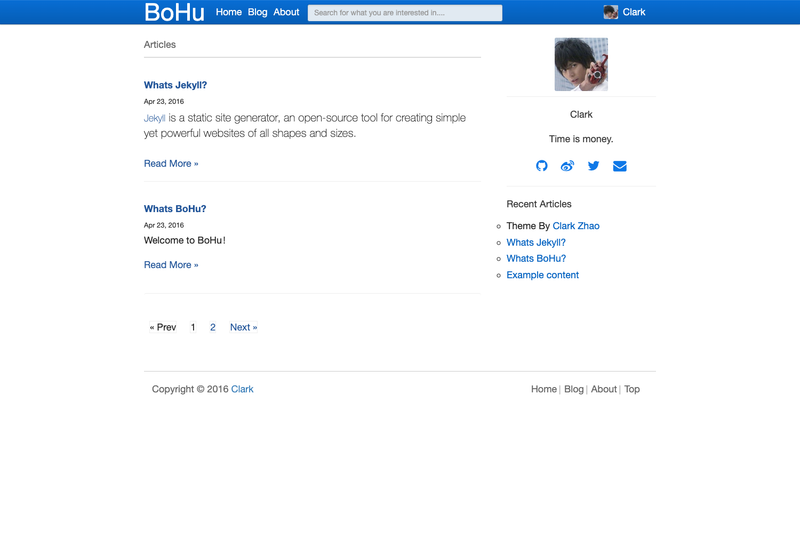
A simple, minimal Jekyll theme with Disqus comments, Google Analytics, and tag archive pages.
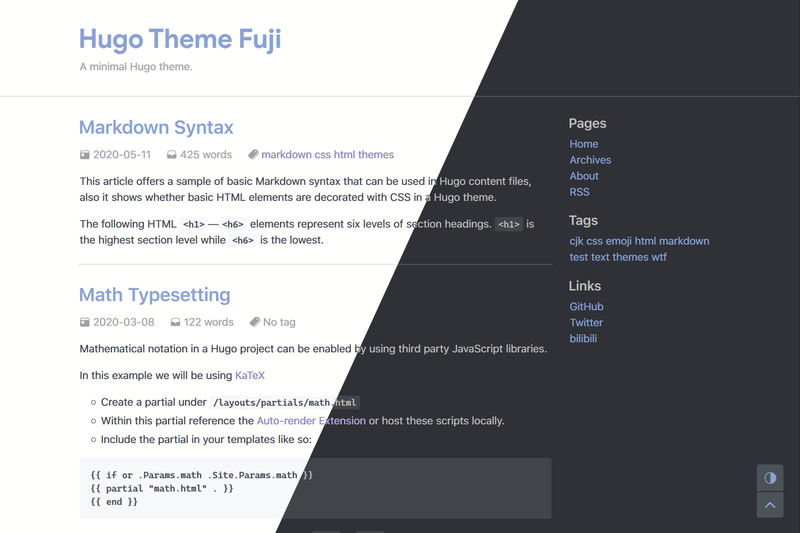
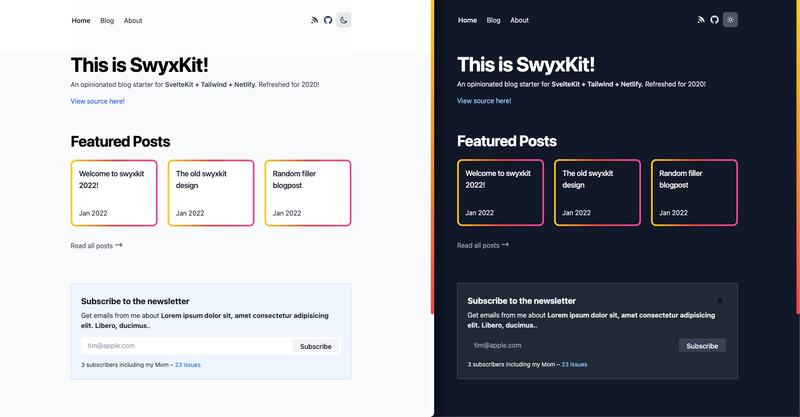
A minimal Hugo theme with full dark mode, GitHub Primer markdown styling, and 11-language i18n support.
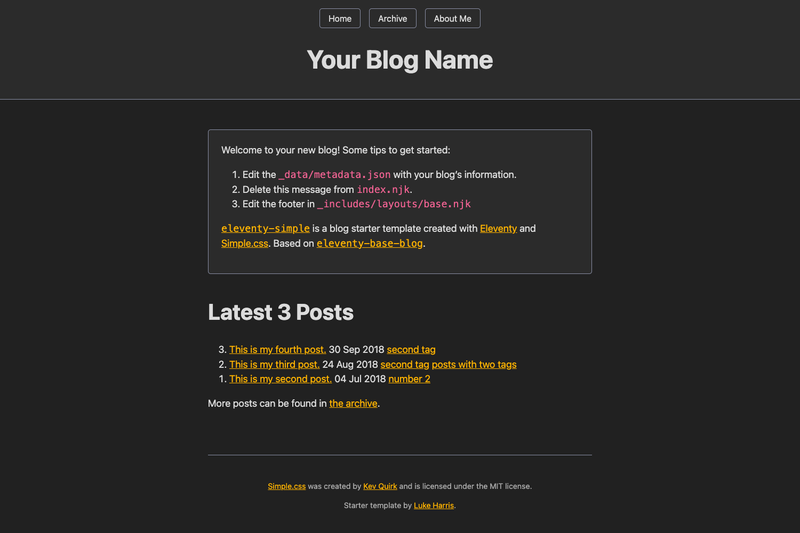
A blog starter template with 11ty and Simple.css.
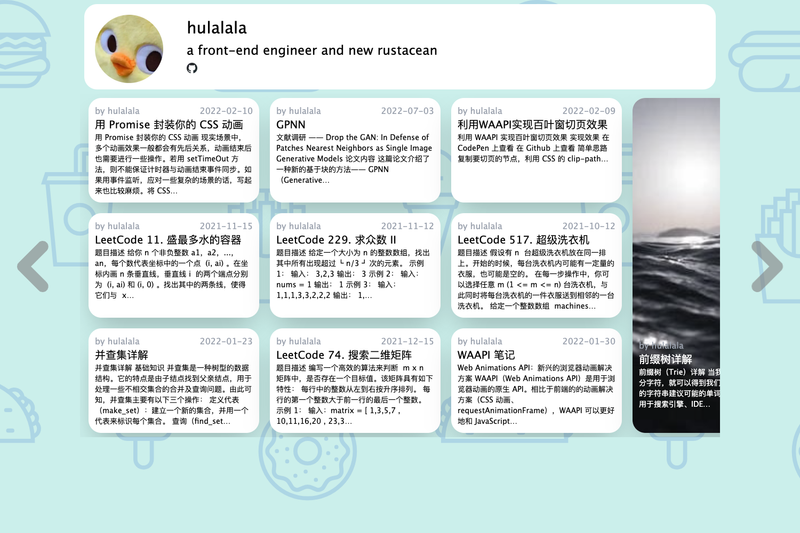
A Gatsby starter for a blog with Markdown content, Tailwind styling, and LaTeX support.
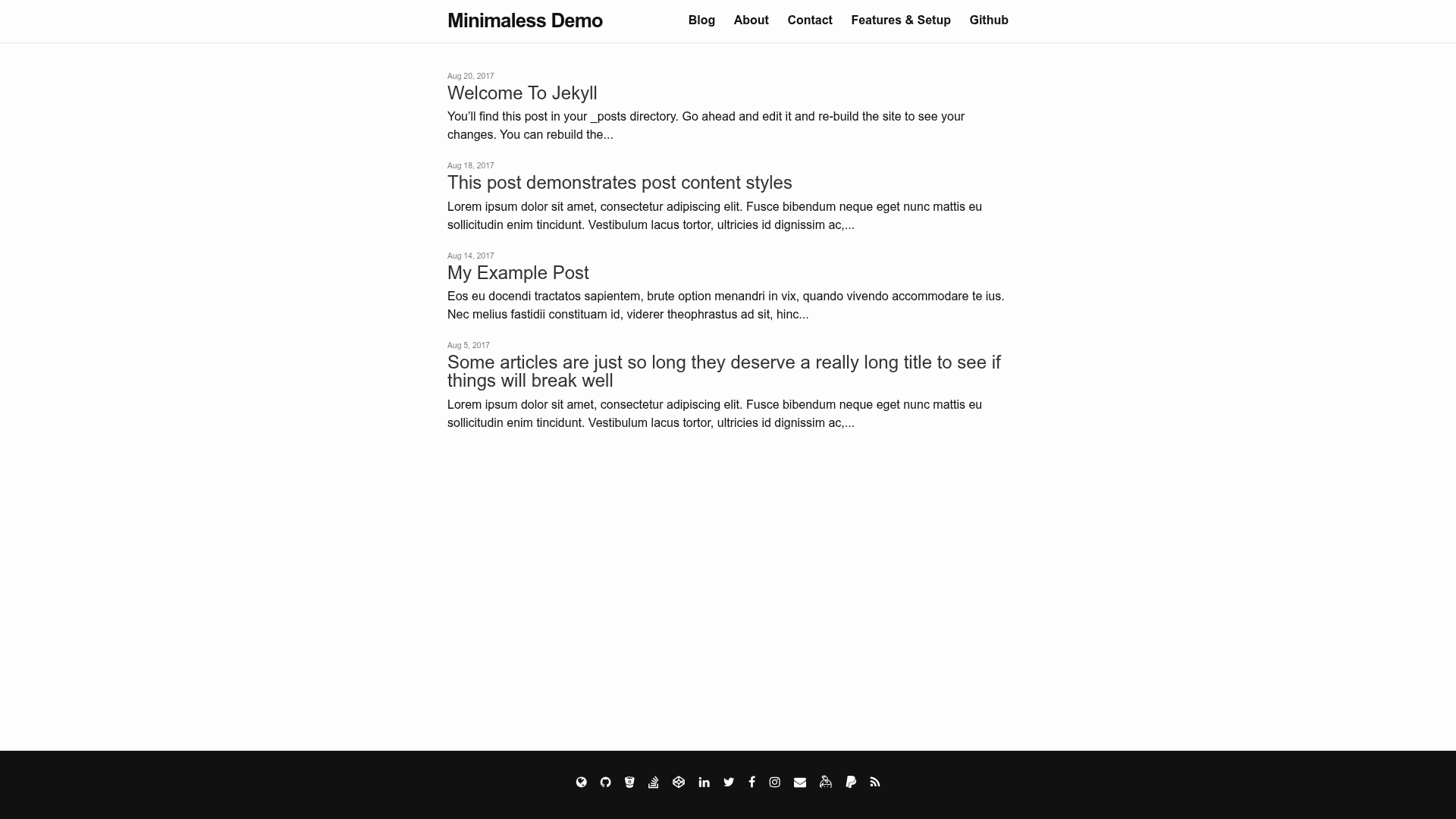
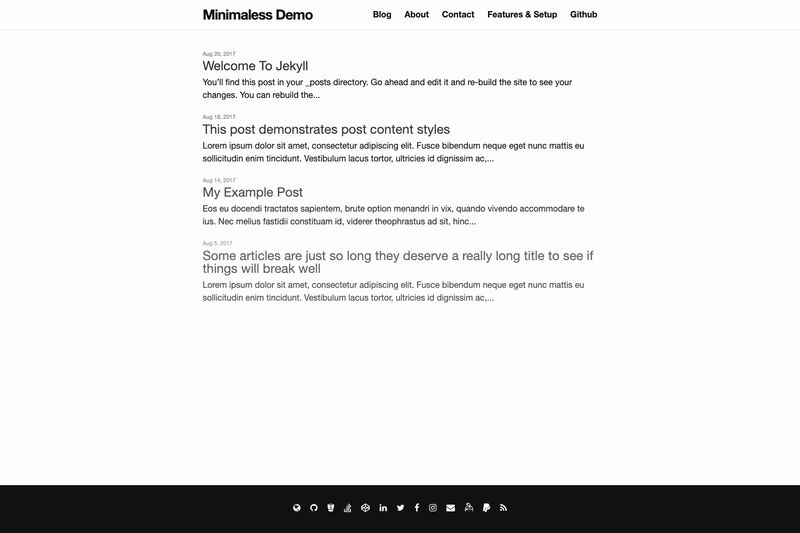
Minimaless is a minimal Jekyll theme for blogs that strips the default minima theme down to less noise while adding Disqus comments, Google Analytics, and tag archive pages.
Minimaless is a Ruby gem-based theme for Jekyll, installable by adding gem "minimaless" to your Gemfile and setting theme: minimaless in your site's config. It takes Jekyll content — Markdown posts, pages, and _config.yml settings — and renders a static HTML blog. The theme is published on RubyGems and developed in the GitHub repository brettinternet/minimaless, with a live demo at brettinternet.github.io/minimaless.
Minimaless packs several convenience features into a small set of Liquid includes and SCSS files, all of which you can override from your site source.
index.md.disqus.shortname in config; comments appear only when JEKYLL_ENV=production and can be turned off per post with comments: false in front matter.google_analytics config key; the snippet is injected only in production.tag folder with one Markdown file per tag (using layout: tags and a permalink like /tag/kittens/) to list all posts carrying that tag.*_username values in config to display icons in the header; adding an .asc file shows a GPG key download icon.assets/main.scss inside the gem; override it by creating your own assets/main.scss at your site source or copying the gem's assets folder.head.html, header.html, footer.html, and google-analytics.html can be copied from the gem into your site's _includes directory to customize markup.Minimaless fits Jekyll users who want a clean, functional blog without the default theme's visual weight. It suits personal bloggers who want to publish Markdown posts and organize them by tags, developers who need a theme they can inspect and override directly from the gem, and site owners who want Disqus comments and Google Analytics wired in without building those integrations themselves.
With Minimaless you can publish a tagged blog and integrate comment and analytics systems without writing Jekyll plugins.
_posts, assign tags, and give readers tag archive pages under /tag/.index.md for a simple splash page and override the theme's SCSS or Liquid includes for a bespoke design.Install the gem with bundle, set theme: minimaless in _config.yml, and run bundle exec jekyll serve to preview. To customize, copy any include file from the gem into your site's _includes directory or create your own assets/main.scss; to use tags, make a tag folder with a Markdown file per tag. The theme injects Disqus and Google Analytics snippets only in the production environment (JEKYLL_ENV=production).
If the default Jekyll appearance is all you need, Minima is the direct point of comparison.
These answers cover the most common setup questions for Minimaless.
Yes, Minimaless is open source under the MIT License, so you can use, modify, and redistribute it freely, including in commercial projects.
Add disqus.shortname: my_disqus_shortname to your site config. Comments are enabled by default and appear only in production; to hide comments on a specific post, set comments: false in that post's front matter.
Create a file named main.scss in your site's assets/ directory with the frontmatter dashes and @import "minimaless";, then add your custom CSS. Alternatively, copy the gem's assets/ folder into your site root and edit the values directly.
The theme is a Ruby gem, so it works on GitHub Pages with Jekyll if you declare it in your Gemfile and set it as the theme in _config.yml. The demo site is hosted on GitHub Pages.