Newsletter
Join the Community
Subscribe to our newsletter for the latest news and updates

A free, fully responsive HTML5 one-page portfolio template with intro, work, portfolio, and contact sections.
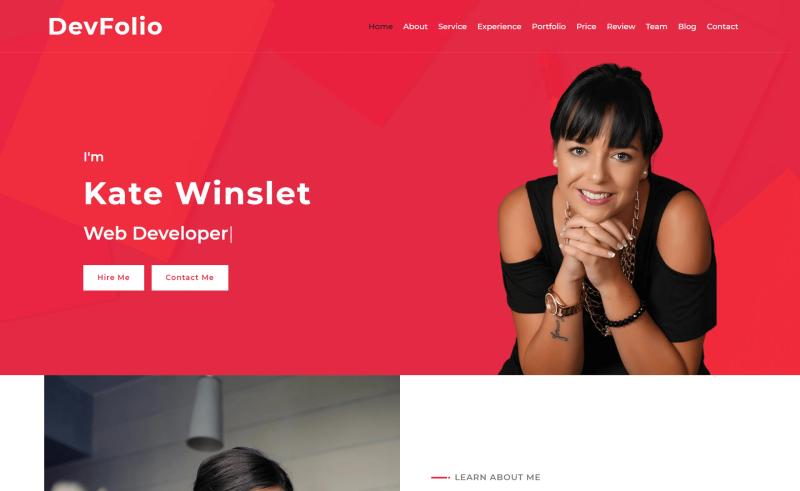
Free Bootstrap 4 HTML5 one-page portfolio template for freelancers and designers.
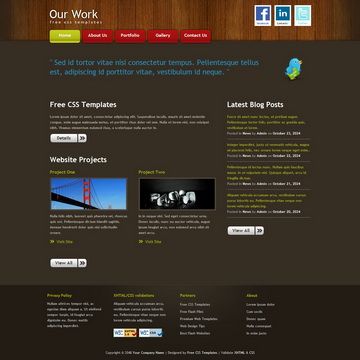
Free HTML/CSS portfolio template with a dark brown palette and wooden texture header for showcasing creative work.
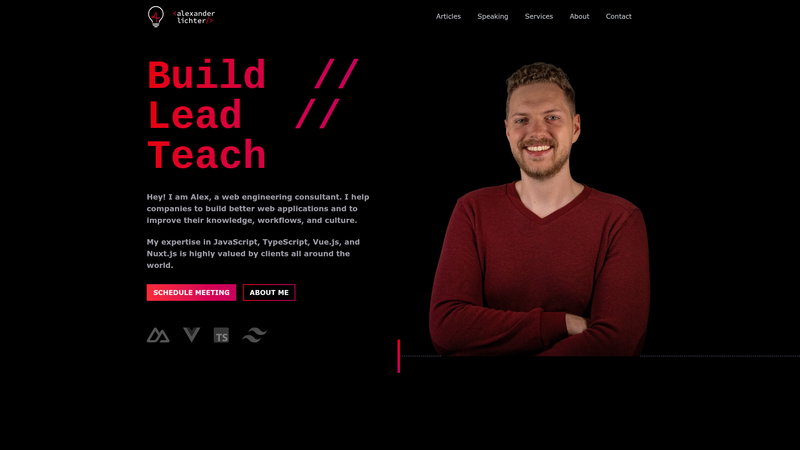
Personal website and CV template built with Nuxt.js 3 and Tailwind CSS.
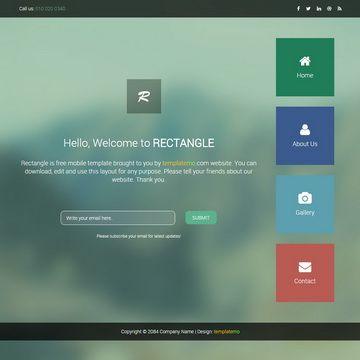
Rectangle is a Bootstrap v3.3.1 mobile layout with vertical sliding pages using lightgreen background.
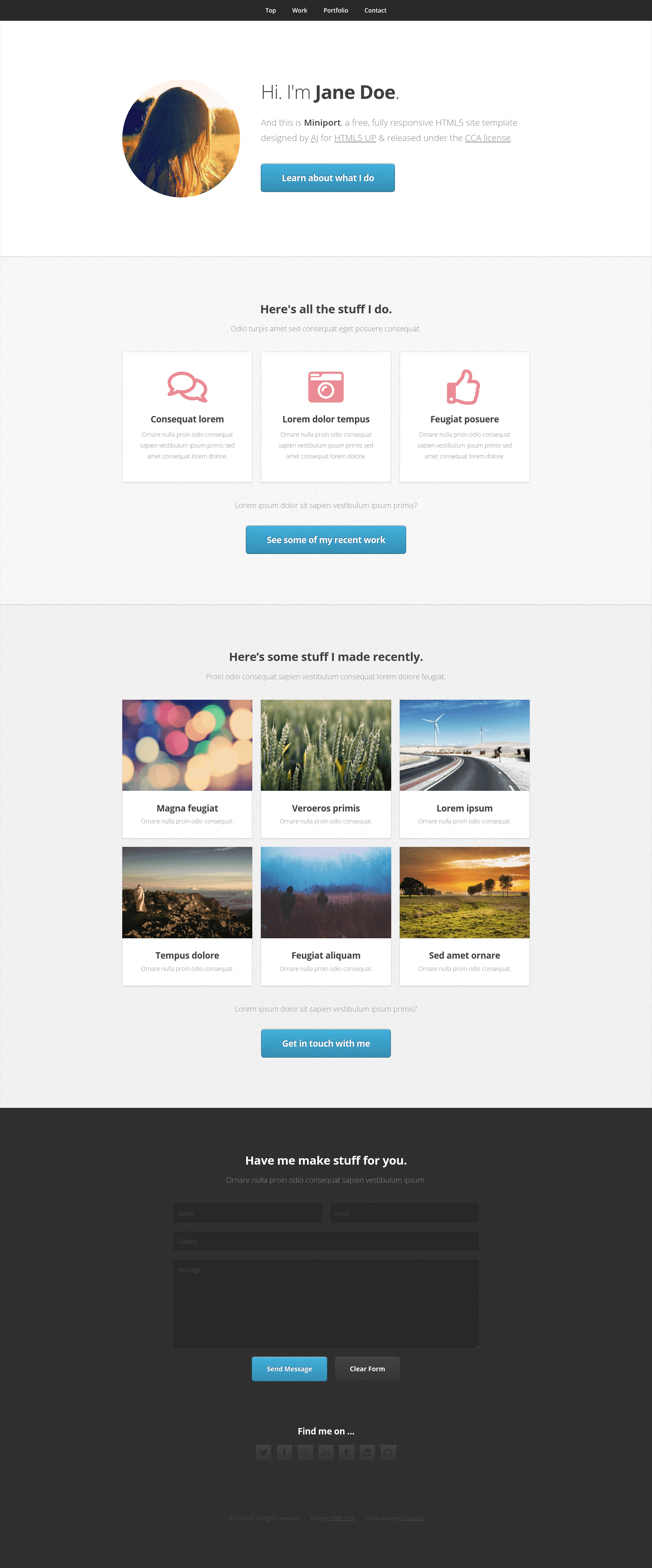
Miniport is a free, fully responsive HTML5 one-page portfolio template from HTML5 UP, designed for personal and portfolio sites that showcase a profile, services, and sample work.
Miniport is a fully responsive HTML5 site template designed by AJ for HTML5 UP and released under the Creative Commons Attribution (CCA) license. It takes a single-page structure and produces a portfolio-oriented website with an intro banner, a three-column work/services area, a six-project portfolio grid, and a social contact section. The template runs on plain HTML and CSS, so it needs no server-side processing or build step.
The page prominently features a portrait image in the intro, three feature boxes with placeholder text, six portfolio thumbnails with titles, and a "Find me on..." section that includes a Twitter widget iframe for social integration. All demo content is placeholder, meant to be replaced by the user.
Miniport is free to download and use under the Creative Commons Attribution (CCA) license, which means you can deploy it commercially as long as you give credit to HTML5 UP and the designer AJ. No payment or subscription is required.
Yes, Miniport is completely free to download from HTML5 UP. It is released under the Creative Commons Attribution license, so you only need to include attribution when you use it.
No. Miniport is built with plain HTML5 and CSS, with no CSS framework or JavaScript library included. The styling is custom-written for the template.
Yes, the template can be adapted for business use — the work and portfolio sections make it easy to present services and case studies. Just replace the placeholder content and keep the attribution requirement.
Basic HTML knowledge helps. You will edit the index.html file to change text, images, and links, and you can adjust colors and layout by editing the included CSS files.
Placeholder images are referenced in the HTML (for example, images/pic01.jpg). Replace those files or change the image source paths to your own images.