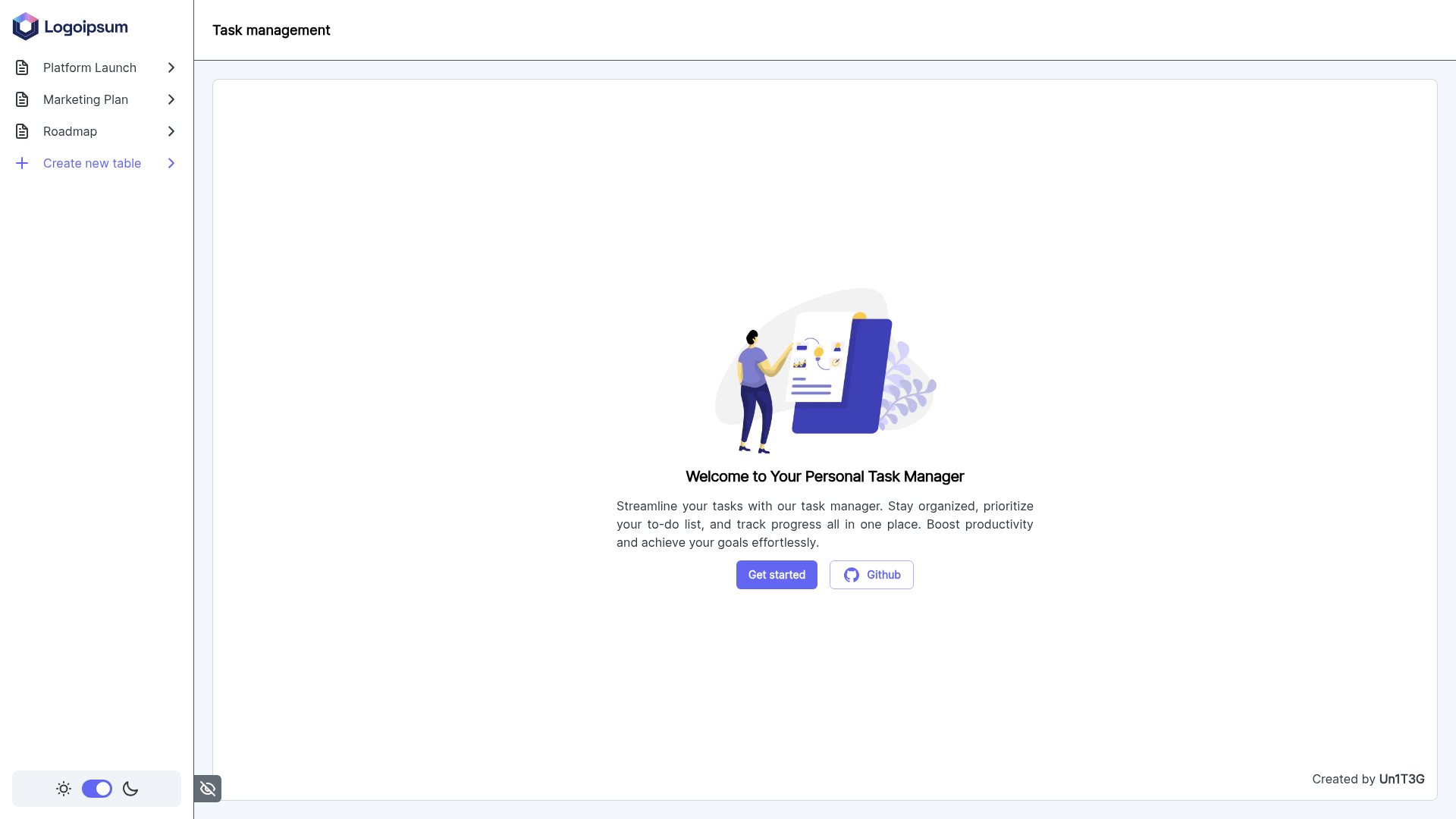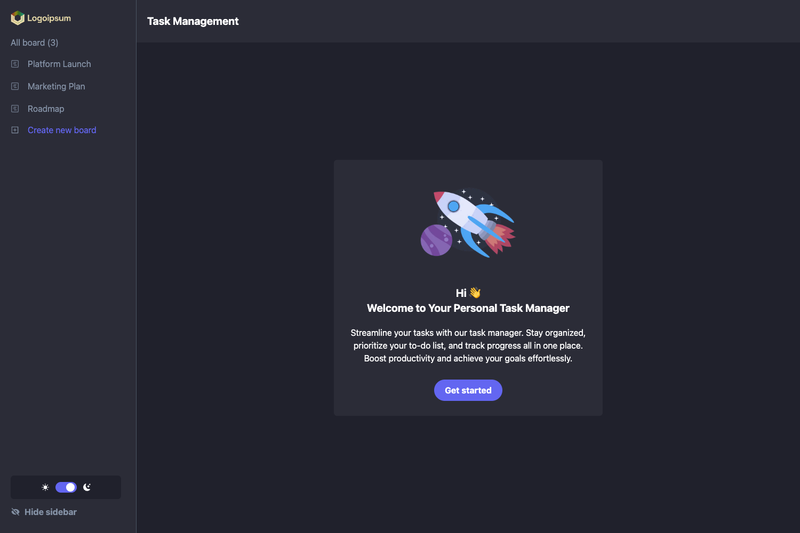
The Kanban task management app is a Next.js-based boilerplate for building kanban board interfaces, with a task manager to organize, prioritize, and track your to-do list in columns.
What is the Next.js Kanban Task Management App?
This is a front-end web template that implements a kanban board for task management. It takes task data and renders it as columns and cards, letting users organize and prioritize their to-do list in one place. The project is built with Next.js and runs in the browser, using Joy UI for the visual component library, Effector for state management, React Hook Form for form inputs, and Yup for validation. The repository also follows the Feature-Sliced Design (FSD) methodology to structure the codebase.
Key Features
- Next.js framework — React-based framework with built-in routing and server-side rendering capabilities, making the board fast and SEO-friendly.
- Joy UI component library — A Material Design-inspired React component set that provides the buttons, inputs, cards, and layout for the kanban interface.
- Effector state management — A reactive store system that keeps task and column data in sync across the app.
- React Hook Form — Lightweight form handling for adding, editing, and validating task entries with minimal re-renders.
- Yup schema validation — Form field rules that validate task titles, descriptions, and other inputs before submission.
- Feature-Sliced Design (FSD) architecture — The project is organized into layers for features, entities, and shared UI, which makes the codebase modular and easier to extend.
- Three screenshots showing the interface — The repository includes three PNG screenshots (Screenshot1, Screenshot2, Screenshot3) that display the board in action.
Who is it for?
- Front-end developers who want a ready-made kanban board starter to customize with their own branding, features, and server integrations.
- Product managers who need a visual prototype to demonstrate task workflows and get feedback before building a full application.
- Students and hobbyists learning how Effector, Joy UI, and React Hook Form work together inside a Next.js project.
Use cases
- Agile teams: use the board to manage sprints, backlog, and in-progress tasks across columns.
- Freelancers: keep track of client projects and deadlines in a simple visual format.
- Developers: use the code as a reference for implementing kanban interactions with Effector state management and Yup validation.
FAQ
What technology stack does this template use?
The template uses Next.js as the React framework, Joy UI for UI components, Effector for state management, React Hook Form for forms, and Yup for validation.
Is it free to use?
The repository is publicly available on GitHub, so the source code can be cloned and used without payment. You should check the repository's license to see if any restrictions apply.
Can I add a backend to this app?
The page doesn't mention any backend or database integration, so the template is currently front-end only. You'd need to connect your own API or database to persist tasks.
What is Feature-Sliced Design?
Feature-Sliced Design (FSD) is a front-end architecture that splits code into layers such as features, entities, and shared components, keeping related logic together and simplifying maintenance at scale.