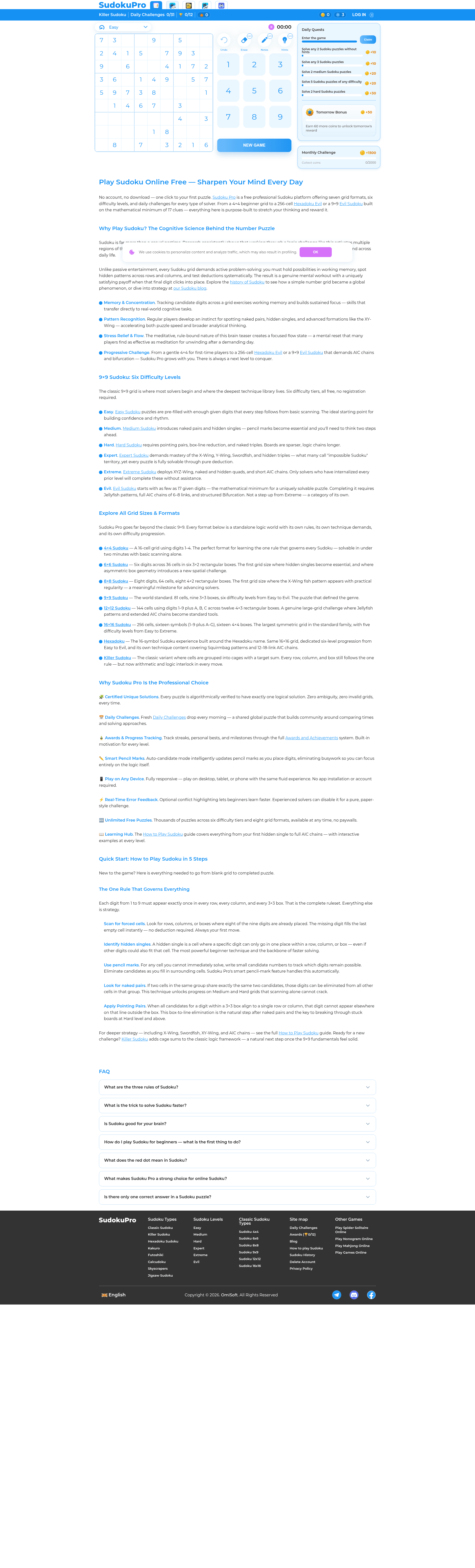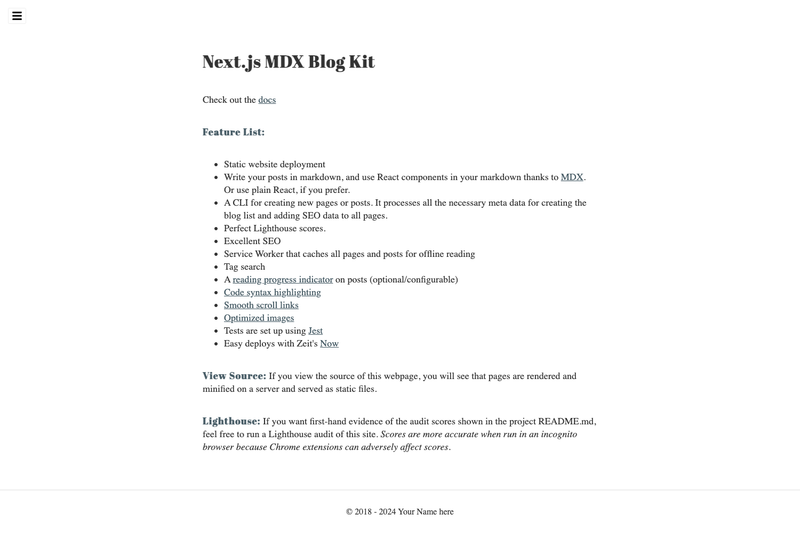
Omisoft Blog Template Front is a MIT-licensed boilerplate for a blog front end built on React.js and Next.js, created by OmiSoft and already used to power the blog at SudokuPro.app.
What is Omisoft Blog Template Front?
Omisoft Blog Template Front is the front-end half of a three-repository blog system, providing a minimal React.js and Next.js starting point for publishing content. The project takes no input beyond your own blog configuration and produces a running web interface for readers; a companion back end and admin panel handle data storage and content management. It was developed by software agency OmiSoft and is released under the MIT license.
Key Features
- React.js + Next.js stack — The boilerplate uses React.js for UI components and Next.js for server-rendered pages and the development server.
- Material-UI (MUI) components — Styling is based on the Material-UI component library, giving you ready-made buttons, cards, and layout primitives.
- Redux state management — Includes Redux for predictable global state, useful for blog features like categories or user preferences.
- React Router — Client-side routing is handled by React Router, letting you map URLs to blog posts and pages.
- TypeScript — The codebase is written in TypeScript, so you get static type-checking and better editor support from the start.
- Three-part architecture — This repo (Front End) is meant to pair with the separate Back End and Admin Panel repositories, both linked in the README.
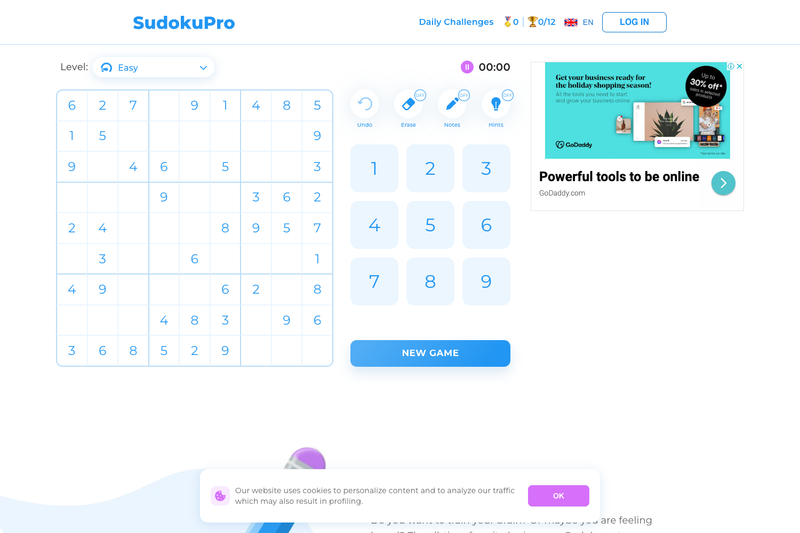
- Real-world deployment — The same boilerplate behind SudokuPro.app's blog gives a production-tested base rather than an untested prototype.
- MIT License — You can freely use, modify, and redistribute the code in personal or commercial projects.
Who is Omisoft Blog Template Front for?
- React developers building a new blog who want a minimal, known-good Next.js setup instead of configuring from scratch.
- Small teams that need a complete blog stack and can run the matching back end and admin panel repos to get a full content management workflow.
- Freelancers who want to spin up a custom blog quickly for clients, using the MIT license to avoid licensing hassles.
- Learners looking for a compact, typed example of React, Next.js, Redux, and Material-UI working together in one project.
What can you do with Omisoft Blog Template Front?
- Launch a blog fast: clone the repo, run
npm run iandnpm run dev, then open http://localhost:4000 to see the running blog front end in your browser. - Build a full blog system: combine this front end with the companion Back End and Admin Panel repositories to get content storage, an editorial interface, and a public-facing site.
- Use it as a learning reference: study how TypeScript, Redux, React Router, and Material-UI are wired together in a production-proven codebase.
- Customize the design: swap out Material-UI components or extend the pages since the boilerplate is intentionally simple and not locked to a specific content model.
How does Omisoft Blog Template Front work?
The README provides two commands to start: npm run i installs dependencies and npm run dev launches the Next.js development server, which serves the blog at http://localhost:4000. The front end is intended to fetch data from the companion back end API; the repository itself focuses on the presentation layer. The separate Admin Panel repo gives editors an interface to create and manage posts.
Pros and cons
- Pro: Free under the MIT license with no registration or paid tier.
- Pro: Built with a modern, typed stack (React.js, Next.js, TypeScript, MUI, Redux) that many developers already use.
- Pro: Comes from a real project (SudokuPro.app), so it's likely to be practically tested.
- Con: It is not a full blog out of the box — you need the companion back end and admin panel repos (or your own API) to make a working site with content management.
- Con: The README is minimal; there is no extensive documentation or tutorial beyond the run commands and repository links.
Pricing
Free. The project is released under the MIT license, so it costs nothing to download, use, or modify for personal or commercial projects. There are no paid tiers or premium features mentioned in the repository.
FAQ
Is Omisoft Blog Template Front free to use?
Yes, the boilerplate is released under the MIT license, which permits free commercial and personal use. You are not required to pay or credit the authors, though attribution is appreciated.
What tech stack does Omisoft Blog Template Front use?
It uses React.js and Next.js as the core framework, with Material-UI for components, Redux for state management, React Router for routing, and TypeScript for typing. The codebase is set up as a simple, minimal blog front end.
How do I run Omisoft Blog Template Front?
After cloning the repository, run npm run i to install dependencies and then npm run dev to start the development server. Open http://localhost:4000 in your browser to view the blog front end.
Does Omisoft Blog Template Front include a back end or admin panel?
No, the front end is only one part of a three-part system. The README links to separate Back End and Admin Panel repositories. You can use the front end with your own API, but by itself it doesn't manage content.
Where can I see Omisoft Blog Template Front in action?
OmiSoft says the boilerplate is used in the SudokuPro.app project, which means the same front-end code is running as the blog for that site.