Newsletter
Join the Community
Subscribe to our newsletter for the latest news and updates

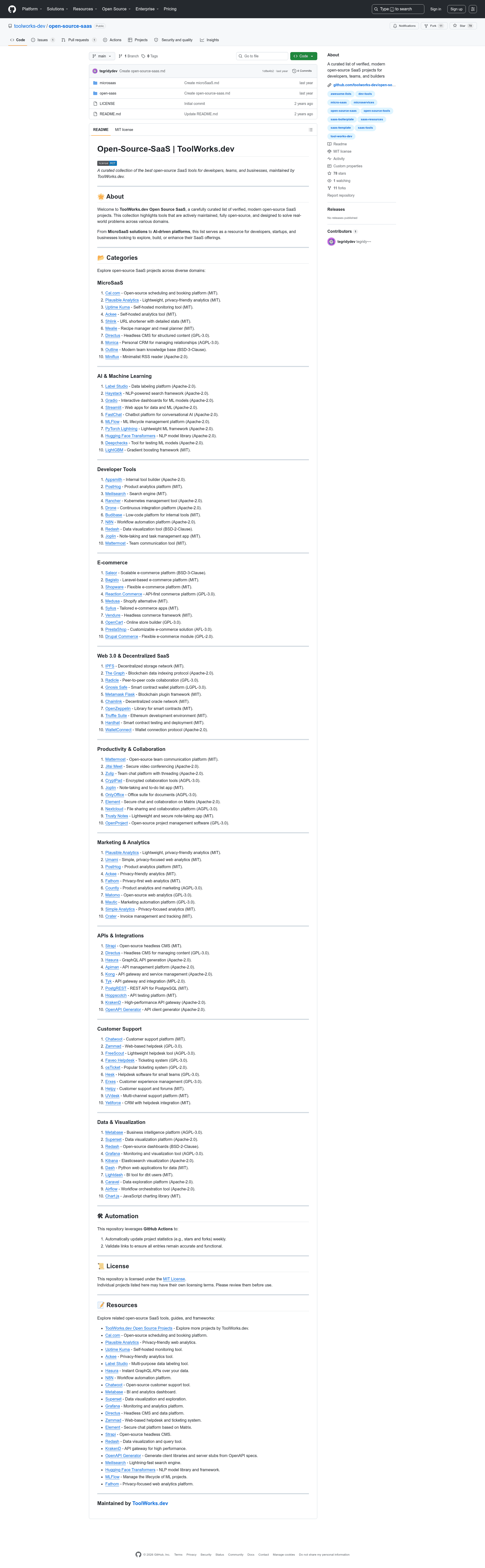
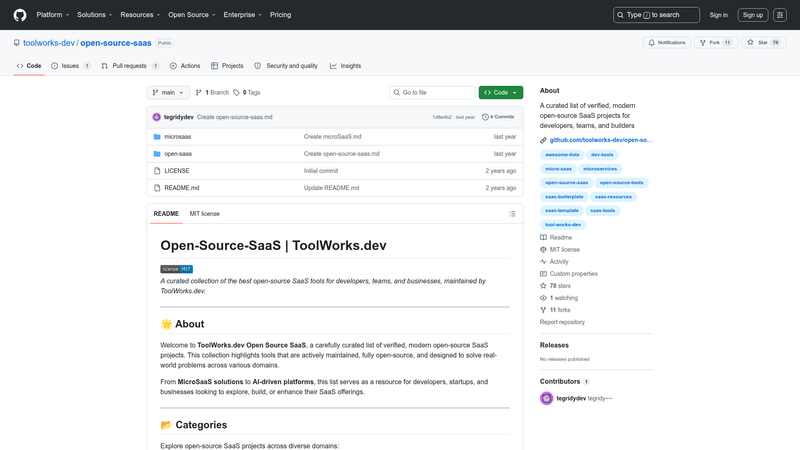
A curated directory of verified open-source SaaS projects across 10 categories, with licenses and GitHub links.
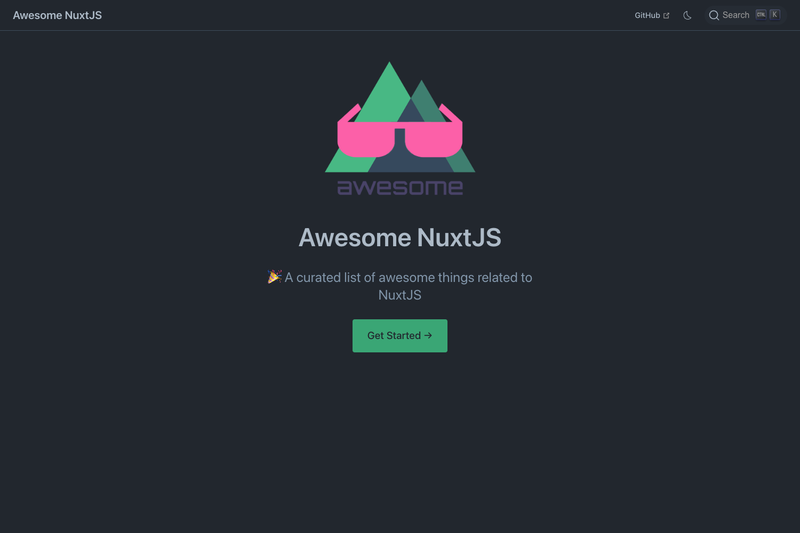
A curated list of awesome Nuxt.js resources, built as a static VuePress site with Markdown content.
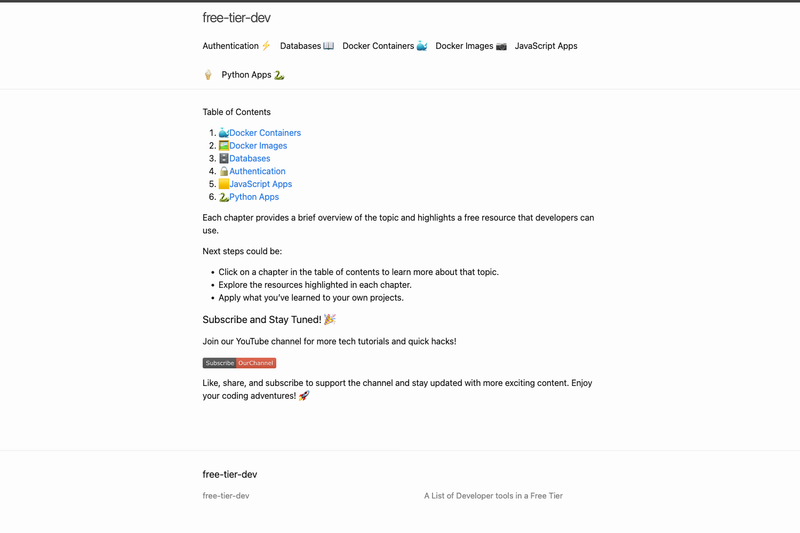
Curated list of free-tier developer tools for building SaaS, organized into eight categories on a Jekyll-powered GitHub Pages site.
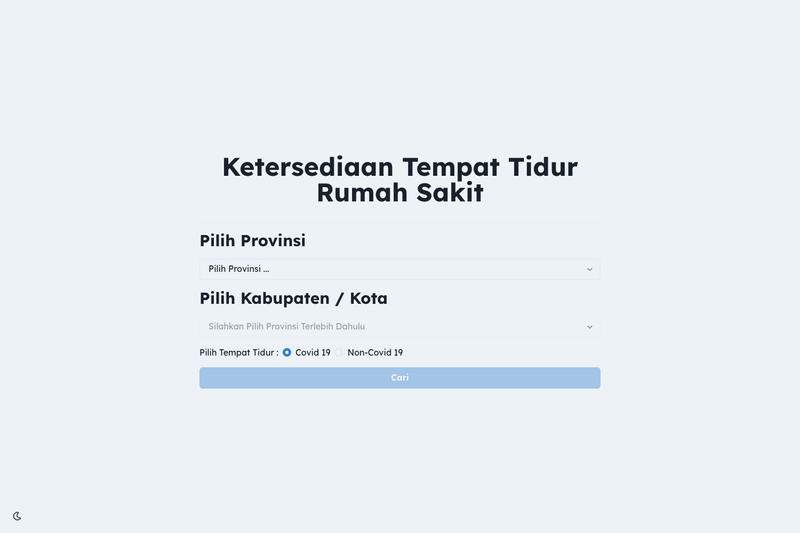
Website yang memberikan informasi terkait ketersediaan rumah sakit dan tempat tidur rumah sakit untuk pasien covid-19 ataupun non-covid di Indonesia.

Curated collection of developer portfolios and their repositories from developers around the world.
Open-Source-SaaS is a curated GitHub directory of verified open-source SaaS projects, organized by ToolWorks.dev across ten categories with per-project license and repository links.
Open-Source-SaaS is a GitHub repository that curates about 100 open-source SaaS tools, from MicroSaaS products like Cal.com scheduling and Plausible Analytics to AI frameworks like Hugging Face Transformers and infrastructure such as Kong. It functions as a reference index: each entry names the project, links to its upstream GitHub repository, and states its open-source license. The list is written as a Markdown README, hosted on GitHub, and maintained by ToolWorks.dev; the repository itself is MIT-licensed.
The project is a Markdown README organized into ten category sections. A GitHub Actions workflow periodically refreshes star and fork counts and checks that every linked repository remains reachable. Users open the README, choose a section, and click the GitHub link of any project to view its source and documentation.
Yes. The repository itself is released under the MIT License, and all listed projects are open source under their own licenses. You can clone, read, and reuse the list without charge.
The README lists on the order of one hundred projects spread across ten categories. Each entry includes the project name, a GitHub repository link, and its license, so you can quickly gauge scope.
The ten categories are MicroSaaS, AI & Machine Learning, Developer Tools, E-commerce, Web 3.0 & Decentralized SaaS, Productivity & Collaboration, Marketing & Analytics, APIs & Integrations, Customer Support, and Data & Visualization.
GitHub Actions runs weekly to update star and fork statistics for listed repositories and to validate outbound URLs, which helps keep the directory reliable.