Newsletter
Join the Community
Subscribe to our newsletter for the latest news and updates

A lightweight Hugo theme with automated image resizing, margin-note footnotes, and draft/visibility controls for content sites.
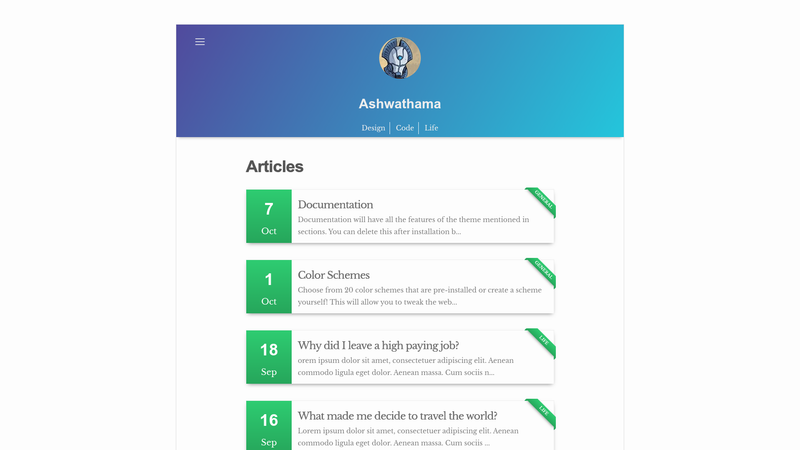
A minimal Jekyll theme with an app-like layout, built for image-heavy journal websites.
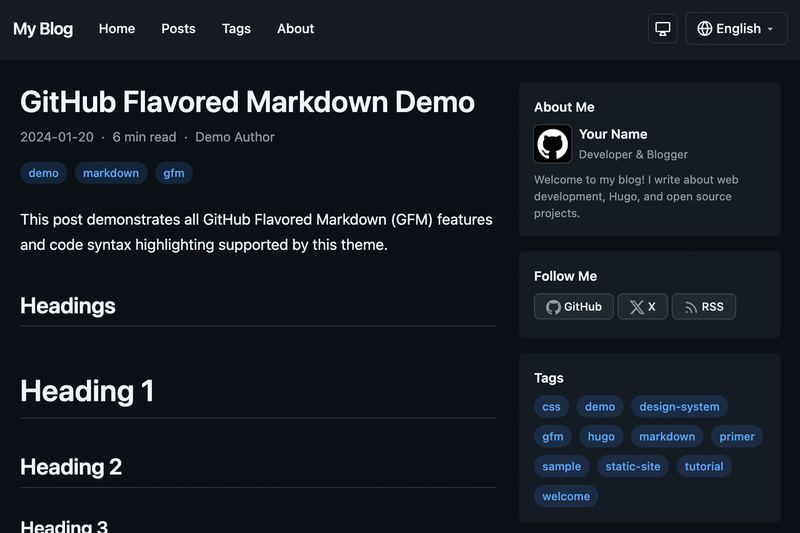
A clean, responsive Hugo blog theme built on GitHub's Primer CSS design system with dark mode, i18n, and LLM-friendly output.
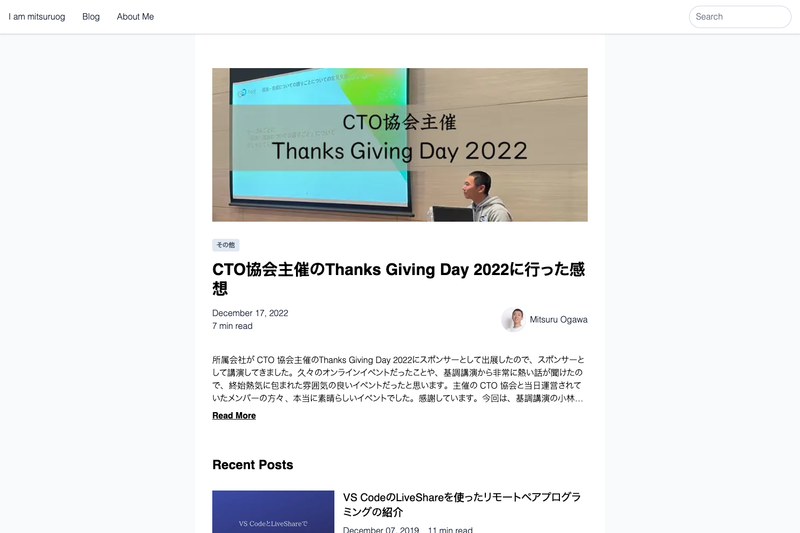
Hexo blog theme designed to make Japanese text more readable and beautiful.
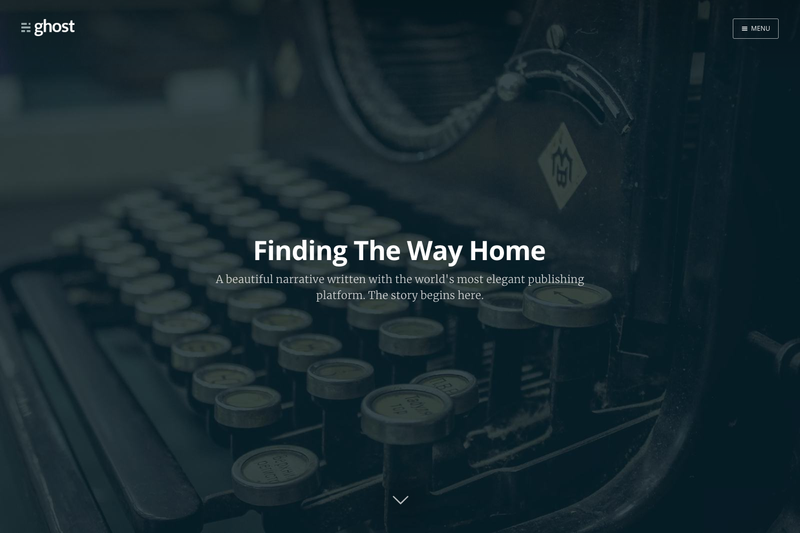
Jekyll port of Ghost's Casper theme with author pages, tags, pagination, and a sliding sidebar.
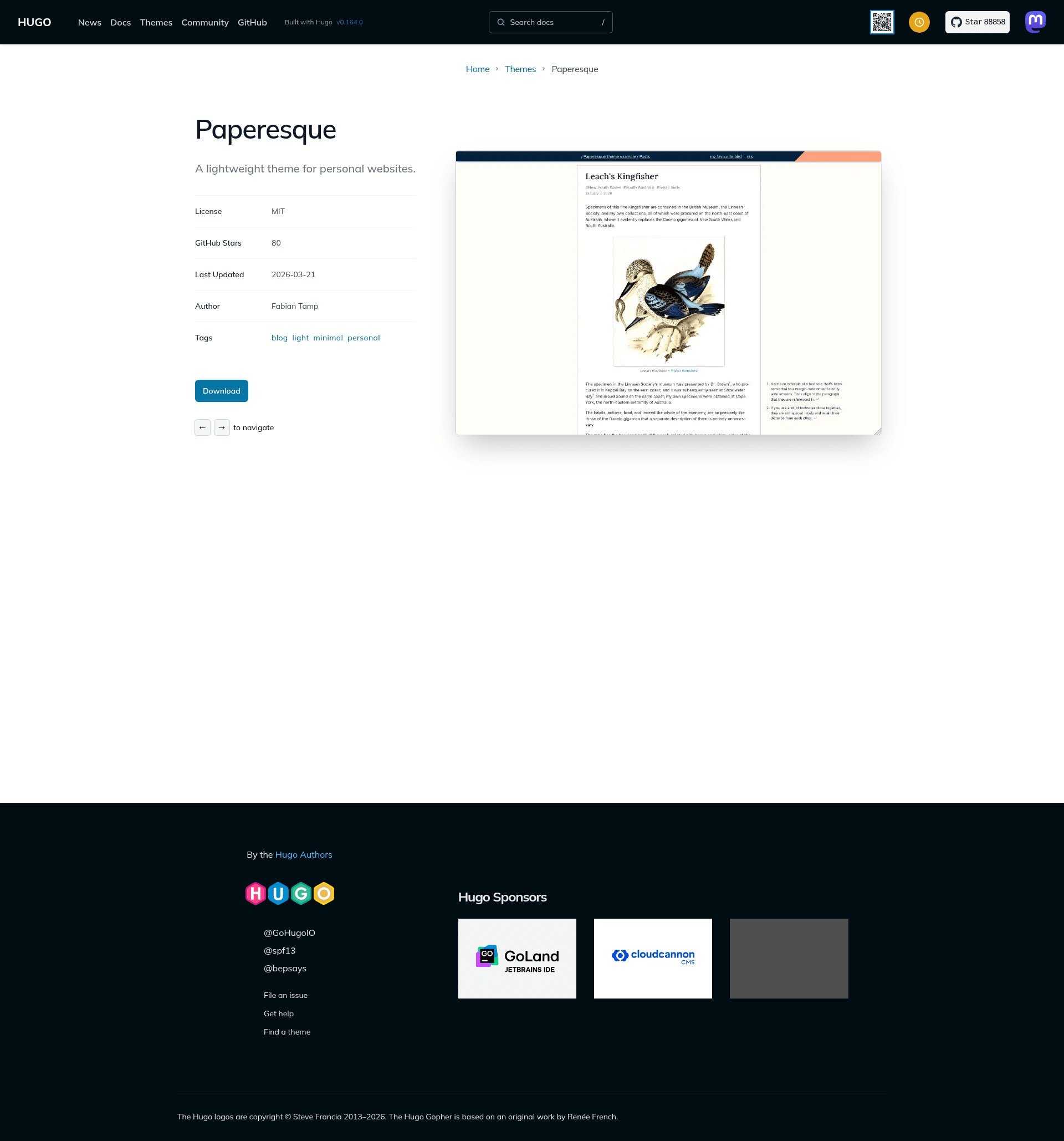
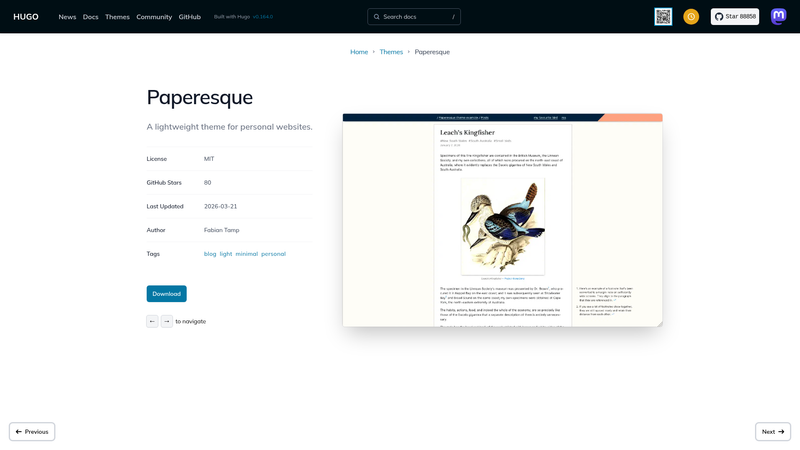
Paperesque is a lightweight Hugo theme for content-focused sites, automating image resizing with the fitfigure shortcode, turning footnotes into margin notes when space allows, and providing draft and visibility controls.
Paperesque is a Hugo theme created by capnfabs, designed for personal blogs and content sites. It takes a Hugo site's content and configuration, then renders static HTML output with features like responsive images, margin-note footnotes, and draft styling. The theme is open-source and available on GitHub, with 79 stars. It runs on the Hugo static site generator (gohugo.io) and is selected by setting the theme field in config.toml.
fitfigure shortcode — a drop-in replacement for Hugo's figure shortcode that resizes images to fit the container and generates 1x/2x DPI versions.drop-resources.py) removes original images from the output after resizing, leaving only the resized versions.disableMarginNotes or per page.[[params.topmenu]] entries in config.toml.fitfigure to auto-generate 1x/2x images and run drop-resources.py to strip originals from public/.mostlyHidden: true for pages that should not appear in lists or sitemaps.To install, either copy the theme into your project with git subtree add --prefix themes/paperesque https://github.com/capnfabs/paperesque mainline --squash or add it as a git submodule, then set the theme field to paperesque in config.toml. For image cleanup, add page = ["HTML", "droplist"] to [outputs] and run ./themes/paperesque/buildscripts/drop-resources.py on your Hugo output directory. The JavaScript in assets/js/main.js is built from the ./js/ source using Parcel via npx parcel build --no-source-maps.
Yes, the theme is open-source on GitHub under the capnfabs repository; there is no paid version mentioned.
Yes, add disableMarginNotes = true to the [params] section in config.toml for the whole site, or set the same key to true in a page's front matter for that page only.
No, image removal is off by default. You must explicitly add a droplist output format and run the provided drop-resources.py build script to delete originals from the generated public directory.
The sitemap.disable front matter option for mostly-hidden pages requires Hugo 0.125.0 or later; other features work in earlier versions.
Yes, top-right links are defined in config.toml using an array of entries with name and url fields under [[params.topmenu]].