Newsletter
Join the Community
Subscribe to our newsletter for the latest news and updates

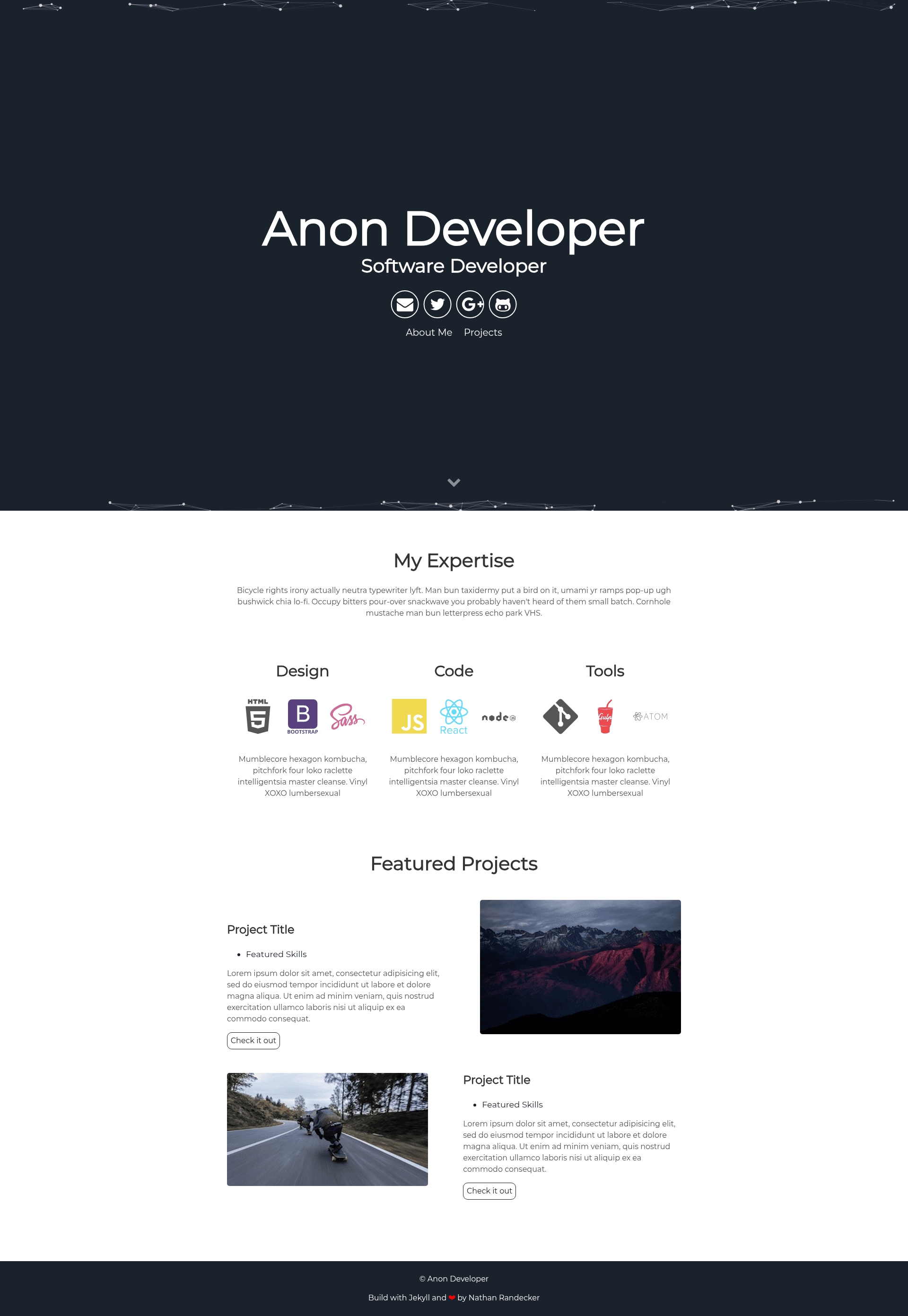
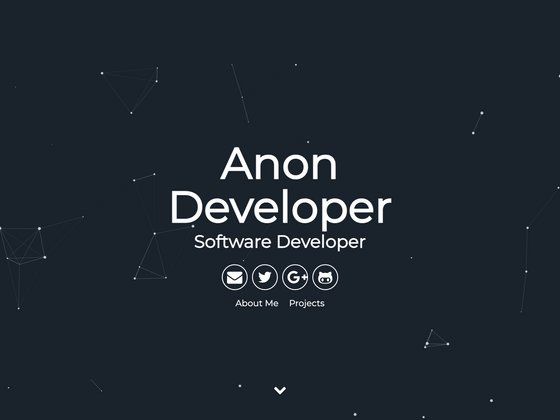
A free, open-source Jekyll portfolio theme for developers with an animated particle.js background, SASS customization, and Gulp workflow.
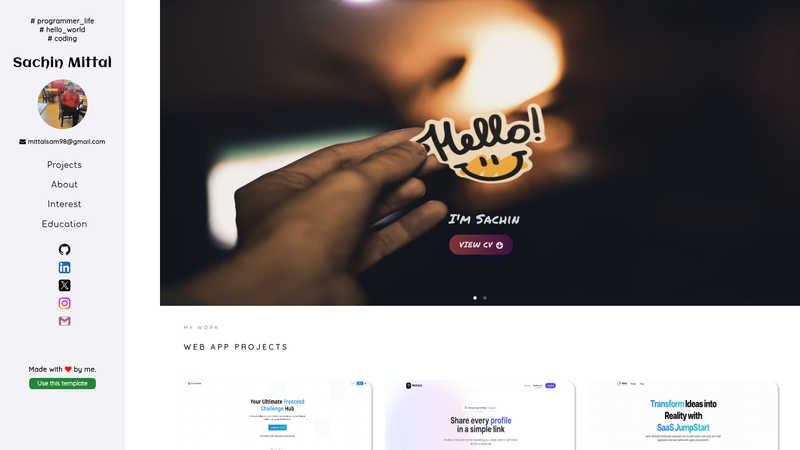
React Portfolio made with love ❤ from India

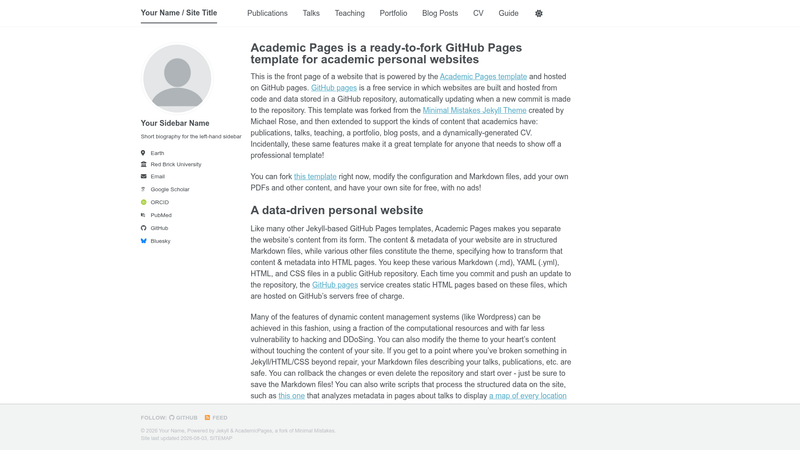
A simple Jekyll + GitHub Pages powered resume template that lets you publish a free resume site on your GitHub account.

A Next.js and Chakra-UI portfolio template with dark mode, MDX support, Fuse.js search, and SEO-friendly setup.

Rosey Pixel is a free one-page HTML/CSS template with a dark red background and pixelated header graphics.
Particle is a free, open-source Jekyll portfolio theme for developers, built around an animated particle.js background and a single-page layout with SASS styling.
Particle is a minimalist, single-page portfolio theme built on Jekyll, the Ruby-based static site generator. It takes the site author's details from _config.yml — username, title, description, email, Twitter, GitHub, and Google Plus handles — and renders a static personal portfolio page with a particle.js canvas in the header. The theme is maintained by GitHub user nrandecker and is distributed under the MIT License, so it can be freely forked, modified, and deployed. The repository has collected over 1,000 GitHub stars, indicating active use.
app.js._config.yml settings._config.yml, keeping layout files untouched when updating your profile.particles JSON in app.js, using the particles.js documentation.sudo gem install bundler jekyll._config.yml with your username, description, social links, and site URL.yarn in the project folder.gulp to compile assets, start BrowserSync, and serve the site locally at http://localhost:3000.Particle is free and open source software distributed under the MIT License. There are no paid tiers or premium features; everything is available in the public GitHub repository.
Yes, the theme is licensed under the MIT License. You can use, modify, and distribute it freely, including in commercial projects, without paying any fee.
Yes, Jekyll is a Ruby-based static site generator, so Ruby, Bundler, and Jekyll must be installed to build the site locally. However, deployment to GitHub Pages can handle the Jekyll build remotely.
Edit the particle configuration JSON found in the particle function inside app.js. The format follows the particles.js library, so you can adjust particle count, colors, size, and linking behavior directly in that object.
Yes, Jekyll includes built-in blog post support, and Particle inherits it. You can create Markdown posts that are styled consistently with the rest of the portfolio page.
The theme includes Google Analytics support; you configure it by editing the _config.yml settings file. The README lists Google Analytics among its features without specifying a dedicated field, so check the theme's configuration comments for the exact key.