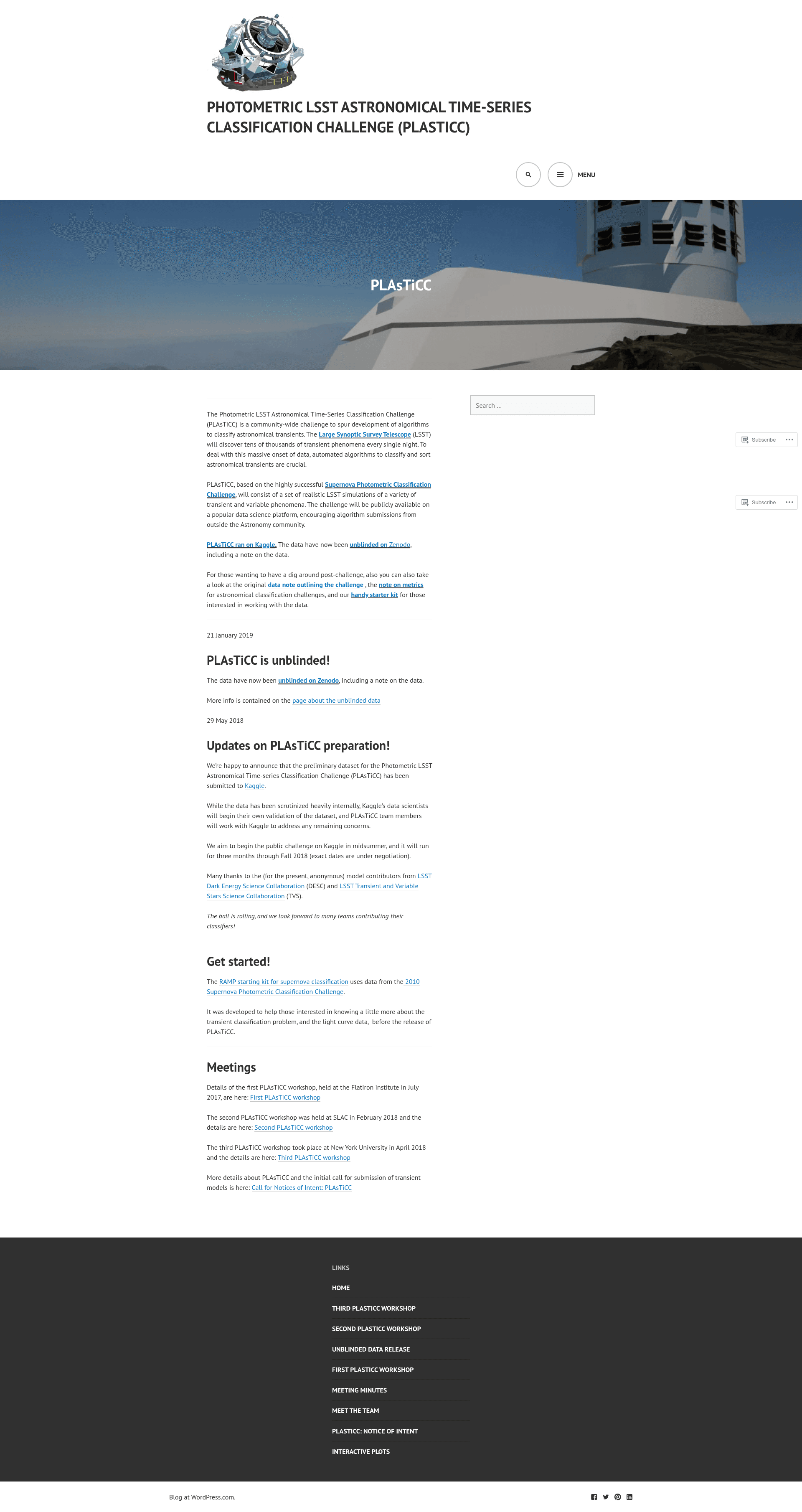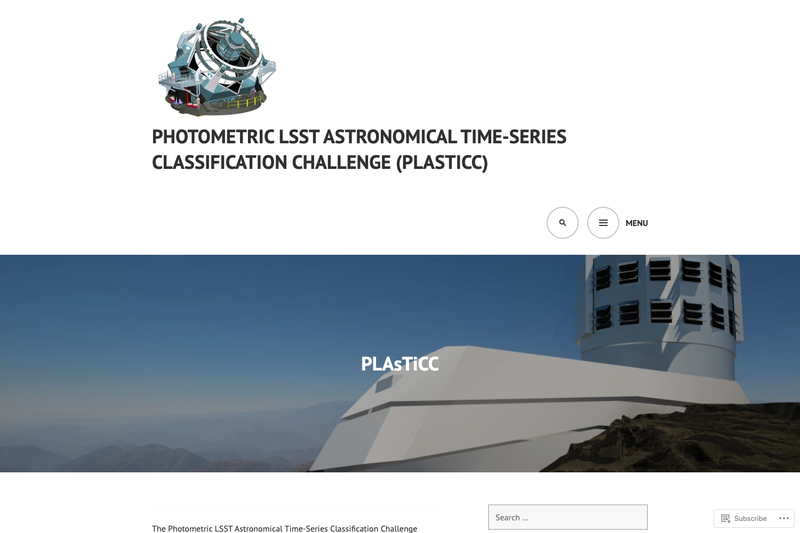
PLAsTiCC Astro Starter Kit is a Jupyter-notebook-based starter kit for the Photometric LSST Astronomical Time-series Classification Challenge (PLAsTiCC) hosted on Kaggle, created by The PLAsTiCC Team to introduce the astrophysical jargon and domain knowledge needed to understand the challenge data. It contains two notebooks, example data, media files, and environment configuration files for setting up a compatible Python environment.
What is the PLAsTiCC Astro Starter Kit?
PLAsTiCC Astro Starter Kit is a collection of educational resources for the PLAsTiCC Kaggle competition. It takes no direct data input; instead, it provides two Jupyter notebooks: plasticc_astro_starter_kit.ipynb for an astrophysics introduction (viewable as a slideshow) and plasticc_classification_demo.ipynb as an example of building a classifier for the challenge data. The kit runs on any system with Jupyter Notebook and Python, and it is maintained by The PLAsTiCC Team (copyright 2018).
Key Features
- Two Jupyter notebooks — An astronomy introduction notebook that can be viewed as a slideshow, plus a demonstration notebook that walks through building a classifier for the PLAsTiCC data.
- Example data included — A
data/directory contains sample data used by the notebooks, so users can follow along without first downloading the full Kaggle dataset. - Media resources — A
media/folder with images and videos referenced in the notebooks, providing visual context for the astronomical concepts. - Conda environment files —
conda_env_py36_osx64.ymlfor macOS andconda_env_py36_i686.ymlfor Linux (tested on Ubuntu 16.04) specify a compatible Python 3.6 environment. - Pip requirements — A
requirements.txtfile lists package specifications for users who prefer pip over conda. - README documentation —
README.rstexplains the kit's structure and points to the Kaggle forums for questions.
Who is it for?
- Kaggle competition participants — Data scientists entering the PLAsTiCC challenge can use the classification demo notebook as a starting point for building and evaluating their own models.
- Astronomers new to machine learning — The astrophysics introduction notebook bridges the gap between domain-specific jargon and the challenge data, making the competition approachable.
- Students learning time-series classification — The kit serves as a self-contained tutorial on classifying astronomical time-series data, with example data and environment setup provided.
What can you do with it?
- Learn the astrophysics background — View the
plasticc_astro_starter_kit.ipynbnotebook as a slideshow to understand the types of objects (like supernovae) and the photometric measurements in the challenge. - Build a classification model — Run
plasticc_classification_demo.ipynbto see a step-by-step example of preprocessing the data and training a classifier. - Set up your environment — Use the provided conda YAML files or
requirements.txtto recreate a compatible Python environment for the notebooks on macOS, Linux, or other systems.
FAQ
What is PLAsTiCC?
PLAsTiCC stands for the Photometric LSST Astronomical Time-series Classification Challenge, a Kaggle competition about classifying astronomical objects based on photometric time-series data. The starter kit was created specifically for this challenge.
How many notebooks are included?
The kit includes two Jupyter notebooks: one that provides an astrophysics introduction and another that demonstrates building a classifier. Both are intended to work with the included example data.
What is the classification demo notebook about?
plasticc_classification_demo.ipynb is an example of building a classifier for the PLAsTiCC data. It shows the process of working with the time-series data and training a machine learning model, serving as a reference for participants.
Does the kit include the full Kaggle dataset?
No, the data/ directory contains only example data to accompany the notebooks. Participants are expected to download the full dataset from the Kaggle competition page.
How do I get support for the kit?
The provided README directs users to the Kaggle forums for questions about the data or the notebook material. That is the official support channel for the PLAsTiCC challenge.