Newsletter
Join the Community
Subscribe to our newsletter for the latest news and updates

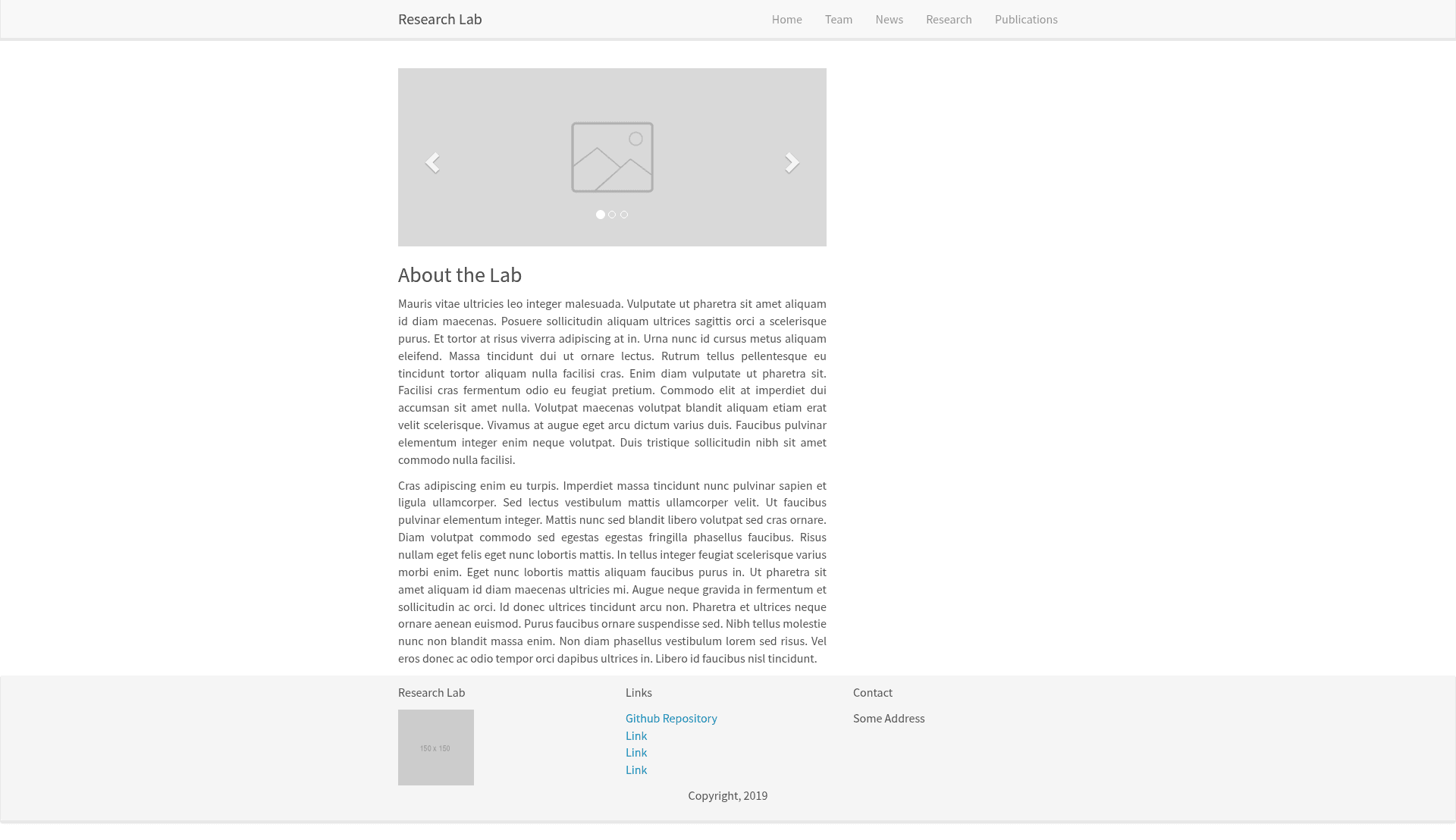
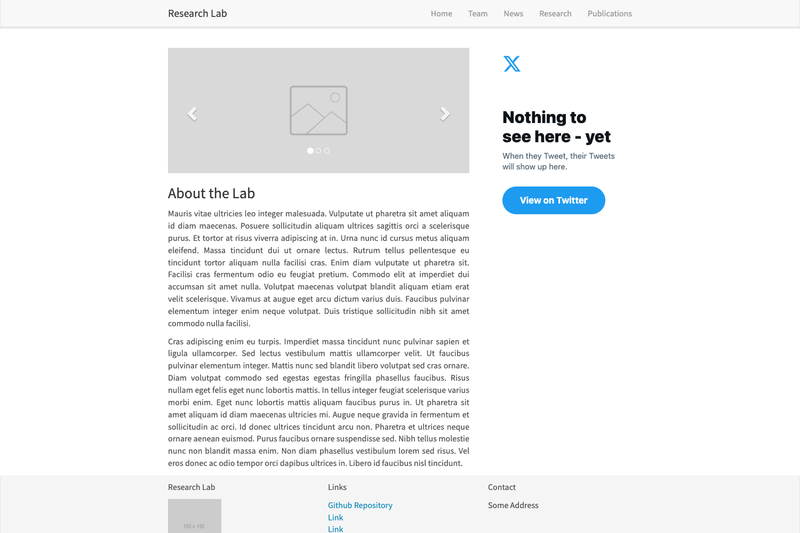
A template for a Research Lab website, built with Jekyll.
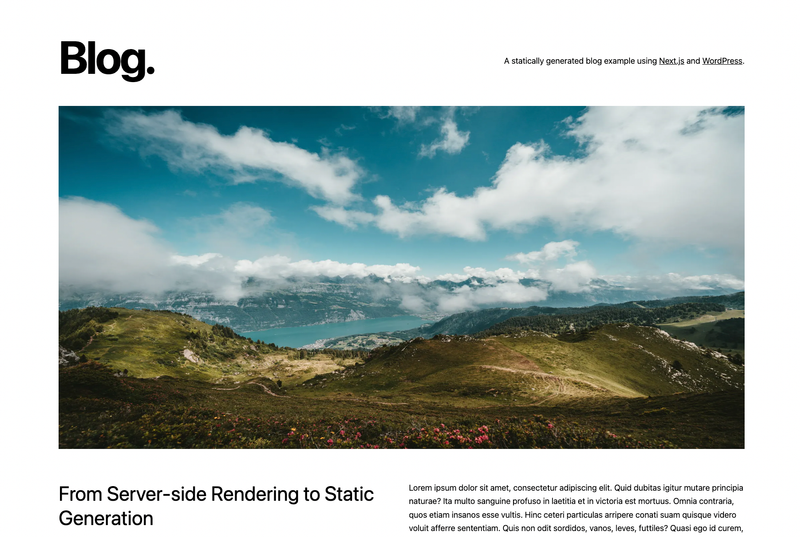
A feature-rich Next.js 14 App Router example using WordPress as a headless CMS with preview mode, sitemaps, redirects, and cache revalidation.
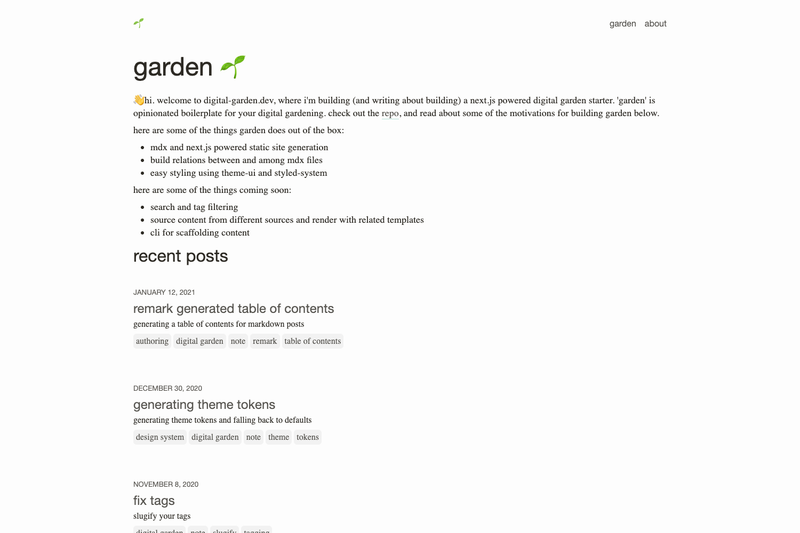
A batteries-included Next.js boilerplate for MDX authoring, with built-in search, theming, CI/CD, and easy deploys.
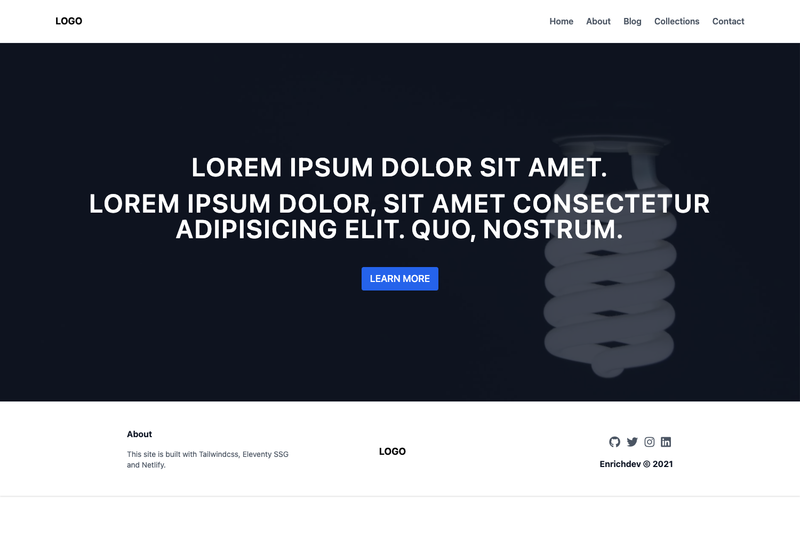
A starter template built with Eleventy static site generator and Tailwindcss
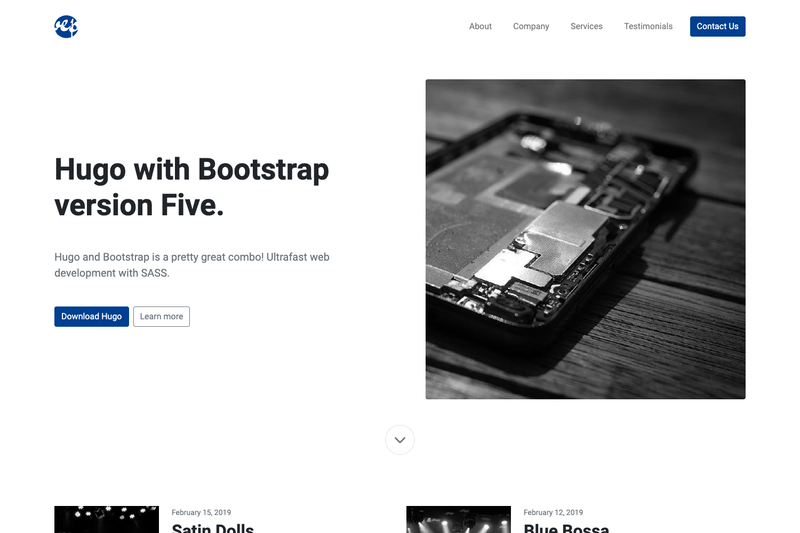
A basic Hugo starter project for Bootstrap v5, set up for deployment on Netlify.
Research Lab Website Template is a free, open-source Jekyll template for building academic research lab websites, derived from the Allan Lab's template at Leiden University. It outputs a static HTML site with team, publication, and news sections, and is designed for simple content management through Markdown, JSON, and YAML files.
The Research Lab Website Template is a static website generator for research groups that uses Jekyll to compile flat content files into a complete lab website. Inputs are Markdown files for team members, a JSON export from Zotero for publications, and YAML entries for news; the output is a set of static HTML pages ready to deploy to Netlify, GitHub Pages, or any web host. The project is a derivative of the well-known Allan Lab template at Leiden University and relies on Bootstrap for its visual design.
The template packs the essential components of a lab website into a lightweight Jekyll project with no database overhead.
_pages/team/_posts with a YAML front-matter block that defines layout, category, title, photo, role, permalink, social media links (Twitter, LinkedIn, Google Scholar, GitHub, ORCID, ResearchGate), and an education list._data/publications.json file stores all papers and is formatted as a Zotero export; entries include the Zotero ID, type, title, container journal, volume, issue, pages, abstract, DOI, authors, and issue date._data/news.yml with date, title, tags, and content fields, allowing the lab to share recent updates and achievements._layouts and _pages directories for customizing components.bundle install and then bundle exec jekyll serve starts a local web server for previewing the site during development.This template is built for academic research groups that need a credible web presence without maintaining a CMS or database.
publications.json, either manually or by exporting directly from Zotero.news.yml, optionally tagging them for organization._layouts folder or adding new pages under _pages.The template follows a standard Jekyll workflow. After installing Ruby and Jekyll, you clone the repository and run bundle install to install the necessary gems. Running bundle exec jekyll serve builds the site and serves it locally; Jekyll watches the content files and rebuilds on changes. To publish, you can push the repository to a static hosting service such as Netlify, which builds the site automatically.
The template is free to use and modify. It is published as an open-source GitHub repository, and there are no paid tiers or license fees associated with the template itself.
Create a new Markdown file in the _pages/team/_posts directory. In the YAML front matter, set the layout to member, choose a category such as staff, and fill in the researcher's title, image filename, role, permalink, social media URLs, and education list. Write the bio in the body of the file.
Open _data/publications.json and add a new object to the existing list. Follow the format shown in the README, which includes the Zotero identifier, type, title, container title, page range, volume, issue, source, abstract, DOI, author list, and issued date. This structure matches Zotero's export format.
Install Ruby and Jekyll on your machine, then run bundle install followed by bundle exec jekyll serve in the project directory. The terminal will display a localhost URL where you can view and test the site.
No. The template is powered by Jekyll, a static site generator. All content is stored in plain Markdown, JSON, and YAML files, and Jekyll converts them into static HTML files at build time. There is no database or server-side processing.
Yes, this is a free, open-source template hosted on GitHub. You can clone it, modify it, and deploy it for your research lab without paying any license fees.