Newsletter
Join the Community
Subscribe to our newsletter for the latest news and updates

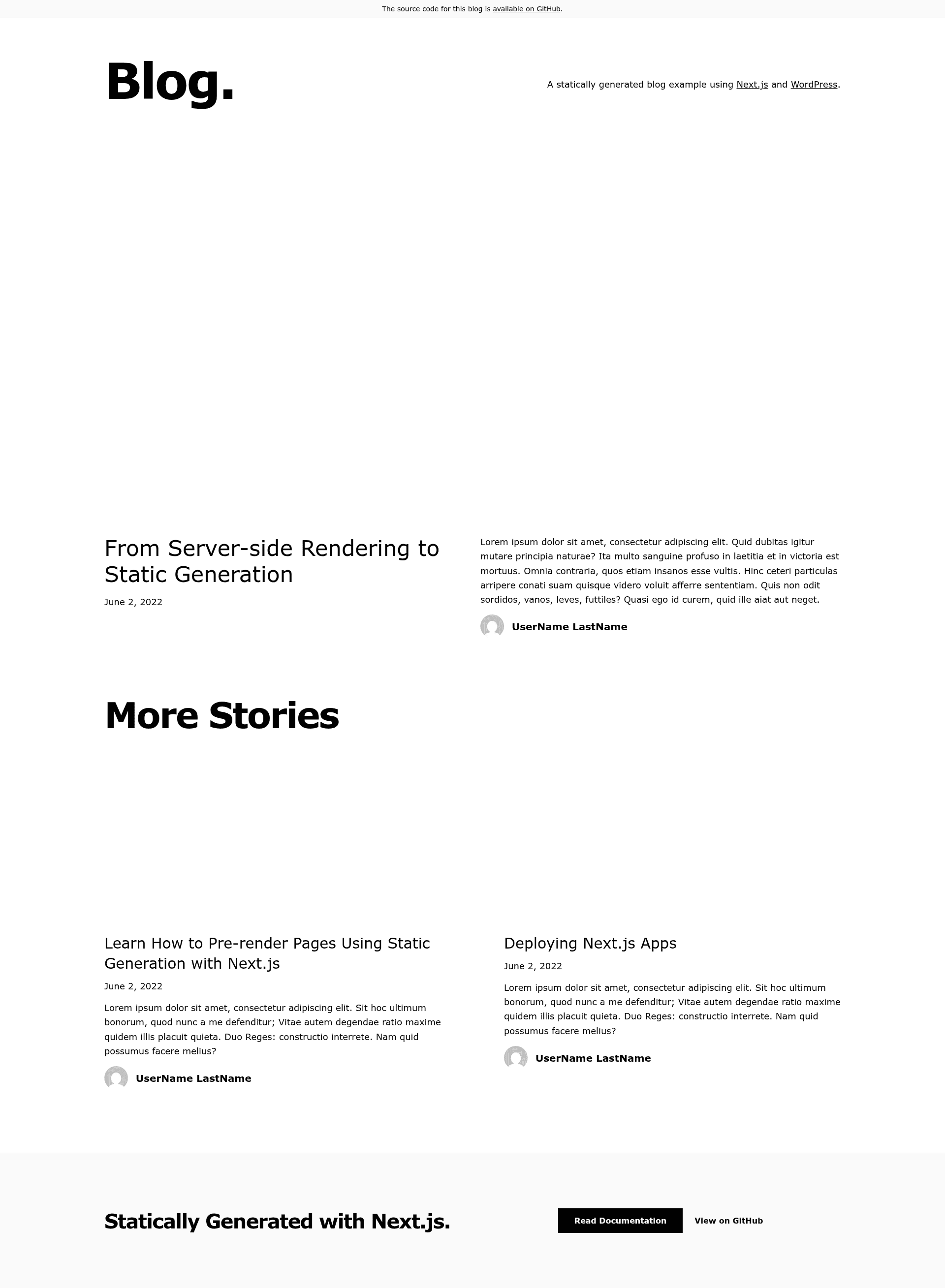
A feature-rich Next.js 14 App Router example using WordPress as a headless CMS with preview mode, sitemaps, redirects, and cache revalidation.

Free Bootstrap 4 one-page fitness template with video background header, sticky nav, counters, and contact form.
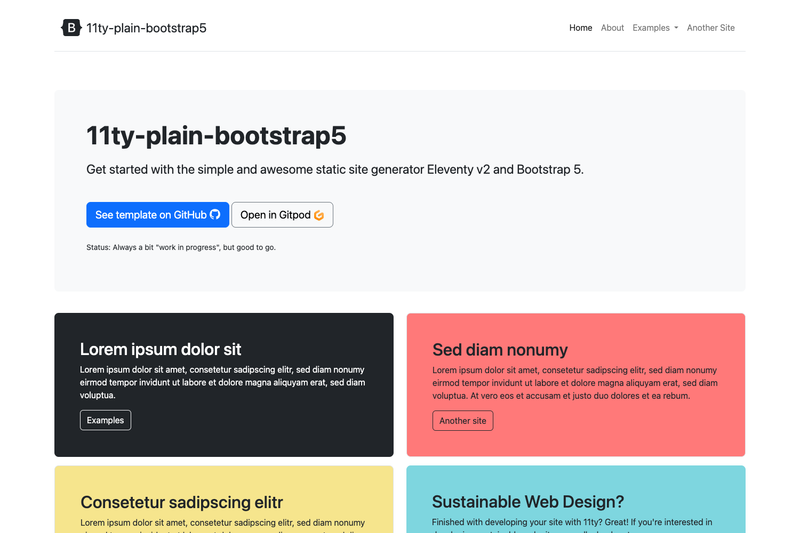
Plain template for static site generator Eleventy with Bootstrap 5 and Laravel Mix.
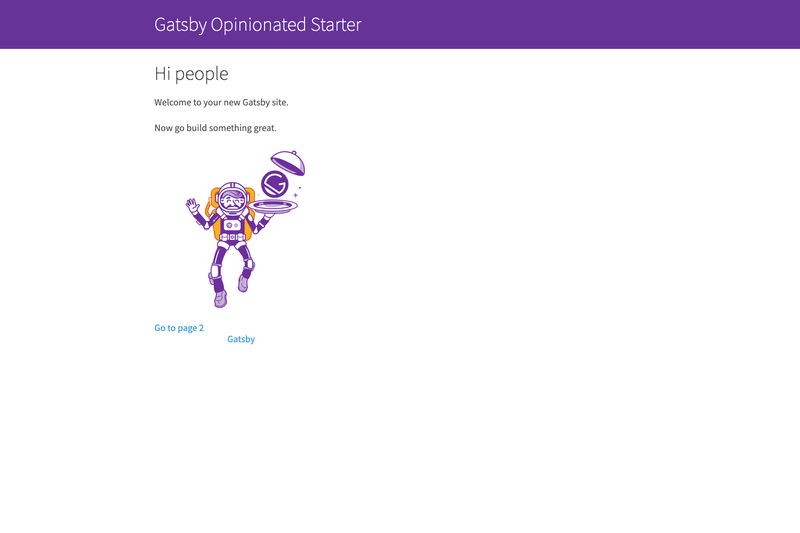
Opinionated Gatsby starter with TypeScript, ESLint, Jest, Storybook, commitizen, semantic-release, and Netlify readiness.
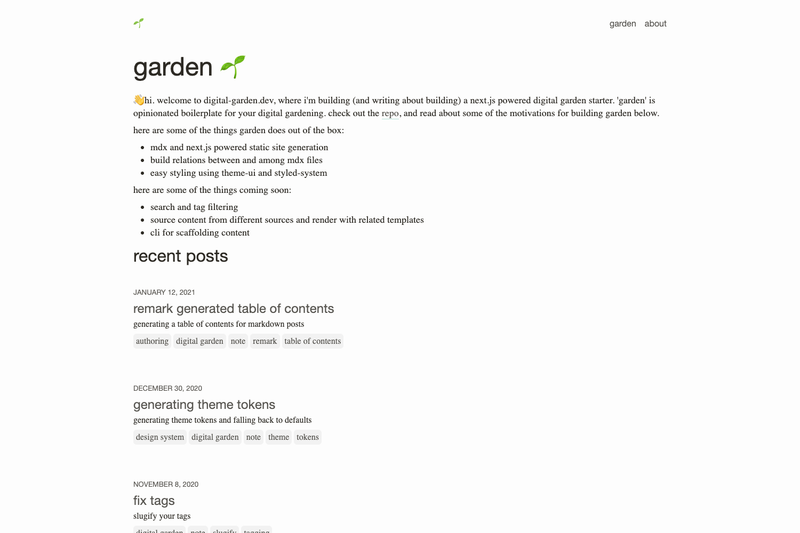
A batteries-included Next.js boilerplate for MDX authoring, with built-in search, theming, CI/CD, and easy deploys.
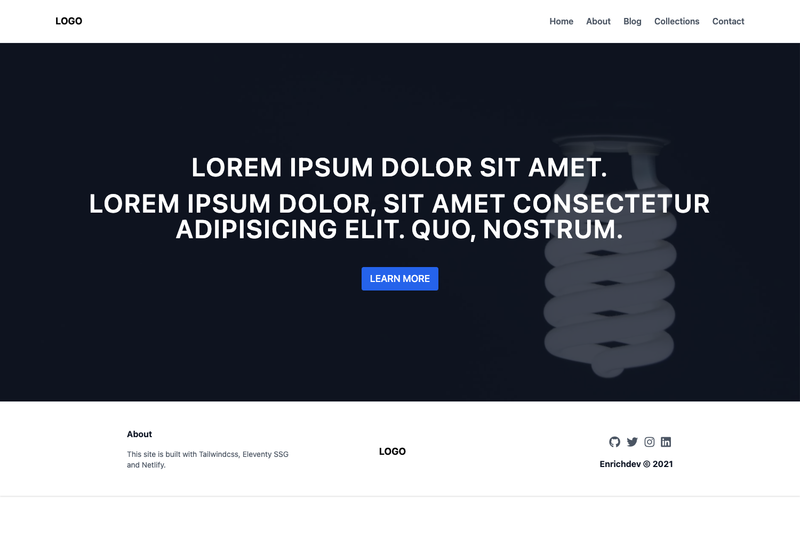
A starter template built with Eleventy static site generator and Tailwindcss
This is the official Next.js 14 App Router example from the Vercel Next.js repository that uses WordPress as a headless CMS, demonstrating a full production-style frontend with draft preview, automatic sitemap generation, CMS-managed redirects, and on-demand cache revalidation.
This template is a starter application, part of the Next.js examples collection, that wires a WordPress installation to a Next.js 14 App Router frontend through the WPGraphQL plugin. It accepts your WordPress URL and credentials as environment variables and outputs a fully typed, server-rendered website with pages, posts, SEO metadata from Yoast, a dynamic 404 page, robots.txt, and sitemap.xml. The official source lives under the canary branch of the vercel/next.js repository and is maintained by the Next.js team with community contributions.
[[...slug]]) — Handles every WordPress page and post by asking GraphQL what content type a route represents, then rendering the matching template; removing this route breaks all page rendering.sitemap.ts — Pulls all paths from the WordPress REST endpoints and serves them as /sitemap.xml.robots.ts — Fetches the robots.txt content from the WordPress API and exposes it at /robots.txt.WP_USER and WP_APP_PASS environment variables.not-found.tsx uses a configurable database ID to render a WordPress page whose slug is not-found, so editors can update 404 content without code changes./preview/{id} fake route.wordpress; a bundled minimal WordPress theme calls /api/revalidate on post transitions to clear only the relevant cache tag.codegen.ts generates types and a schema.gql file from the WordPress GraphQL schema on npm run dev, and an optional Apollo GraphQL VS Code extension config adds autocomplete.app, components, gql, queries, utils).Set up WordPress: set the site URL to the frontend, enable "Post name" permalinks, create a 404-not-found page, install required plugins (WPGraphQL, WPGraphQL SEO, WPGraphQL JWT Authentication, Redirection, Yoast SEO, optionally ACF Pro and WPGraphQL for ACF), enable introspection, and add four constants to wp-config.php. Then clone the repository, create a .env file with NEXT_PUBLIC_BASE_URL, NEXT_PUBLIC_WORDPRESS_API_URL, NEXT_PUBLIC_WORDPRESS_API_HOSTNAME, HEADLESS_SECRET, WP_USER, and WP_APP_PASS, and run npm run dev — type generation happens automatically.
Yes. It is an open-source example in the Next.js repository, released under the repository's license, and it relies on the free WordPress and WPGraphQL plugins. Optional paid tools like Advanced Custom Fields PRO are not required.
WPGraphQL, WPGraphQL SEO, Classic Editor, Redirection, Yoast SEO, and WPGraphQL JWT Authentication are listed as required; ACF Pro and WPGraphQL for ACF are marked optional but recommended for structured page building.
Yes. Create a WordPress page with slug 404-not-found, then change the database ID in not-found.tsx to match that page's post ID. The 404 content is then editable from the CMS.
Yes. Six variables are needed: the frontend base URL, the WordPress API URL and hostname, a shared HEADLESS_SECRET, and a WordPress username/password (WP_USER and WP_APP_PASS) used for preview and redirects. Without the last two, preview mode and Redirection support will not work.