Newsletter
Join the Community
Subscribe to our newsletter for the latest news and updates

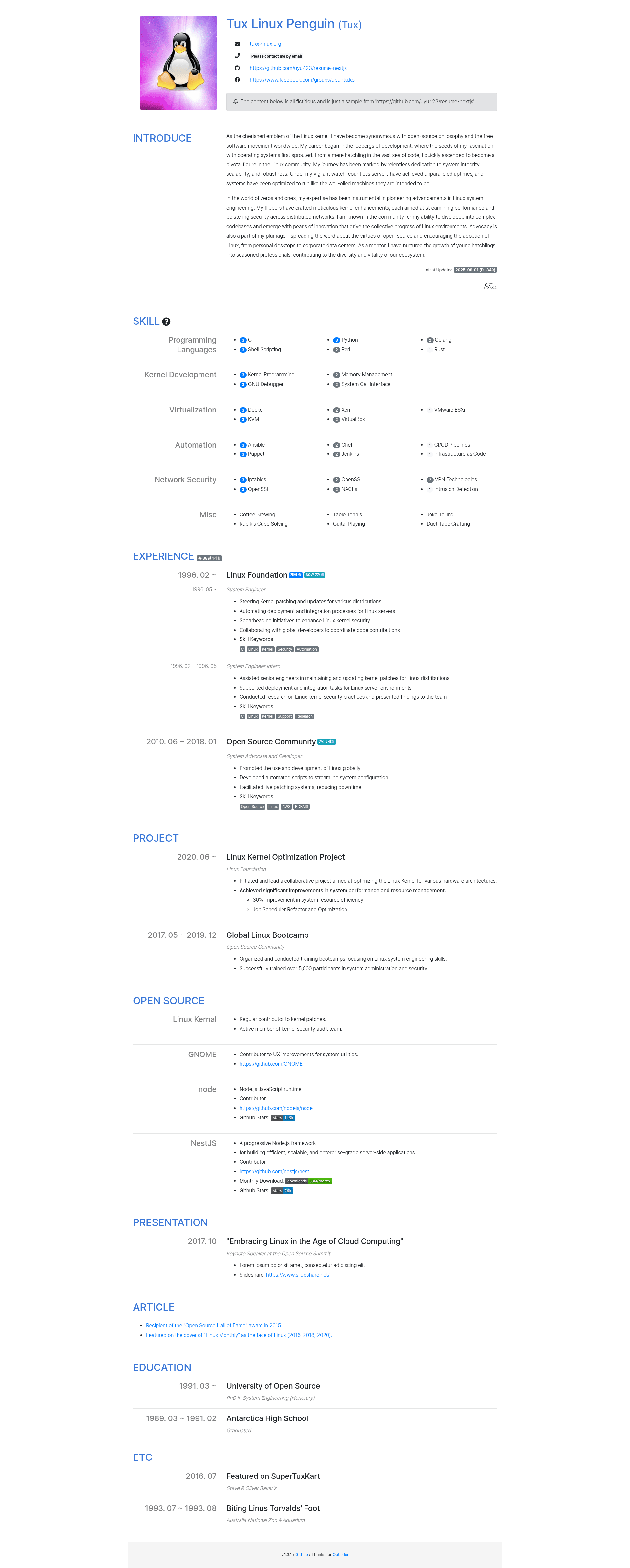
Next.js resume template that renders a static HTML resume from editable TypeScript payload data.
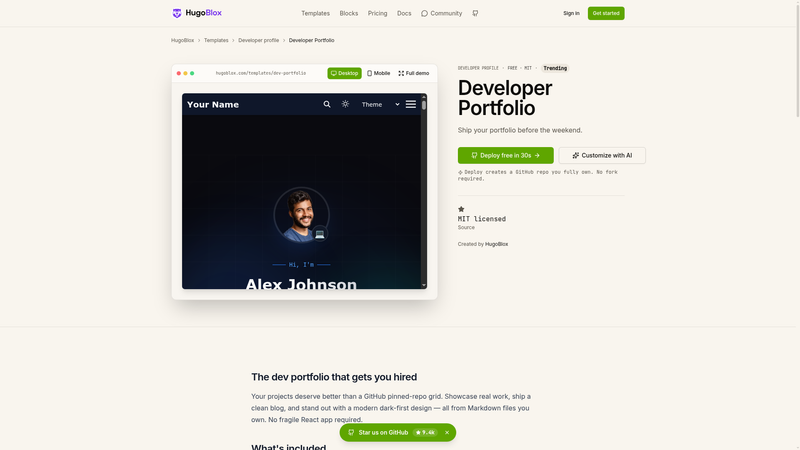
Developer portfolio that gets you hired — AI generates pages, you own Markdown. Project grid, tech stack, timeline, blog, dark design, free hosting.

Prologue is a single-page HTML5 site template by HTML5 UP that showcases a portfolio gallery and personal bio with an embedded Twitter widget.
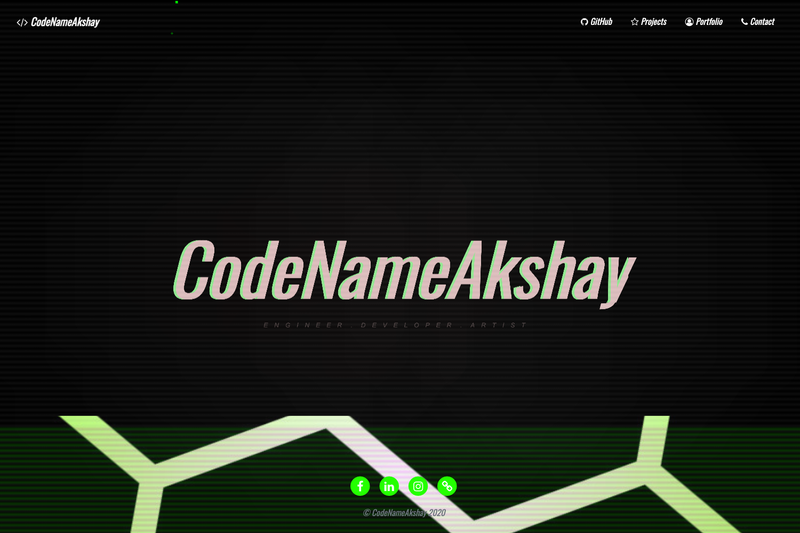
A CSS-based hacker-styled portfolio template with glitch animations, parallax background, and mouse cursor trail.

Open-source Gatsby starter for a Contentful-powered portfolio site with one-click Netlify deploy.
resume-nextjs is an open-source Next.js resume template that renders a static HTML resume from TypeScript payload data and is built for hosting on GitHub Pages. The project is a Next.js port of the older resume-legacy template, created by uyu423 with contributions from four other developers. The template uses Bootstrap CSS for styling and requires Node.js version 18 or higher, with an .nvmrc file to pin the recommended version.
resume-nextjs is a static web resume generator powered by Next.js. You write your career information in TypeScript payload files under the payload/ directory, and the template renders a styled, single-page resume that can be previewed locally or exported to static HTML. It is the successor to the resume-legacy template and is maintained on GitHub. A live sample is available at https://uyu423.github.io/resume-nextjs, and more examples are listed in EXAMPLE.md.
Fork the repository, git clone your fork, and run npm install to set up dependencies. Edit the TypeScript payload files under payload/ with your personal data, then run npm run dev to preview the resume locally. When you are satisfied, run npm run export to generate static HTML in the docs/ directory and push the changes to your repository; the site is then served by GitHub Pages from the docs folder.
Yes. The template is designed for GitHub Pages: npm run export writes static HTML to docs/, and you select the master branch /docs folder as the publishing source in the repository's Pages settings. When using a custom domain, the docs/CNAME file is created automatically from the homepage field in package.json.
Node.js 18 or higher is recommended. The repository includes an .nvmrc file and sets NODE_OPTIONS=--openssl-legacy-provider to work around the ERR_OSSL_EVP_UNSUPPORTED error that occurs on Node.js 18 and later versions.
The README explains that section order is not configurable through payload data. You must rearrange the component rendering order in pages/index.tsx. The project maintainers note that a data-driven solution is being considered.
If assets return 404 after export, the homepage field in package.json likely does not match your deployment path. The README points to issues #24 and #37, which cover broken images in production builds and missing assets in index.html when deploying under a sub-path.