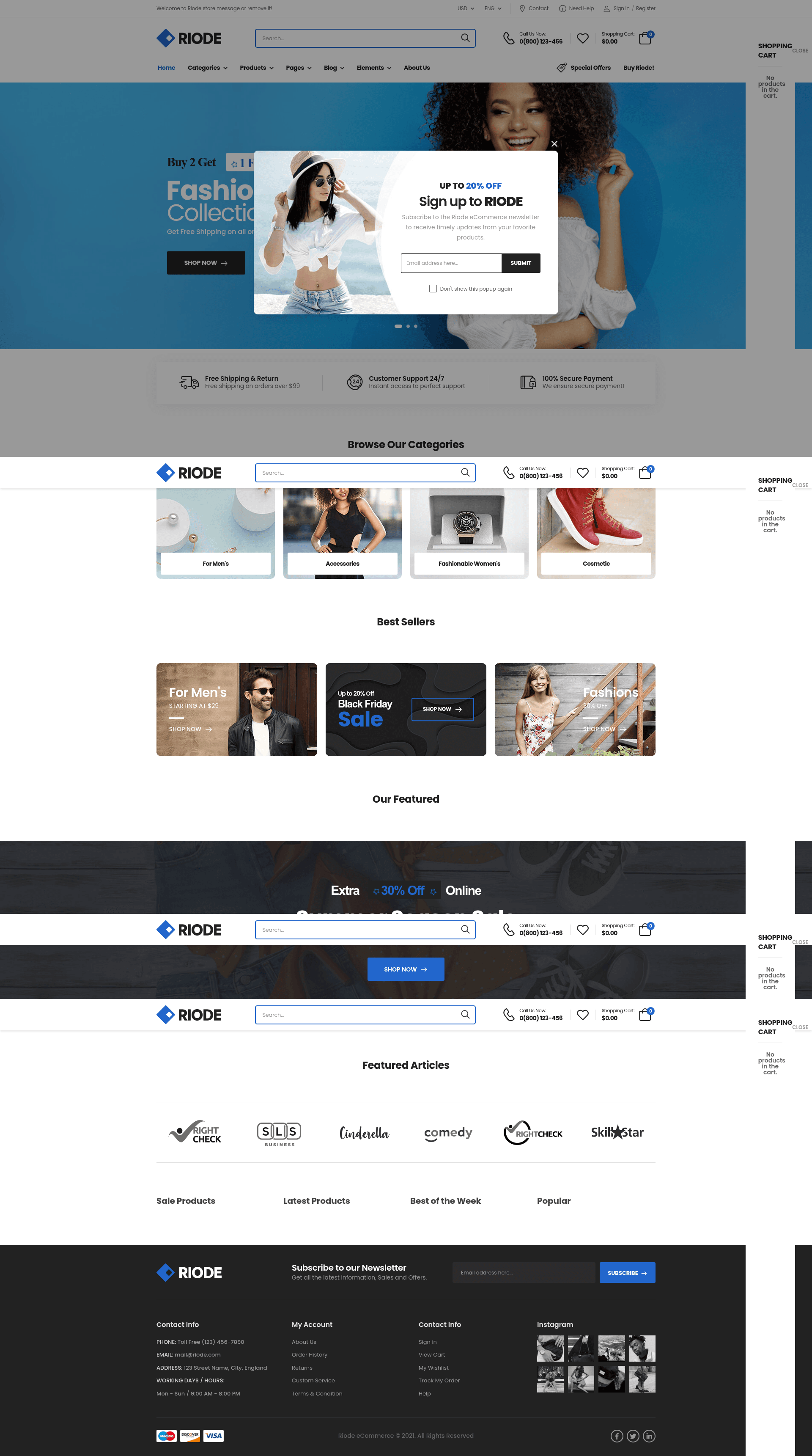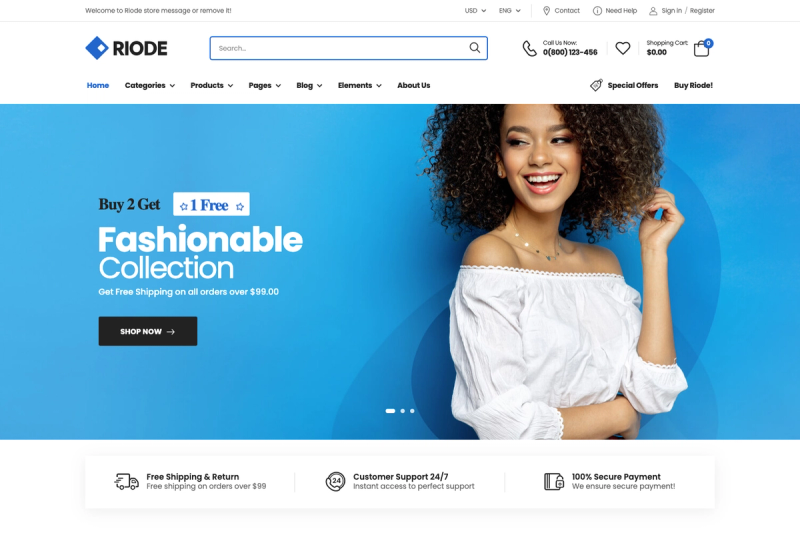
Riode is a MERN stack eCommerce template built on Next.js, Redux, Redux-Saga, Apollo GraphQL, and SCSS, designed for building online storefronts. The repository, named riode-react-nextjs-vercel, contains a working Next.js application with file-system routing, API routes, and a deployment-ready configuration for Vercel. This template is intended as a starting point for developers who want to launch an eCommerce site without building the frontend and state management from scratch.
What is Riode React Next.js?
Riode React Next.js is a GitHub-hosted starter project for eCommerce websites. It takes Next.js as the foundation, uses SCSS for styling, and integrates Redux with Redux-Saga for state management and asynchronous side effects. The template also includes Apollo GraphQL for data fetching, plus lazy loading for images and skeleton screens for placeholders. The repository metadata describes it as a MERN stack template, though its topic list includes MySQL rather than MongoDB, and Node.js as the server runtime.
Key Features
- Next.js framework — The template uses the pages directory for route creation, so each file in pages becomes a URL. It also provides API routes in the pages/api directory that map to backend endpoints.
- SCSS styling — All styling is written in SCSS, allowing developers to define reusable variables, mixins, and nested rules for a consistent design system.
- Redux and Redux-Saga — Global application state is managed with Redux, and side effects like network requests are handled with Redux-Saga middleware.
- Apollo GraphQL — An Apollo Client is configured for querying a GraphQL backend, which is common for eCommerce APIs.
- Lazy loading and skeleton screens — Images are lazy-loaded to reduce initial page weight, and skeleton placeholders show while content loads for a smoother user experience.
- Node.js and MySQL backend — The MERN stack description and topics point to a Node.js server with MySQL database integration for the backend.
- Vercel deployment — The README includes a "Deploy on Vercel" section, and the repository name ends in "-vercel", indicating the target hosting platform.
Who is it for?
- Ecommerce developers who need a ready-made React and Next.js storefront with state management and GraphQL integration built in.
- Full-stack JavaScript developers who want to see how Redux-Saga and Apollo Client are wired into Next.js alongside a Node.js backend.
- Next.js learners who want to explore a real-world project structure with SCSS, API routes, and deployment configuration.
What can you do with Riode React Next.js?
- Launch an online store: Install the template, connect it to a product catalog and cart backend, and customize the SCSS and React components to match a brand.
- Integrate a GraphQL API: Use the Apollo Client to fetch products, categories, or customer data from a compatible GraphQL service.
- Deploy to production: Push the project to a Git repository and use the Vercel platform to deploy the Next.js app with automatic build and hosting.
How does the template work?
To run the template locally, run npm run dev in the project root. This starts a development server at http://localhost:3000 with hot reload for page edits. Any file placed in the pages directory becomes a new route, and files in pages/api are exposed as API endpoints. The README also links to the Next.js documentation for deeper customization and to the Vercel deployment guide.
Alternatives
- Next.js Commerce — Vercel's official storefront starter, also built on Next.js, with Stripe checkout and a pre-configured commerce backend, making it a direct alternative if you prefer a more officially maintained commerce solution.
FAQ
Is Riode React Next.js free to use?
The README lists no pricing or licensing terms, and the repository is publicly visible on GitHub, so the code is likely open source. For exact reuse rights, check the repository's license file.
What is the MERN stack in this template?
MERN normally stands for MongoDB, Express, React, and Node. This repository calls itself MERN but its topics include MySQL instead of MongoDB, so the backend database may be MySQL while still using React, Node, and Express.
How do I start the development server?
Run npm run dev in the project directory. The server starts on http://localhost:3000, and editing pages/index.js triggers an automatic browser reload.
Can I use this template for a production eCommerce store?
Yes. The template is a Next.js project that can be built and deployed to production. The README points to the official Next.js deployment documentation and a one-click Deploy on Vercel link, so production hosting is supported.